

| Number of functional layers | 4 (base, structure, statement, finishing) |
| Statement elements per outfit | Exactly one |
| Most overlooked layer | Finishing layer (accessories and footwear) |
| Primary purpose of the base layer | Fit and neutrality — support without competition |
| What structure layers define | Silhouette, proportion, and occasion tone |
| Framework applicability | Works across all personal aesthetics and occasions |
Why Outfit Structure Matters More Than Individual Pieces
Most dressing frustration isn't about lacking clothes — it's about not knowing how the pieces in your wardrobe are supposed to relate to one another. When you understand that every item in an outfit performs a specific function, getting dressed shifts from guesswork to a repeatable, confident process.
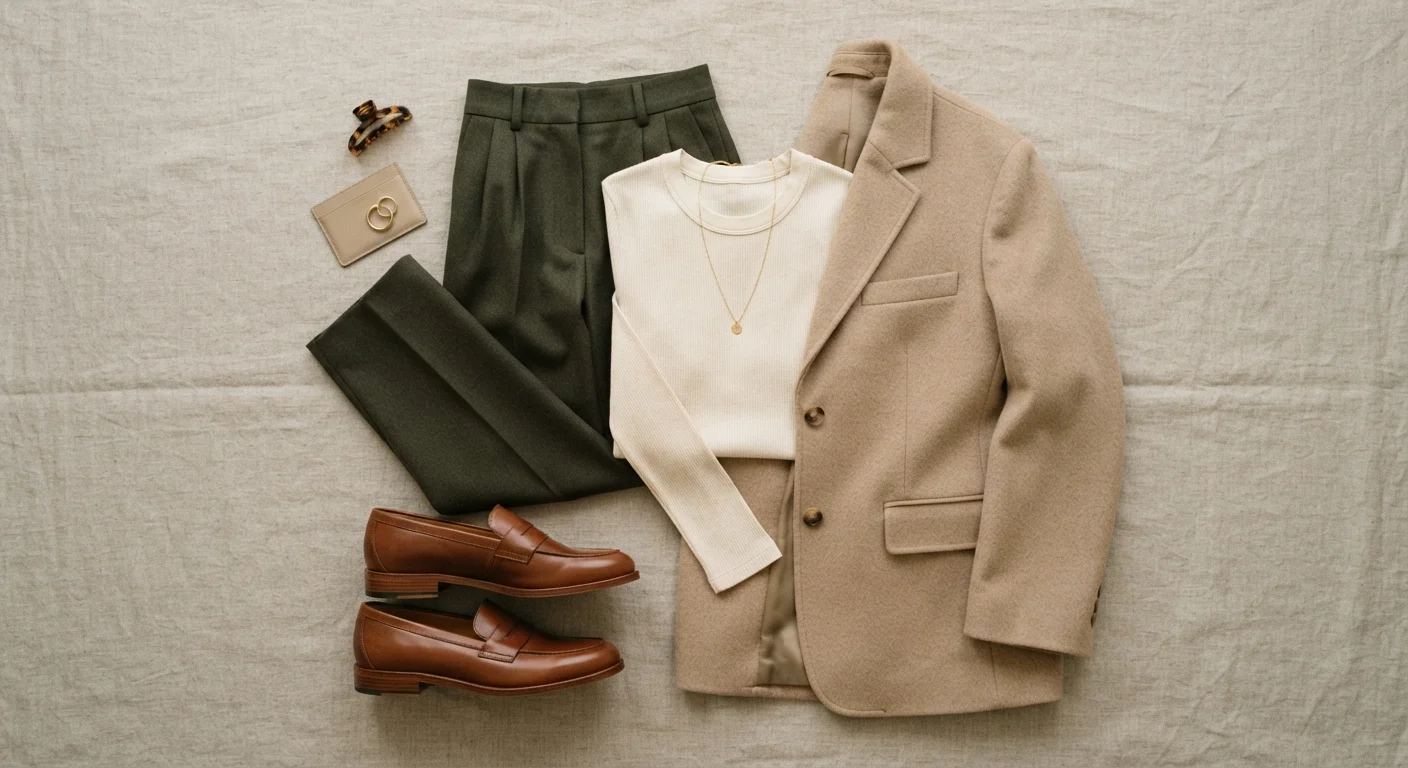
Think of an outfit less like a collection of items and more like a layered system. Each layer — the base, the mid-layer, the statement element, and the finishing touches — has a job to do. When each piece does its job, the whole look feels complete. When one layer is missing or miscast, something feels off even if you can't immediately name why.
This framework applies regardless of your personal aesthetic or the occasion. Whether you're dressing for a work-from-home day or a dinner out, the same structural logic holds. Building outfits from scratch becomes far more intuitive once you stop thinking in individual items and start thinking in roles.
Base Layer
The foundational garment worn closest to the body that sets the outfit's overall tone and silhouette. It should fit well and remain visually neutral relative to other pieces.
Structure Layer
An outer garment — such as trousers, a skirt, or a blazer — that defines the outfit's shape, proportion, and occasion-appropriateness.
Statement Element
The single piece in an outfit that draws the eye and provides a visual focal point, whether through colour, texture, print, or silhouette. Effective outfits typically contain only one.
Finishing Layer
Accessories and footwear that complete an outfit, refine its proportions, signal occasion, and add personality without competing with the statement element.
Wardrobe Anchor
A versatile piece capable of fulfilling multiple outfit roles — base, structure, or finishing — across different looks and occasions. Anchors are the highest-value items in a practical wardrobe.
Outfit Proportion
The visual relationship between the volumes and lengths of different garments in a look. Balanced proportion is one of the strongest signals that an outfit was assembled with intention.
The Four Functional Layers of an Everyday Outfit
Breaking down an outfit by function — rather than by garment type — gives you a transferable system that works across seasons and occasions.
The Base Layer
The base layer is the foundation: the item sitting closest to your body that sets the outfit's tone and silhouette. A well-fitted T-shirt, a ribbed tank, a classic button-down, or a slip dress all serve as base layers depending on the look. The key qualities here are fit and neutrality — the base should support what goes over it, not compete with it. This is where foundational wardrobe pieces earn their value.
The Structure Layer
This is the outer piece that gives the outfit its shape and visual weight — trousers, a skirt, a blazer, or a jacket. Structure layers define the outfit's silhouette and its occasion-appropriateness. A well-tailored trouser instantly signals polish; a relaxed wide-leg pant reads as intentionally casual. The structure layer also anchors proportion, which is why fit and proportion matter so profoundly here.
The Statement Element
Every outfit benefits from one item that draws the eye — a textured knit, a printed blouse, a boldly coloured coat. The statement element is not about trend-chasing; it's about giving the outfit a focal point. Without it, looks can read as flat or unintentional. With two competing statement pieces, an outfit becomes visually noisy. One is the rule.
The Finishing Layer
Shoes, bags, jewellery, belts, and scarves are finishing elements — and they do more work than most people give them credit for. They signal occasion, refine proportion, and add personality. A loafer reads differently than a white sneaker even with an identical outfit. Finishing touches are where texture and detail can be introduced without overwhelming the look.
| Number of functional layers | 4 (base, structure, statement, finishing) |
| Statement elements per outfit | Exactly one |
| Most overlooked layer | Finishing layer (accessories and footwear) |
| Primary purpose of the base layer | Fit and neutrality — support without competition |
| What structure layers define | Silhouette, proportion, and occasion tone |
| Framework applicability | Works across all personal aesthetics and occasions |
Putting the Framework Into Practice
The real usefulness of this anatomy is that it turns outfit-building into a checklist rather than a creative struggle. Before leaving the house, you can quickly scan: Is my base layer doing its job quietly? Does my structure layer fit well and set the right occasion tone? Is there exactly one focal point? Do my finishing elements feel cohesive?
Use this framework as a diagnostic, too. If an outfit feels incomplete, you've likely skipped a layer. If it feels cluttered, you've probably doubled up on statement elements. The most common everyday style missteps almost always trace back to a role being unfilled or overfilled.
Understanding which pieces in your wardrobe are strong anchors across multiple roles also helps you shop and edit more deliberately. Wardrobe anchors — pieces that can shift between base, structure, or finishing functions depending on context — are worth investing in. For a practical application of this thinking, the everyday outfit checklist translates this anatomy into a before-you-leave-the-house review.