

Key Takeaways
- Visa rules vary significantly between Southeast Asian countries — always verify requirements with official sources before booking.
- Overland and budget air travel make multi-country itineraries genuinely accessible without a large budget.
- Cultural respect — covering up at temples, removing shoes, understanding local customs — matters far more than many guides suggest.
- Solo women travellers consistently rate countries like Vietnam, Thailand, and Bali among Asia's more welcoming destinations.
- Seasons differ dramatically by subregion; timing your trip around monsoon patterns shapes the entire experience.
- A flexible, lightly planned itinerary often yields richer travel than a rigid daily schedule.
Why Southeast Asia Works So Well for First-Time Explorers
There's a reason Southeast Asia has become the go-to first international adventure for so many women: it offers an unusually forgiving entry point into unfamiliar travel. Infrastructure for visitors is well-established across Thailand, Vietnam, Bali, Cambodia, and beyond. Affordable guesthouses, established transport corridors, and thriving traveller communities mean you're rarely navigating completely alone — even when you want to be.
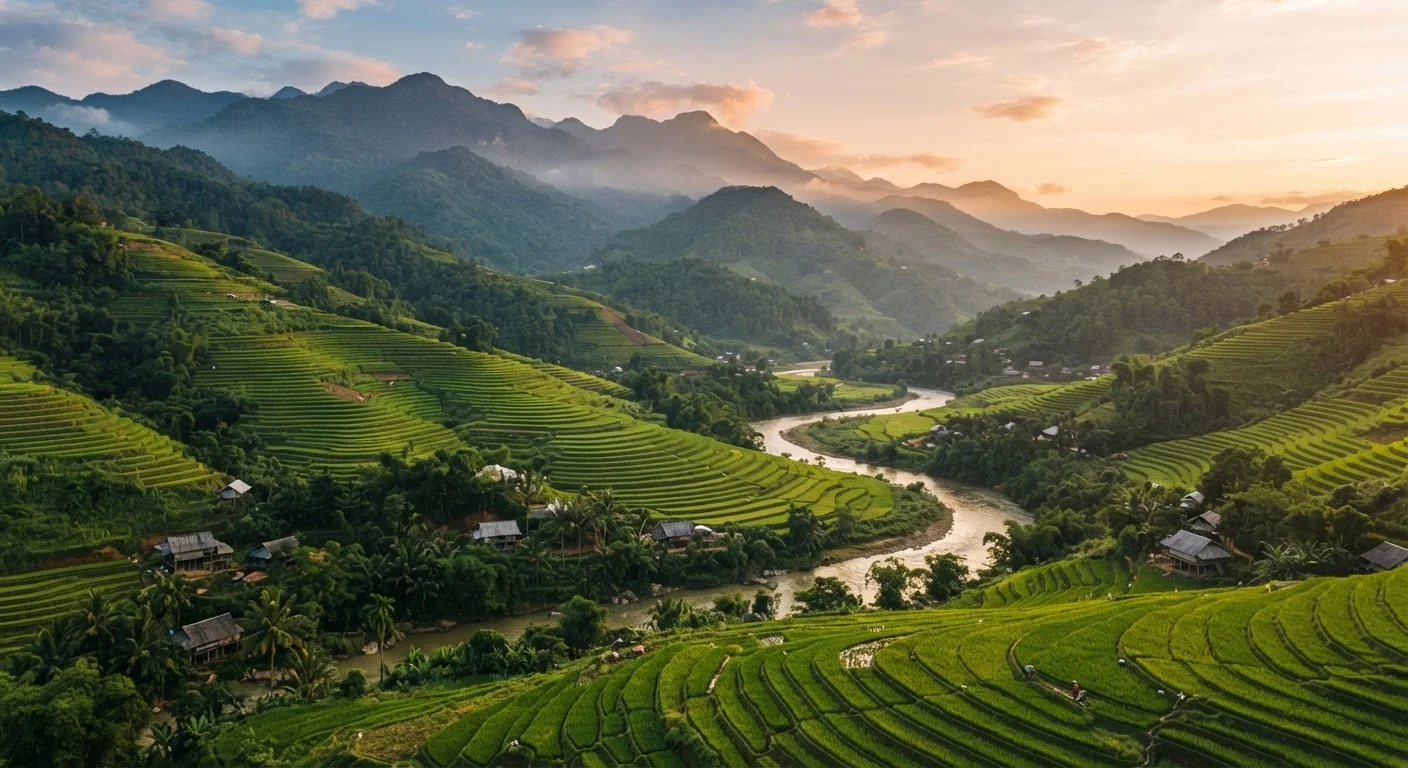
That accessibility doesn't flatten the experience. The region holds genuine contrasts within short distances: mountain hill tribes and beach towns, ancient temples and contemporary street-food markets, slow river towns and dense, electric cities. Intentional travel here means choosing your pace deliberately rather than rushing to tick off a list.
If you're working up to independent travel for the first time, our guide to building confidence before your first solo trip covers the mental and practical groundwork worth laying before you board.
Book your first and last night's accommodation before arrival, then leave the middle of your trip flexible. Arrival stress drops dramatically when you have a confirmed address to give at immigration.
Experienced independent travellers consistently note that decision fatigue peaks at entry points — airports, land borders, ferry docks — where flexibility is least useful and certainty most valuable.
Download offline maps for every city before your mobile data is set up. Apps like Maps.me and Google Maps offline work well and require no connectivity once saved.
Data SIMs are easy to obtain in most Southeast Asian airports and cities, but the gap between landing and connectivity can be disorienting without a navigational fallback.
Visas, Entry Rules, and What to Verify Before You Go
Entry requirements across Southeast Asia vary considerably by nationality and by country. Thailand offers visa-free stays for many passport holders. Vietnam operates an e-visa system. Indonesia allows visa-on-arrival for qualifying visitors at major airports. Cambodia offers tourist visas both online and on arrival. Myanmar's situation has changed significantly in recent years and requires careful, current research.
These rules shift. Processing times, required documents, and permitted stay durations can change with little notice. Always cross-reference the official embassy or immigration website of each country you plan to visit, and check your own government's travel advisory page for that destination. This is not an area to rely on secondhand forum posts.
Always Verify Entry Requirements Officially
Visa rules, permitted stay durations, and required documentation change frequently and vary by nationality. Do not rely on travel blogs or forum posts for entry requirement information. Check the official immigration or embassy website for each country on your itinerary, as well as your own government's foreign travel advice page. Arriving with incorrect documentation can result in being denied boarding or entry.
Passport validity is a consistent requirement: most countries require at least six months of validity beyond your entry date. Check this before you book flights.
Getting Around: Regional Transport Explained
Moving between countries — and within them — is one of Southeast Asia's genuine pleasures once you understand the options. Low-cost carriers like AirAsia and Vietjet connect major hubs at prices that often rival overland journeys for time efficiency. Overnight sleeper trains between Thai cities or Vietnamese coastal stops are widely praised and genuinely comfortable on well-maintained routes.
Buses, minivans, and shared taxis fill the gaps between towns not served by rail. For shorter distances within cities, ride-hailing apps — Grab operates across much of the region — remove a significant layer of negotiation and pricing uncertainty. Ferries connect island destinations throughout Thailand, the Philippines, and Indonesia.
Research specific routes before committing: road quality, crossing times, and seasonal closures vary significantly. Our guide to travelling well on a budget addresses how to weigh transport costs against comfort without sacrificing either.
660M+
People across Southeast Asia's 11 countries
The ASEAN bloc spans 11 nations across a region of enormous geographic and cultural diversity, according to ASEAN Secretariat data.
~$30–60 USD
Typical daily budget in budget destinations
Travellers in countries like Vietnam, Cambodia, and Thailand commonly report comfortable daily budgets in this range, covering accommodation, food, and local transport.
Cultural Context Every Visitor Should Understand
Respectful travel in Southeast Asia begins with understanding that the region is not a monolith. Buddhist, Muslim, Hindu, and animist traditions shape daily life across different countries and communities — sometimes within the same city. What's customary at a Balinese temple differs from a Bangkok wat, which differs again from a mosque in northern Malaysia.
Some baseline practices hold broadly: cover shoulders and knees at religious sites, remove shoes when asked, greet people warmly and patiently, and follow the lead of locals in formal or sacred spaces. Photography deserves particular consideration — always ask before photographing people, and observe posted restrictions at sites.
Our companion piece on cultural etiquette abroad goes deeper into reading situations and responding with genuine care rather than performative compliance.
Safety, Health, and Practical Wellness on the Road
Southeast Asia is not uniquely dangerous for women travellers — but it rewards the same common-sense practices that apply anywhere unfamiliar. Keep digital and physical copies of your documents. Carry a small first aid kit. Know where the nearest reputable medical facility is in each city you stay. Travel insurance that covers medical evacuation is strongly advisable; consult providers directly about policy terms before purchasing.
Health considerations vary by destination and season. Mosquito-borne illnesses — including dengue and malaria in certain areas — are real risks in some regions. Speak with a travel medicine specialist or your GP well before departure; vaccination and prophylaxis needs depend on your specific itinerary and medical history. This content is general information only and is not a substitute for personalised medical advice.
Food safety deserves thought too: street food is one of the region's great pleasures and is largely safe when stalls are busy, food is served hot, and produce is freshly handled. Your gut will likely need a few days to adjust regardless.
For packing essentials that support both wellness and practicality, the packing list that travels with you covers what to bring without overpacking.
Planning a Route That Actually Suits You
The temptation when planning a first Southeast Asia trip is to cover too much ground. A two-week itinerary that touches six countries means two weeks of airports, transitions, and surfaces — not two weeks of place. A better frame: choose a primary country, add one neighbouring destination if geography makes it easy, and leave room for decisions made on the ground.
High season and monsoon patterns shape where you should go and when. Broadly, November through February is dry and pleasant in much of Thailand, Vietnam, and Cambodia. Bali's southern coast is drier June through September. The Philippines and much of Indonesia have their own distinct patterns. These are generalisations — microclimate research by specific region matters.
Start with what draws you: coastline and water, ancient history and temples, food culture, or mountain trekking. Let that anchor your geography. Southeast Asia is large and varied enough that almost any honest interest has a perfect match somewhere in the region — and a first trip, done well, almost always leads to a second.
This article is for general informational purposes only. Travel conditions, entry requirements, health risks, and local laws change frequently. Always verify current information with official government and embassy sources, and consult a qualified travel medicine professional before travelling.