

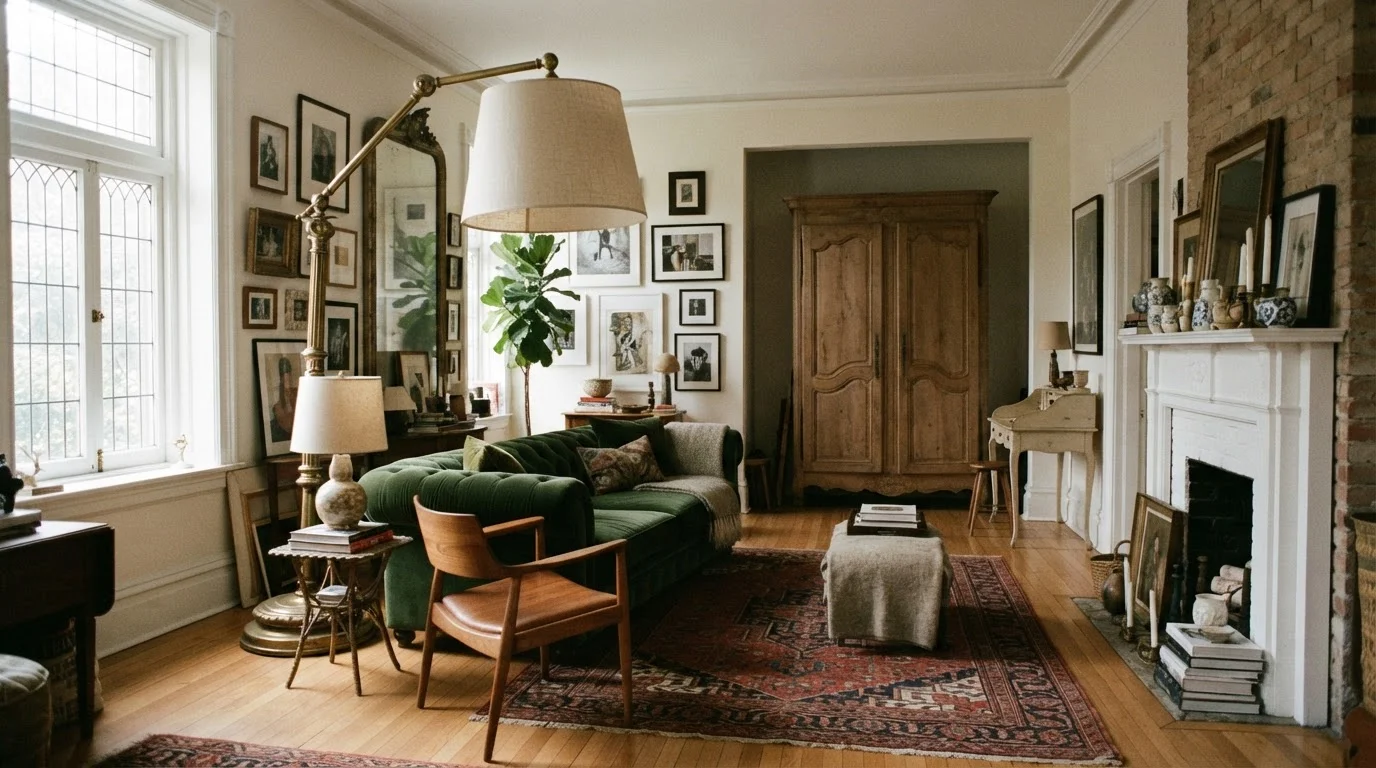
Key Takeaways
- Scale mismatches between furniture and room size are the most common invisible culprit.
- Lighting layered from a single overhead source creates flatness that no decor can fix.
- Too many focal points compete for attention, leaving a room feeling restless rather than curated.
- Rugs placed too small visually shrink a room and disconnect furniture groupings.
- Sensory elements — scent, sound, temperature — shape how a space feels beyond what the eye sees.
The Gap Between Decorated and Right
You've put in the work — chosen a palette, sourced the pieces, arranged and rearranged. The room looks decorated. And yet, something sits slightly wrong. Maybe it feels too busy, too hollow, or just vaguely uncomfortable in a way you can't put a finger on. This is one of the most common and least-discussed experiences in home design.
The disconnect usually isn't about taste or budget. It's about a handful of spatial and sensory principles that most decorating advice glosses over. Understanding them is the difference between a room that photographs well and one that genuinely feels good to live in — something our guide to rooms that feel calm and lived-in explores in depth.
Scale Is the Root of Most Room Problems
Before adjusting color, accessories, or arrangement, assess whether your furniture is proportionally matched to the room's actual dimensions. A sofa that's too small for a large room will always make the space feel unresolved, regardless of how thoughtfully everything else is styled. Getting scale right is foundational — everything else builds on it.
The Most Common Missteps — and How to Correct Them
Most rooms that feel off are suffering from one or more of a predictable set of problems. They're rarely about individual pieces being wrong. They're about relationships — between furniture and space, between light sources, between visual anchors competing for dominance. Once you learn to see these patterns, they become hard to unsee.
Choosing furniture based on looks alone, without considering its scale relative to the room.
Why it happens: We often fall in love with pieces in showrooms or online photos where context is carefully controlled. A sofa that looks perfect in a staged setting can overwhelm a smaller room or disappear in a larger one.
Placing a rug that's too small for the seating area, effectively isolating furniture on a sea of bare floor.
Why it happens: Larger rugs are expensive, and it's tempting to size down to save money or because the correct size seems surprisingly large when viewed on a product page.
Relying on a single overhead light source to do all the atmospheric work in a room.
Why it happens: Overhead lighting is the default — it came with the house, it's already wired, and it's easy. The impact of layered lighting isn't obvious until you experience it yourself.
Creating too many competing focal points so the eye has nowhere to rest.
Why it happens: Each individual piece — a gallery wall, a bold rug, a statement chair, a large plant — was chosen because it was exciting. But layered together without hierarchy, they fight for attention.
Ignoring the sensory dimensions of a room — scent, acoustics, and temperature — that shape how it actually feels to inhabit.
Why it happens: Decorating culture is almost entirely visual. We style for photographs, not for the experience of living in a space day to day.
If your space also feels mentally cluttered despite looking tidy, it may be worth reading about why a clean home can still feel overwhelming — the causes often overlap with the styling issues addressed here.
Beyond the Visual: What Your Room Is Telling Your Nervous System
Even after correcting scale, lighting, and layout, some rooms still feel unsettled. That's often because we've been decorating for the eye and ignoring every other sense. Hard floors and bare walls create echo and ambient noise. Drafty corners or poorly regulated temperature make a room feel uninviting regardless of how it looks. Stale or neutral-smelling air lacks the subtle warmth that makes a space feel genuinely inhabited.
68%
Homeowners dissatisfied after decorating
A survey by Houzz found that roughly two-thirds of homeowners felt their renovated or redecorated rooms didn't fully meet their expectations, often citing intangible 'feeling' issues rather than specific design flaws.
18 inches
Minimum rug clearance from walls
Interior designers commonly recommend leaving at least 18 inches of bare floor between the rug's edge and the wall in larger rooms — a guideline frequently ignored when rugs are selected from online catalogs without measuring first.
These are the details that transform a styled room into a space you actually want to spend time in. For a practical look at working with all your senses intentionally, see our piece on the sensory levers most people ignore. The same restlessness you feel in a room that's off can appear in other areas of daily life — if your wardrobe leaves you with a similar low-grade dissatisfaction, why your wardrobe feels full but nothing goes together addresses an analogous set of root causes.
Don't Rely Solely on Overhead Lighting
Ceiling fixtures illuminate a room functionally but rarely flatter it. Overhead-only lighting flattens texture, casts unflattering shadows, and makes even beautiful rooms feel clinical or unfinished. Layer floor lamps, table lamps, and accent sources at different heights to give a space warmth and dimension — especially in evenings when a room should feel most inviting.