

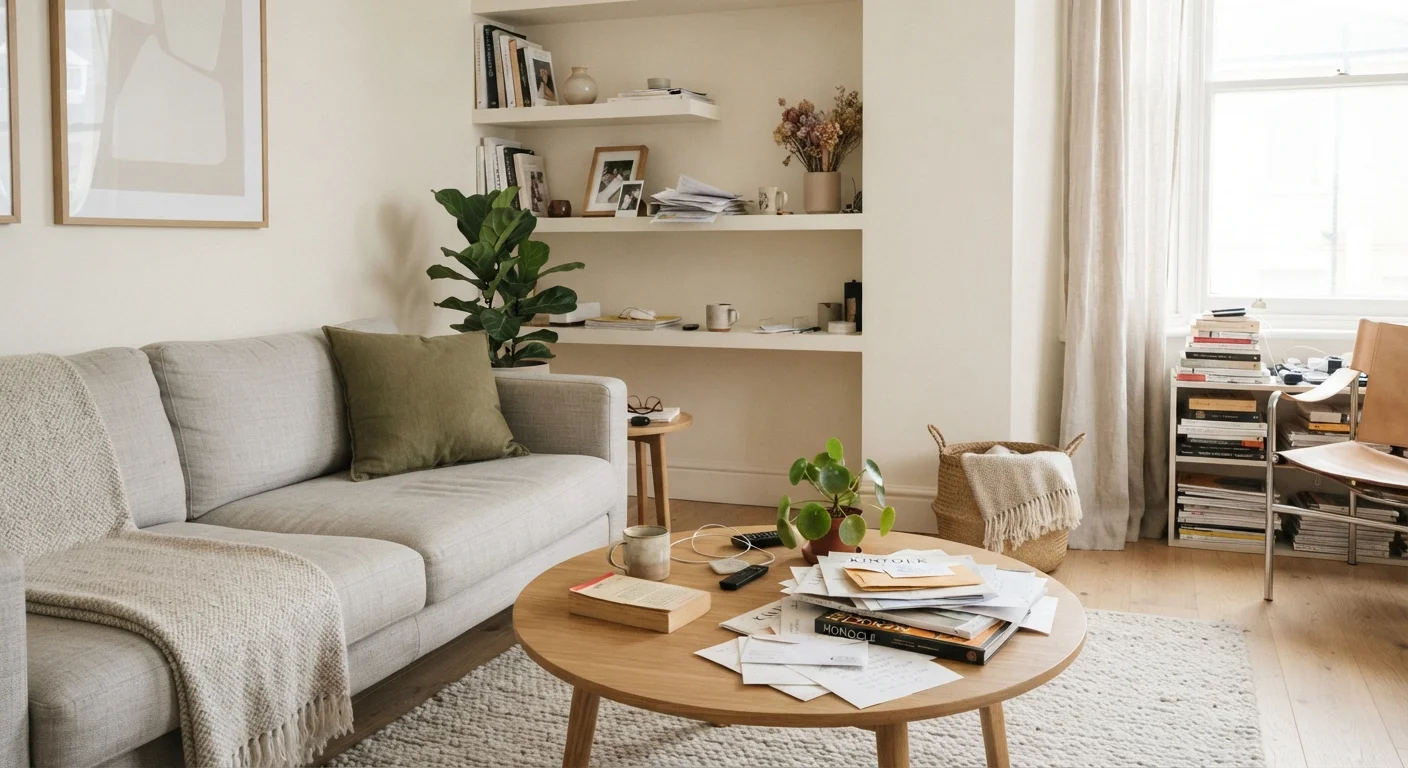
Key Takeaways
- Visual tidiness and mental calm are not the same thing — multiple non-visual factors drive household stress.
- Decision fatigue, sensory overload, and inconsistent systems are major culprits in a home that feels chaotic.
- Small, intentional habit shifts — not a complete overhaul — can meaningfully change how your home feels to live in.
The Gap Between 'Clean' and 'Calm'
You picked up, wiped down the counters, and even vacuumed. So why does the space still feel like it's pressing in on you? The honest answer is that visual tidiness addresses only one layer of how a home feels. Research in environmental psychology consistently shows that perceived clutter — the sense of disorder — is driven by cognitive load as much as actual mess. Your brain is doing ongoing work to process the space around you, and that work is exhausting whether surfaces look clear or not.
Understanding the specific mistakes that create this gap is the fastest route to changing it. These aren't failures of discipline — they're usually structural oversights that are easy to correct once you can name them. See our guide on decluttering vs. organising for why the sequence of how you address your space matters just as much as the effort you put in.
Common Mistakes That Keep Calm Out of Reach
The following errors are among the most widespread — and most overlooked. Each one can make a technically clean home feel mentally draining.
Tidying without a system — things get put away, but not in consistent, logical places.
Why it happens: Most people learned to tidy by moving objects out of sight quickly, not by assigning permanent homes to categories of things.
Keeping too many small decisions active — open loops like unread mail, undone tasks, and ambiguous items left out 'temporarily.'
Why it happens: These items feel too small to deal with formally, so they sit in limbo, creating persistent low-grade cognitive load each time you see them.
Ignoring sensory clutter — noise, scent, and lighting that create tension even when surfaces are clear.
Why it happens: Home organization advice overwhelmingly focuses on the visual, leaving other sensory channels unexamined. Poor air quality, harsh lighting, or ambient noise can all signal stress to the nervous system.
Over-decorating — filling every surface and wall out of a fear of emptiness or a desire to personalize.
Why it happens: Design culture often equates personality with abundance, making sparse spaces feel cold or unfinished to many people.
Skipping a 'reset' routine — relying solely on periodic deep cleans rather than a brief daily reset.
Why it happens: Daily maintenance feels like extra work piled onto an already full schedule, so it gets deprioritized until things tip into noticeable disorder.
~77%
Adults reporting home clutter causes stress
A survey by the American Psychological Association found that a majority of adults identify their physical environment as a significant contributor to daily stress levels.
3x
Cortisol spikes in cluttered vs. tidy homes
A study published in Personality and Social Psychology Bulletin found women living in cluttered homes showed higher cortisol profiles across the day compared to those describing their homes as restful.
Building Habits That Actually Stick
Addressing these mistakes doesn't require a weekend overhaul. The most durable changes tend to be small and specific. Identify one high-friction zone — the spot where things pile up most reliably — and redesign just that area first. Give everything in it a fixed, logical home. Reduce the number of decisions required to maintain it.
One underrated starting point: carving out a single uncluttered surface. That one anchor point can shift how the whole room registers to your brain. From there, consistent daily routines make maintenance far less effortful than periodic clean-up sprints. And if you're ready to work through your home systematically, a room-by-room checklist can help you move through each space without the shame spiral that minimalist content often triggers.
Chronic Stress and Your Home Environment
Persistent feelings of overwhelm tied to your living space are worth taking seriously. While the strategies here address common environmental factors, ongoing stress and anxiety that interfere with daily functioning are worth discussing with a qualified mental health professional. This article provides general organizational information, not clinical advice.