

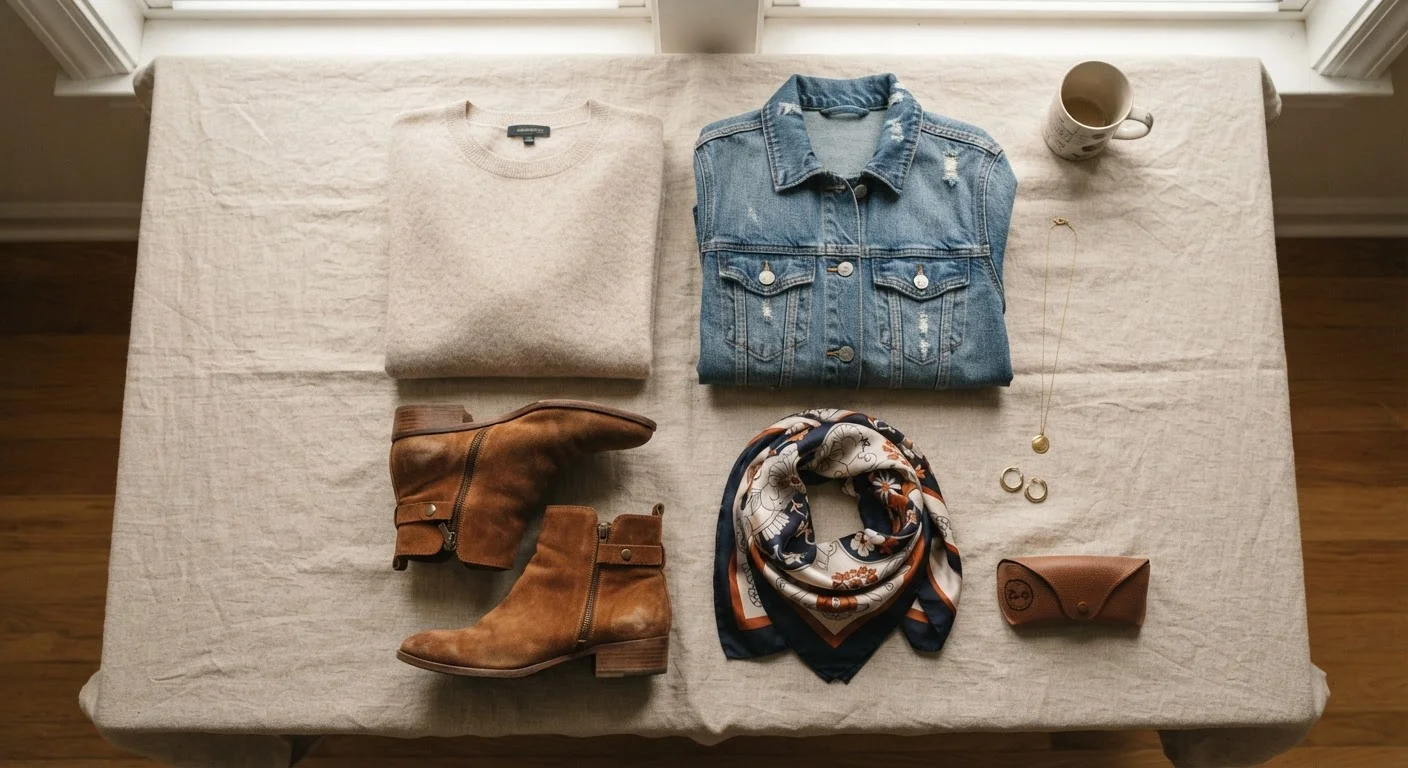
Key Takeaways
- Layering with fabric weight — not just volume — is the most reliable transitional dressing strategy.
- Three anchor pieces can generate multiple outfit combinations across shifting temperatures.
- Breathable mid-layers eliminate the need to rebuild your outfit formula each season.
- Transitional dressing works best when rooted in your actual daily schedule, not an idealized one.
- Neutral base pieces let seasonal accent items rotate in without disrupting outfit cohesion.
What you will need
Why Transitional Dressing Demands a Different Logic
Between-season dressing is genuinely the hardest styling problem most wardrobes face. A morning that starts at 55°F and climbs to 72°F by afternoon requires your outfit to work across a 17-degree shift — without you carrying a bag full of backup options. The instinct is to reach for either a full winter or full summer wardrobe, but both approaches miss the mark.
The more effective framework is to stop thinking in seasonal categories and start thinking in fabric weight and removability. That mental shift is what separates transitional outfits that actually function from those that leave you sweating through a meeting or shivering at a bus stop.
If you're newer to building outfits strategically, the fundamentals of outfit building are worth reviewing before working through the steps below. And for deeper wardrobe architecture, building a wardrobe that works across seasons covers the longer-term picture.
What you will need
The Step-by-Step Formula
These steps build on each other. Work through them in order the first time, and the logic will become second nature within a week of practice.
Anchor Your Outfit in a Temperature-Neutral Base
Start with a piece that reads comfortably at both the coolest and warmest point of your day. Lightweight cotton, bamboo jersey, or a thin merino knit in a neutral tone (oatmeal, white, navy, grey) function well here. This is your anchor — it doesn't change when temperatures shift; everything else adjusts around it.
Avoid structured, single-season fabrics like thick denim or heavy wool as your base layer. Save those for the outer positions where they can be removed.
Add a Mid-Layer That Can Work as an Outer Layer
The mid-layer is where most transitional outfits succeed or fail. It needs to do two things: keep you comfortable in cool conditions and look intentional when worn alone as the weather warms. A crisp overshirt, a lightweight structured cardigan, or an unlined blazer in a mid-weight fabric covers both functions.
Avoid anything that only works as a standalone piece — a heavy chunky knit, for example, layers poorly and offers no versatility once temperatures climb. The mid-layer is your transitional workhorse: dress it up or down based on occasion, not season.
Choose a Bottom That Bridges Fabric Weight
Match the visual weight of your bottom to the mid-point of your expected day, not the extremes. A mid-weight trouser, an A-line midi skirt in crepe, or straight-leg jeans in a lighter denim wash all sit in this zone. Avoid very heavy or very light fabrics — thick corduroy and linen both work against you when temperatures are genuinely unpredictable.
For style continuity, ensure your bottom and base layer share at least one element — color family, silhouette tone (relaxed or fitted), or finish (matte or textured). This prevents the outfit from reading as two separate halves.
Select Footwear That Doesn't Lock You Into One Season
Shoes are the fastest way to date a transitional outfit incorrectly. Sandals signal summer; heavy lug-sole boots signal deep winter. The sweet spot is a leather or suede ankle boot, a clean sneaker, or a loafer — all of which read naturally across spring-to-fall temperature ranges.
Keep footwear in a neutral that bridges both your base and bottom: tan, off-white, black, and warm brown all function as connectors rather than statements in a transitional outfit context.
Use a Scarf or Light Accessory to Regulate Without Restructuring
A lightweight scarf — in silk, modal, or thin wool — is one of the most functional transitional tools available. Worn in the morning when temperatures are lower, removed and folded into a bag by midday, it adjusts your outfit's warmth level without changing the outfit itself. This is the principle of modular dressing: small additions and removals regulate comfort without requiring a wardrobe rebuild.
This same logic applies to the broader outfit formula approach — building in small adjustable variables rather than constructing entirely new looks. See also how dressing for your actual day frames this kind of practical, schedule-aware thinking.
Build Formulas, Not Individual Outfits
Rather than planning one specific look per day, identify two or three repeatable layer combinations that work across your regular environments — office, errands, evening. Rotate within those structures instead of starting from scratch. Over time, these formulas reduce morning decision fatigue and make your wardrobe feel more functional with fewer pieces.
Troubleshooting Common Transitional Dressing Problems
Even with a solid formula in place, a few recurring friction points tend to derail transitional outfits.
The outfit looks right at home but wrong by midday
This is almost always a removability problem, not a styling one. If your outer layer isn't easy to tie at the waist or fold into a tote, you'll keep it on when you shouldn't. Prioritize layers with structure that holds shape when carried — a shirt jacket or an unlined blazer, rather than a bulky quilted coat.
Everything feels mismatched when you start mixing seasonal textures
Mixing weights works best when your base piece is neutral. A cream ribbed turtleneck pairs naturally with both a linen trouser and a heavier wool skirt — it acts as a visual bridge. The foundational pieces that make getting dressed easier are almost always the ones doing this bridging work.
You're building new outfits daily instead of rotating formulas
That's a sign your base pieces aren't versatile enough. Aim for five repeatable pieces styled across a full week rather than a different starting point each morning. Transitional dressing rewards repetition — the formula becomes faster to execute, not boring.
Don't Overbuy for Transitional Gaps
It's tempting to treat seasonal transitions as a reason to shop new pieces. In most cases, the gaps are better filled by rethinking how existing wardrobe items layer together rather than adding more. Before purchasing, wear each current piece in at least three different layer configurations — you may already own more transitional outfits than you realize.