

Key Takeaways
- Five thoughtfully chosen pieces can generate seven or more distinct, workplace-appropriate outfits.
- Outfit formulas — not trends — are the engine behind a wardrobe that works every morning.
- Changing one element (layer, silhouette, or proportion) transforms the same pieces into a new look.
- Repeat dressing is a strategic habit, not a style shortfall.
- Understanding what each piece does functionally makes mixing and matching effortless.
The Five-Piece Starting Point
The premise is straightforward: five pieces, worn across a full work week, styled into seven distinct outfits. No new purchases, no trend detours — just a clear demonstration that a small, intentional wardrobe can carry you further than a crowded closet. If you've ever stared at a rail of clothes and felt stuck, this exercise reframes the problem. The issue is rarely quantity. It's clarity about what each piece actually does.
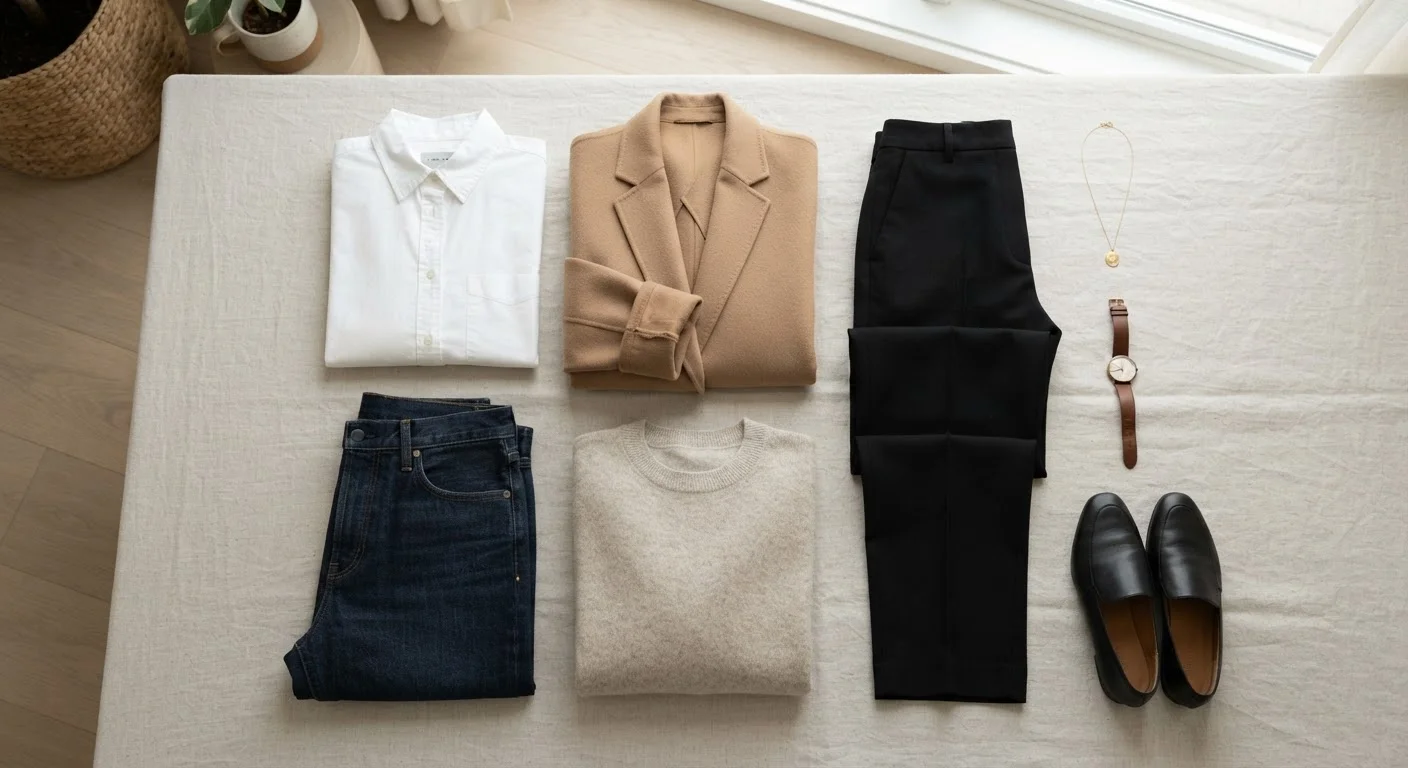
The five pieces we're working with here are archetypes — stand-ins for the foundational items most versatile wardrobes already contain: a white button-down shirt, tailored mid-rise trousers in a neutral (think charcoal or camel), a well-cut blazer, a fine-knit top in a muted tone, and a pair of dark straight-leg denim. Each one qualifies as a foundational wardrobe piece — the kind that earns its closet space by working harder than it looks.
Before diving into the daily formulas, it helps to understand the role each piece plays. Breaking down what each element does in an outfit — base layer, structure, polish — is what makes remixing feel instinctive rather than arbitrary.
Monday: Blazer + Trousers + White Shirt (Classic Power Suit)
Start the week with the most complete formula in the set: the shirt tucked into the trousers, blazer on top. This is the foundational three-piece combination — structured, polished, and immediately office-ready. The key to keeping it from reading as stiff is proportion. If your blazer is oversized, let the shirt sit loosely at the collar; if it's fitted, a clean French tuck adds ease. Shoes are the calibration tool here — a loafer softens; a heel sharpens. No accessories required for the formula to work.
The classic three-piece formula works because proportion — not newness — does all the heavy lifting.
Tuesday: Knit Top + Trousers (Elevated Minimal)
Remove the blazer and shirt, and let the knit top carry Monday's trousers into different territory. A fine-knit tucked — fully or partially — into tailored trousers creates a sleek, considered silhouette that reads professional without effort. The tonal relationship between the two pieces matters: a knit that's one shade lighter or darker than the trousers produces a quietly sophisticated column of color. Add a structured bag and the look is complete. This formula works particularly well for back-to-back meeting days when you want to feel composed without layering.
A fine-knit and tailored trousers, toned together, achieve quiet authority with minimal effort.
Wednesday: White Shirt + Dark Denim + Blazer (Smart-Casual)
Midweek is often where the dress code softens. Swap the trousers for the dark straight-leg denim, pair with the white shirt half-tucked, and layer the blazer loosely over both. This combination threads the needle between casual and polished — it reads deliberately put-together rather than dressed down. The key is keeping the denim dark and well-fitted; a frayed or faded wash shifts the register too far. Roll the shirt sleeves to the elbow for an easy, intentional finish. This is the formula that makes denim feel boardroom-adjacent rather than weekend-casual.
Dark, well-cut denim under a blazer reads smart-casual when the shirt is half-tucked and sleeves are rolled.
Thursday: Knit Top + Dark Denim (Relaxed Foundation)
Thursday's formula is the most pared-back of the week, and intentionally so. The knit top — untucked — over the dark straight-leg denim is a clean, low-effort base that communicates ease without slipping into underdressed. This is where accessories do the most work: a structured tote, a simple chain, or a scarf tied at the neck elevates the combination without changing its essential simplicity. If Thursday is a lighter-meeting day, this formula carries you from desk to after-work without needing to change. Comfort and cohesion aren't mutually exclusive.
An untucked knit over straight-leg denim is the week's easiest formula — and the most accessory-responsive.
Friday: White Shirt (Open) Over Knit Top + Trousers (Layered Casual)
End the week with a layering move that uses the shirt as an outer layer rather than a base. Wear the knit top underneath, leave the shirt unbuttoned and untucked over the trousers, and let the two fabrics do visual work together. This creates a relaxed Friday outfit that still looks thoughtful — the structured trousers anchor the looser top-half proportions, keeping the overall silhouette grounded. It also introduces a new relationship between three pieces that have already appeared earlier in the week, proving that changing the function of a single garment is enough to generate an entirely fresh look.
Using the white shirt as an outer layer rather than a base generates a new formula from familiar pieces.
Bonus Day One: Blazer + Knit Top + Dark Denim (Weekend-Ready Polish)
For a Saturday obligation that requires more intention — a brunch, a creative meeting, a casual event — this combination takes the denim out of office hours entirely. The blazer over a knit top with dark straight-leg denim is a well-proportioned, slightly elevated casual formula. Let the blazer be the statement by keeping the knit tonal and the denim clean. Sneakers ground it as weekend; a flat loafer bridges it toward something more polished. This is the combination that demonstrates how context — not new pieces — shifts an outfit's occasion.
A blazer over a knit and dark denim proves that context — not new clothes — changes an outfit's occasion.
Bonus Day Two: Shirt Dress Formula (Belted White Shirt + Trousers Dropped)
The final formula requires a single styling move: belt the white shirt at the waist, skip the trousers, and treat the shirt as a shirt-dress. This only works if the shirt is long enough — typically a size up from your usual, worn with tailored consideration. Pair with dark denim or wear alone as a dress with heeled mules or ankle boots. It's the week's most transformative combination because it changes the category of the garment entirely. One piece, used differently, produces a look that shares nothing visually with Monday's polished three-piece formula — despite containing the same shirt.
Belting an oversized shirt as a dress is the week's most transformative move — same piece, entirely new category.
What This Exercise Actually Proves
Working through this week makes one thing undeniable: the limiting factor in most wardrobes isn't the number of pieces — it's the absence of a system. When you understand outfit formulas, the same five items stop feeling repetitive and start feeling resourceful. That shift in perspective is exactly what makes repeat dressing a strength, not a concession.
The deeper lesson is about proportion and contrast. Swapping a relaxed knit for a crisp shirt changes the register of identical trousers. Leaving a blazer unbuttoned reads differently from belting it at the waist. These are small moves with meaningful visual results — and they're the foundation of an outfit formula that travels across occasions without requiring a wardrobe overhaul.
If you're building this kind of wardrobe from a blank slate, starting with the fundamentals will give you the strategic framework to make every piece work as hard as it can. And when the weather shifts mid-week — which it will — transitional layering principles keep these same five pieces functional without reaching for anything new.
Make Footwear Your Fastest Variable
Across all seven of these formulas, shoes are the fastest way to shift register without changing a single clothing item. A pointed-toe flat sharpens; a chunky loafer relaxes; a low heel elevates. If you're rotating the same five pieces, keeping two or three shoe styles in rotation dramatically expands how many distinct looks the formulas produce. Think of footwear as the volume dial — same outfit, different energy.