

Key Takeaways
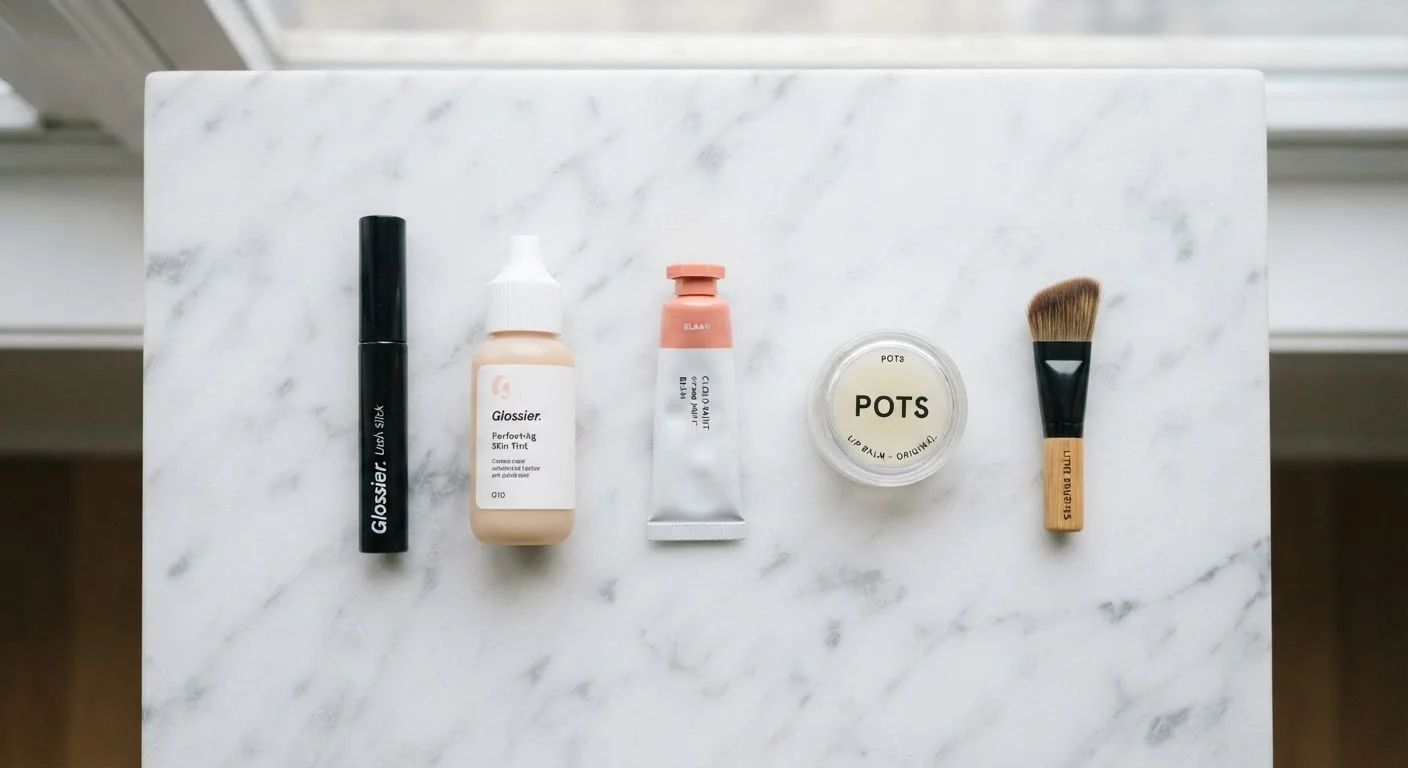
- A beginner kit needs roughly six to eight products — not an entire beauty counter.
- Skin-enhancing products (tinted moisturizer, blush, mascara) deliver the highest return for the least effort.
- Most specialty products marketed to beginners are the last things a beginner actually needs.
- Tools matter: a few quality brushes outperform a drawer full of sponge applicators.
- Skill-building with fewer products leads to more consistent, polished results over time.
Start here
Why Starting Small Actually Works
Core products
The Essentials Worth Owning
Tools
Tools That Actually Earn Their Drawer Space
Edit down
What to Skip for Now
Next steps
Building Skills Alongside Your Kit
Why Starting Small Actually Works
The makeup aisle is designed to feel like every product is essential. It isn't. For a first kit, restraint is a genuine advantage — fewer products means fewer variables when something isn't working, and a shorter routine means you'll actually use it consistently.
The goal at this stage isn't a full-face look. It's learning how products interact with your specific skin, finding formulas that suit your texture and tone, and developing the muscle memory to apply them efficiently. That process is faster with six products than with thirty.
If you're also starting to think about your broader aesthetic — what feels like you — our guide to developing your personal style can help you think about makeup as part of a coherent whole, not a separate project.
Tinted moisturizer
A lightweight skin product that combines hydration with a small amount of pigment for a sheer, skin-evening effect — less coverage than foundation, easier to apply and blend.
Buildable coverage
A product that starts sheer but can be layered to increase how much it covers, giving you control over the finish without changing products.
Undertone
The subtle warm, cool, or neutral hue beneath your skin's surface that affects which shades of makeup look natural and blended on your face.
Setting
The process of applying powder, spray, or another product over makeup to lock it in place and extend how long it wears throughout the day.
Spoolie
A small brush with a spiral, mascara-wand-style tip used to comb and blend eyebrow hair or brush through lashes after applying mascara.
The Essentials Worth Owning
These six categories form a genuinely complete first kit. Every item listed solves a real, recurring problem for most people most days.
- Tinted moisturizer or light-coverage foundation. This is the base of any everyday look. Tinted moisturizers are more forgiving to blend and faster to apply — a logical first choice. If you prefer more coverage, a buildable liquid foundation with a skin-like finish works equally well. Match your shade in natural light when possible.
- Concealer. For spot-coverage on blemishes or mild under-eye concerns. Choose a creamy, blendable formula — dry or cakey concealers are harder to work with and more visible on skin.
- Cream or powder blush. A touch of blush reintroduces warmth that base coverage can flatten. Cream blush blends easily with fingertips, making it beginner-friendly. Powder blush is more forgiving for oily skin.
- Mascara. Single-handedly opens and defines the eye with minimal skill required. A basic lengthening or volumizing formula in brown-black or black suits most people and most occasions.
- Brow product. Brows frame the face more than almost any other feature. A tinted brow gel or a fine pencil in a shade close to your natural hair color is all you need to establish definition without an overly groomed look.
- Tinted lip balm or sheer lipstick. Adds color and moisture in one step. A neutral or your-lips-but-better shade works across the widest range of situations.
For a focused look at which of these products delivers the most impact day-to-day, see the five products that build a versatile everyday look.
Tools That Actually Earn Their Drawer Space
You don't need a full brush roll. You need three to four tools that are genuinely multi-functional.
- A flat or buffing foundation brush, or a damp makeup sponge. Either works for applying base products. Sponges tend to produce a skin-like, blended finish that's harder to over-do. Brushes offer more control over placement.
- A small fluffy blending brush. Useful for blush, powder, and any product that benefits from soft edges. This is the most multi-purpose brush in any kit.
- A spoolie brush. Often included on the opposite end of brow pencils. Used to blend brow product and groom brows into place — irreplaceable for natural-looking brows.
Clean Tools Make a Real Difference
Dirty brushes transfer old product and bacteria onto skin, which can affect both application quality and skin health. A quick spot-clean with a brush cleaning spray after each use, and a deeper wash weekly, is enough to keep your tools performing properly. This habit matters more than owning expensive brushes.
A clean fingertip is also a legitimate tool. Cream blush and tinted lip products both blend beautifully with fingers, and warmth from your skin helps sheers melt in naturally.
What to Skip for Now
Marketing works hard to convince beginners they need everything at once. These categories can wait.
- Setting spray, primer, and setting powder. These extend wear and refine texture — problems you may not encounter at all with a minimal routine. Introduce them only once you've identified a specific issue they solve.
- Contour and highlight palettes. Effective contouring requires a mapped understanding of your face's natural shadows and a solid base application skill. It's a technique to learn later, not a product to buy now.
- Eyeshadow palettes. Multi-pan palettes look appealing but require blending skills that take time to develop. A single neutral matte shade and a soft shimmer — often available as singles — will serve you better at this stage.
- Full-coverage or long-wear foundation. These formulas are less forgiving to blend and harder to remove cleanly. Start with something more workable while you develop your application technique.
Not sure whether a full-face routine is right for your lifestyle at all? An honest look at the case for and against a full-face makeup routine is worth reading before you expand your kit.
Building Skills Alongside Your Kit
Products alone don't produce results — technique does. The most efficient way to improve is to use the same small set of products repeatedly until application becomes second nature, then add one new item at a time with a specific intention.
A useful framework: choose one product per week to practice with intentionally. Notice how it behaves on your skin at different times of day, in different lighting, and over different skincare bases. This kind of observation builds the intuition that no tutorial can shortcut.
Once you feel confident with your core six, a progressive skills guide can map out what to learn next and in what sequence — so your growth stays intentional rather than trend-driven.
Building your makeup knowledge alongside a solid skincare foundation also makes a meaningful difference. Well-prepped, hydrated skin simply performs better as a base. If you haven't yet built a skincare routine, a no-overwhelm starting point for skincare covers the essentials without overlap.