

Key Takeaways
- A versatile everyday look requires depth, color, definition, and finish — not a full drawer of products.
- Each of these five categories serves a distinct function; skipping one creates a visible gap in the result.
- Mastering application technique for each product matters more than the specific formula you choose.
- These five products adapt across occasions, from a ten-minute morning routine to a polished evening look.
- Understanding why each step works lets you make smarter substitutions when needed.
Why Five Products Is Enough
The makeup market is designed to suggest that more is always better — more steps, more layers, more SKUs. But a look that travels well across a full day and multiple contexts isn't built on volume. It's built on function. Every product in a genuinely versatile routine earns its place by doing something specific that nothing else in the lineup replicates.
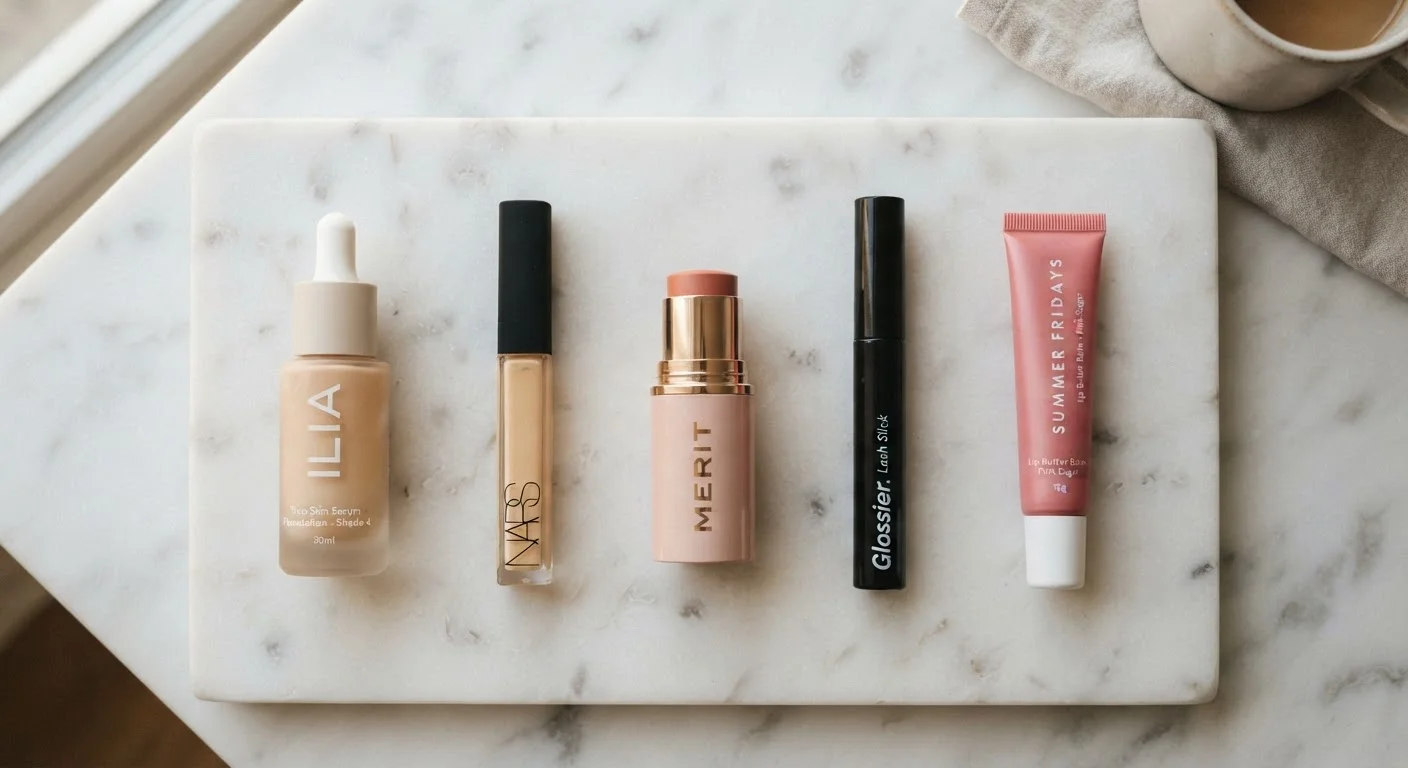
The five categories below — skin base, concealer, brow product, a neutral eye color, and a lip-and-cheek tint — collectively address the four things that make a face look intentional: evenness, definition, dimension, and finish. If you're starting from scratch, the beginner's kit guide is a useful companion for understanding what to prioritize when building up. If you already have a routine and want it to last longer, pair this with our morning checklist for long-wear results.
A Skin-Perfecting Base
A base product — whether that's a tinted moisturizer, a BB cream, or a light-coverage foundation — creates the even canvas that makes everything applied afterward look intentional rather than added on. The goal at this step isn't to create a mask; it's to reduce the visual noise of redness, discoloration, or uneven texture so the rest of the look reads clearly.
For everyday wear, the most versatile base formulas offer buildable coverage: sheer enough to look natural in daylight, layerable enough to increase coverage where needed. Apply with fingertips or a damp sponge rather than a brush if you want the most skin-like finish — both methods allow the formula to blend into, rather than sit on top of, the skin. For a detailed breakdown of how these base formats differ in practice, see tinted moisturiser vs. BB cream vs. foundation.
The goal of a base is to reduce visual noise, not erase your face.
A Versatile Concealer
Concealer does two distinct jobs in an everyday routine: targeted coverage and subtle highlighting. Under the eyes, it neutralizes shadow and brightens the mid-face. Over blemishes or redness, it brings specific areas back in line with the base. Applied lightly along the bridge of the nose or the center of the forehead, it adds a gentle dimension that reads as natural light.
The key variable here is formula consistency. A concealer that's too thick will crease; one that's too thin won't provide coverage where you need it. For most everyday looks, a medium-weight, blendable formula that dries to a natural — not matte — finish is the most practical choice. Blend the edges thoroughly: the color match matters less than the transition.
How you blend the edges matters more than finding a perfect shade match.
A Brow Product
Brows are the structural element of the face. Even minimal brow definition — filling sparse areas, extending a short tail, lightly darkening fair hairs — changes how finished a face reads, often more dramatically than any eye makeup applied below them. This is why brow products consistently rank as the one product women feel they can't skip.
A brow pencil with a fine tip gives the most control for drawing individual hair strokes in sparse areas. A tinted brow gel works faster and is ideal for fuller brows that mainly need grooming and a touch of color. The underlying principle is the same: you want to mimic the appearance of individual hairs, not draw a solid line above the eye. Brush the product through with a spoolie at the end to soften any edges that read as drawn-on.
Brows change how finished a face reads more than almost any other single step.
A Neutral Eye Color
A single neutral eyeshadow — something in the warm taupe, soft brown, or muted rose family — serves more functions than any other eye product. Pressed lightly over the lid, it adds subtle depth. Concentrated along the lash line with a flat brush, it creates soft definition that reads like liner without the precision demand. Swept into the crease with a fluffy brush, it adds dimension that makes eyes appear more awake.
The reason to choose a neutral rather than a statement shade is adaptability. A warm taupe works across skin tones and under multiple lighting conditions; a bright or cool-toned shade requires more precision and limits where the look can go. If you want to expand from here into blended, multishade eye looks, the eyeshadow blending technique guide covers the core method in detail.
One well-chosen neutral eyeshadow can replace liner, definition, and dimension in a single step.
A Lip-and-Cheek Tint
A cream or gel tint that works on both the lips and cheeks is the most efficient product in this lineup. Applied to the apples of the cheeks and blended upward, it gives the flush of color that distinguishes a finished look from one that reads as washed-out. Pressed onto the center of the lips, it creates a natural stain that layers easily with a balm for gloss or wears alone for a just-bitten effect.
The reason to use a single product for both is not just convenience — it's color harmony. When the cheek color and lip color are drawn from the same formula, the face looks balanced without effort. Look for formulas that blend easily into skin before setting; anything that grabs quickly or dries before you've finished blending will be difficult to work with at both application sites.
Using one tint for lips and cheeks creates instant color harmony with zero effort.
Building Fluency, Not Just a Routine
The real value of limiting yourself to five products isn't minimalism for its own sake — it's repetition. When you use the same five products every day, you become genuinely skilled with each one. You learn exactly how much concealer blends out seamlessly, how lightly to load a brush for the eye color, how far to stretch the lip tint to read as blush. That fluency is what makes a look look effortless rather than labored.
Practice Each Product in Isolation
Before combining all five products, spend a week focusing on one at a time. Apply just your base on Monday, just your concealer on Tuesday, and so on. This isolates the learning and helps you understand exactly what each product contributes — and what it takes to apply it well. You'll troubleshoot faster and make better decisions when something isn't working.
If you find yourself wanting more from any one of these steps — more coverage on the base, more drama on the eye — that's useful information. It tells you which category is worth expanding. For a structured approach to building from here, see the skill-level progression guide, which maps out what to learn in what order without overwhelming you. The same logic applies to your wardrobe: the everyday outfit checklist uses the same principle of deliberate, functional curation.
This article is for general informational purposes only. Individual skin types, sensitivities, and concerns vary. If you have specific skin conditions or reactions to cosmetic products, consult a qualified dermatologist or healthcare professional before making changes to your routine.