

Key Takeaways
- Personal style is built on self-awareness, not trend fluency.
- Your existing wardrobe already contains clues about your aesthetic preferences.
- Curating inspiration is useful only when filtered through your real daily life.
- Style development is a gradual, iterative process — not a single revelation.
- A small set of consistent outfit formulas creates more confidence than a large, disjointed wardrobe.
Start here
Why Personal Style Isn't About Trends
Next
Start With What You Already Know
Then
Gathering Inspiration Without Getting Lost
Apply it
Translating Inspiration Into Your Actual Life
Move forward
Your First Steps Forward
Why Personal Style Isn't About Trends
Personal style and fashion trends are two different things — and conflating them is the most common source of wardrobe frustration. Trends are externally generated, commercially driven cycles. Personal style is an internally developed visual language that communicates who you are before you say a word.
This distinction matters practically. A wardrobe built around trends requires constant rebuilding. A wardrobe built around your personal style only needs occasional, deliberate updating. The latter is both more economical and more confidence-producing — because the clothes consistently feel like you.
If you've never consciously thought about your style before, that's not a deficit. It simply means your aesthetic preferences have been operating beneath the surface, undirected. This guide is designed to help you surface and shape them.
Personal style
A consistent visual identity expressed through clothing choices, rooted in your own preferences and life context rather than external trend cycles.
Outfit formula
A repeatable structural template for an outfit — such as a specific combination of silhouettes or garment types — that reliably works for you and can be executed in different colors or fabrics.
Aesthetic fingerprints
The recurring visual themes — colors, proportions, textures, moods — that consistently appear in what you're drawn to, revealing your underlying style preferences.
Wardrobe curation
The intentional process of selecting and organizing clothing so that everything you own serves your actual life and personal style rather than accumulating by chance.
Style blueprint
A loose framework of your identified preferences — palette, silhouette, mood — that guides future wardrobe decisions without rigidly prescribing specific items.
Start With What You Already Know
The most reliable starting point isn't a shopping trip or a mood board — it's your existing wardrobe. What you already own, and what you consistently choose to wear, is behavioral data about your real preferences.
Do a simple observation exercise: pull out every item you've worn in the last month. Notice what they share. Are they predominantly one color family? Do they lean structured or relaxed? Are fabrics mostly matte or textured? These recurring elements are the beginning of your style blueprint.
Equally informative is what you never reach for. Items that sit untouched, regardless of how much you liked them in the store, signal a mismatch between aspirational style and lived style. Both categories are useful data. For a more structured version of this process, a wardrobe audit can help you decode what's already working in your closet.
Gathering Inspiration Without Getting Lost
Visual inspiration is a valuable tool — but only if you approach it analytically rather than aspirationally. The goal is to identify patterns in what attracts you, not to compile an overwhelming catalog of looks you'll never realistically wear.
When saving or noting images that appeal to you, ask: what specifically draws me to this? Often it's not the full look but one element — a color, a proportion, a level of ease. Isolating that element is more useful than saving the image wholesale.
After collecting 20–30 references, look for the common threads: recurring palettes, consistent silhouettes, a shared mood or atmosphere. Those threads are your aesthetic fingerprints. If you find your references span wildly different aesthetics, our article on finding your aesthetic when you like everything offers practical strategies for distilling coherence from range.
Limit Your Inspiration Sources
More references rarely produce more clarity. Try capping your inspiration gathering to one or two sources at a time — a single saved folder, a curated collection of images — rather than scrolling broadly. Constraint forces you to identify what genuinely resonates versus what merely caught your attention in the moment.
Translating Inspiration Into Your Actual Life
The gap between inspiration and reality is where most style-building efforts stall. Inspiration boards tend to reflect idealized lives — editorial lighting, specific body proportions, occasions that rarely come up. Real style has to function within your actual daily schedule, physical context, and comfort range.
A useful filter: before being drawn to any look, ask whether it fits your daily life as it actually is — not as you imagine it might be. A style that works beautifully for someone with a creative office job may be actively impractical for someone who commutes, moves quickly, or works in a more formal environment. Dressing for your real life, not your inspiration board, is what makes style sustainable.
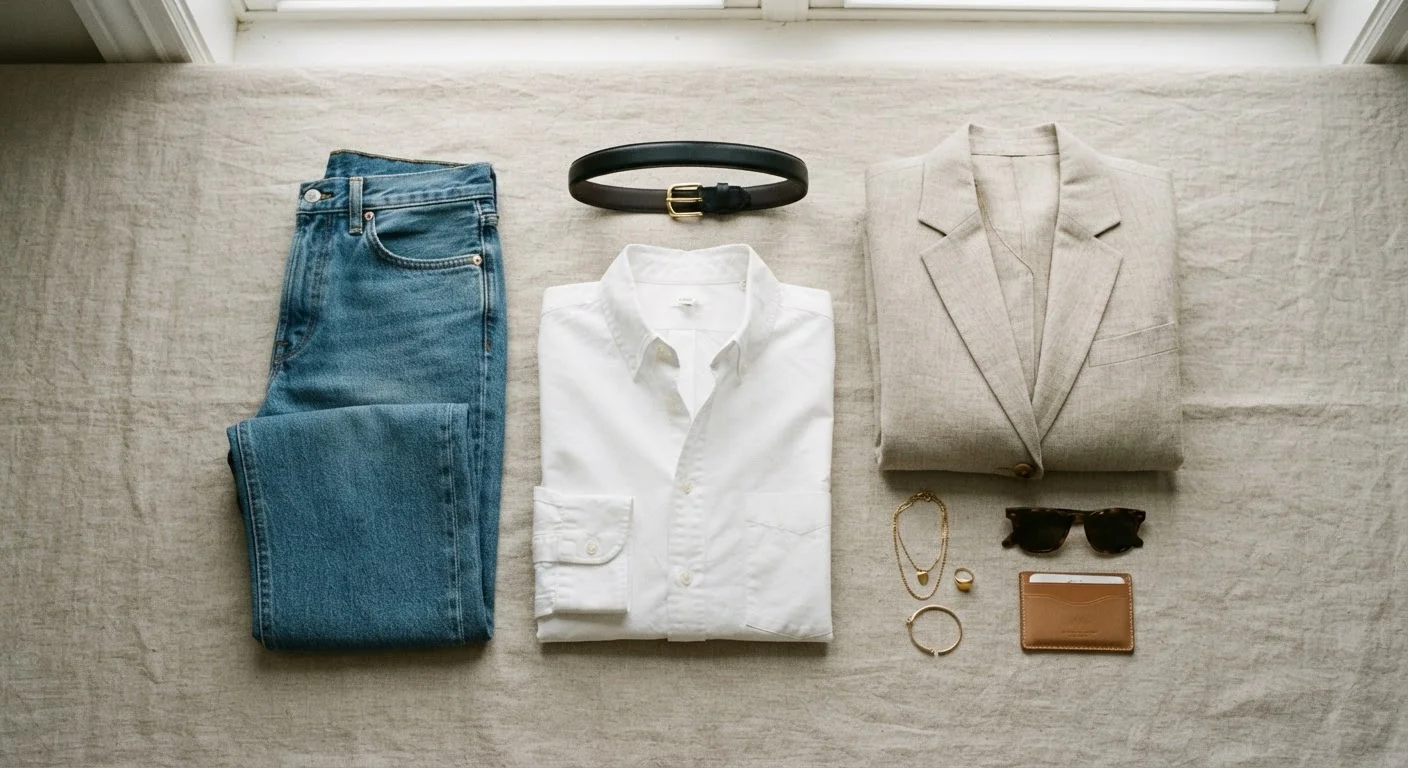
From your inspiration analysis, try to extract two or three outfit formulas — repeatable structural combinations that suit your life. A formula might be: relaxed trouser + fitted knit + loafer. The formula stays consistent; the specific items within it can vary by color, fabric, or season. Once you know your formulas, getting dressed becomes faster and more assured.
Your First Steps Forward
Developing a personal style is not a project you complete — it's a practice you begin. The most important move is the first deliberate one: wearing something because you consciously chose it, not because it was the easiest option or the most trend-aligned.
A practical starting sequence: complete a wardrobe observation, gather and analyze inspiration, identify two to three outfit formulas, and then — before buying anything new — consult how to identify your personal style base to make sure any additions genuinely serve the aesthetic you're building.
When you're ready to think beyond individual outfits toward how your wardrobe can evolve intentionally over time, building a personal style that evolves with you offers a longer-horizon perspective. Style is a long game — and that's what makes it worth playing deliberately.
Wardrobe Observation Worksheet
A structured template for recording what you already own and identifying recurring patterns in color, silhouette, and fabric — the first step in any personal style audit.
Everyday Outfits Hub
A curated collection of practical outfit ideas for real daily life, useful for testing style formulas across different occasions and contexts.
Wardrobe Essentials Hub
Guidance on building a versatile, timeless wardrobe foundation — the structural layer that makes any personal style easier to execute consistently.