

Key Takeaways
- A three-step routine — cleanse, moisturize, protect — is enough to start seeing results.
- Skin type shapes which formulas work best, but the same core steps apply to everyone.
- Consistency over two to four weeks matters more than using the most advanced products.
- Actives like retinoids and exfoliating acids are additions, not starting points.
- New routines sometimes cause short-term skin changes — most are normal adjustment responses.
Start here
Why Simplicity Is the Right Starting Point
Next
The Core Three Steps Every Routine Needs
Then
Understanding Your Skin Type
Build on it
Building Consistency Before Adding Complexity
When you're ready
When You're Ready to Go Further
Why Simplicity Is the Right Starting Point
The skincare aisle — physical or digital — is designed to feel like a problem that needs solving. Serums, toners, essences, mists, masks: each promises something specific, and together they suggest that a longer routine is a better one. It isn't.
For anyone building a routine from scratch, simplicity isn't a compromise — it's the correct strategy. A short, consistent routine trains you to observe how your skin actually responds to products. Without that baseline, there's no way to know whether a new addition is helping or causing trouble.
Think of it the way you'd approach any new daily habit: start with the minimum viable version and build only once the foundation is solid. That principle applies directly here.
Skin barrier
The outermost layer of the skin, made up of lipids and cells, that retains moisture and blocks out irritants, bacteria, and environmental damage.
Non-comedogenic
A label indicating a product is formulated to avoid clogging pores — useful for breakout-prone skin, though the term is not regulated and varies by product.
Broad-spectrum SPF
A sunscreen rating that indicates protection against both UVA rays (linked to aging and skin damage) and UVB rays (linked to sunburn).
Actives
Ingredients in skincare formulated to produce a specific change in the skin, such as exfoliating acids, retinoids, or vitamin C — distinct from the base or carrier ingredients in a product.
Sebum
The natural oil produced by skin's sebaceous glands. It protects and lubricates the skin but can contribute to clogged pores when produced in excess.
pH (in skincare)
A measure of acidity or alkalinity. Healthy skin sits at a mildly acidic pH, and cleansers that match this range are less likely to disrupt the skin barrier.
The Core Three Steps Every Routine Needs
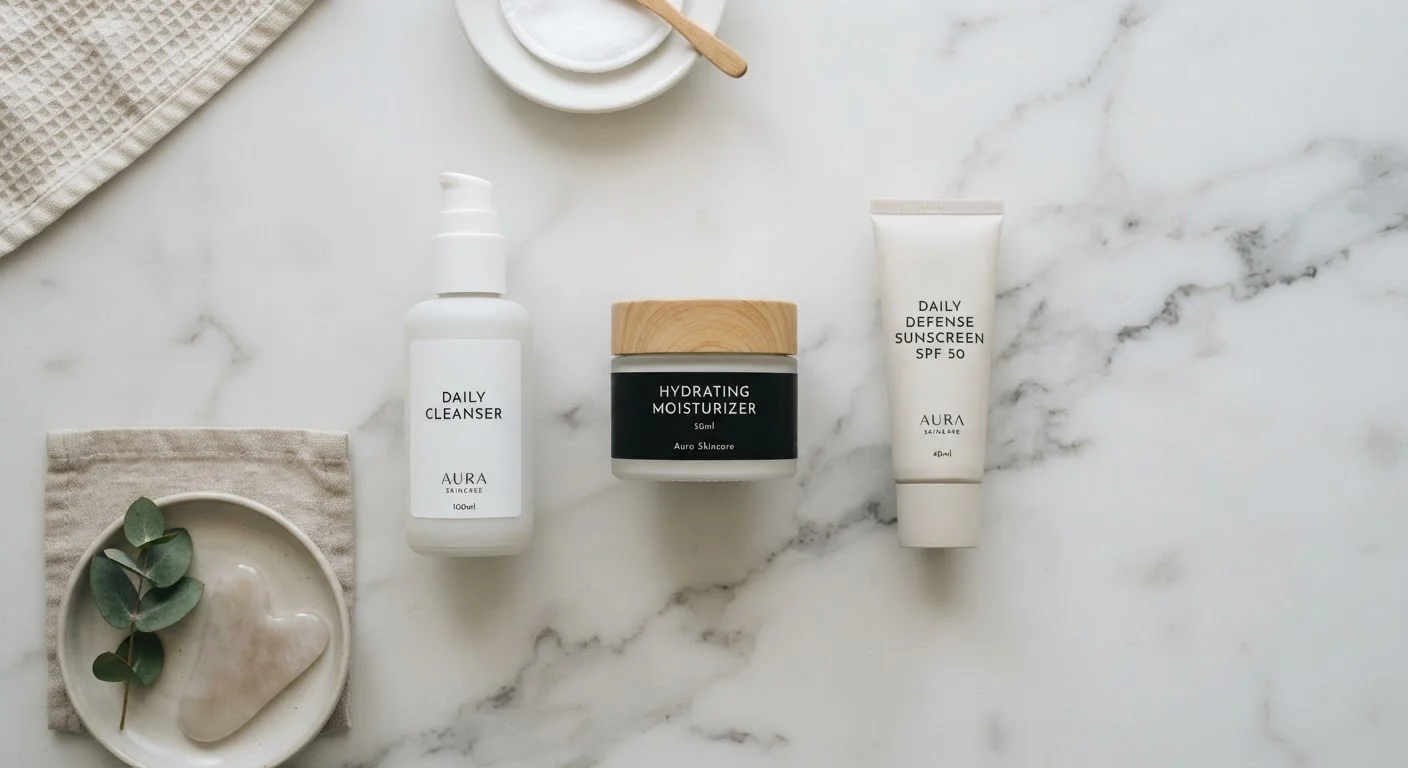
Every effective skincare routine — beginner or advanced — is built on three functions: cleansing, moisturizing, and protecting. Everything else is an optional layer on top.
Step 1: Cleansing
A cleanser removes accumulated sebum, environmental pollutants, and product residue that would otherwise sit on the skin and clog pores. The goal is clean, not stripped. A gentle, low-pH cleanser is appropriate for most skin types twice daily; if your skin feels tight or dry after washing, the formula is likely too harsh.
Step 2: Moisturizing
Moisturizer does two things: it delivers hydration to skin cells and — critically — it reinforces the skin's barrier function. The barrier is a protective layer of lipids that keeps moisture in and irritants out. A compromised barrier leads to sensitivity, redness, and breakouts, so maintaining it is foundational regardless of skin type. This includes oily skin, which still needs moisture; stripping oil away without replacing it often triggers more oil production as compensation.
Step 3: Sun Protection
Broad-spectrum sunscreen applied every morning is the single most evidence-supported step in preventive skincare. UV exposure is the primary driver of premature aging, uneven pigmentation, and skin damage. An SPF of 30 or higher is the widely cited threshold for meaningful protection. This step applies year-round, not just in summer.
Apply Products Lightest to Heaviest
Product order affects how well each one absorbs. After cleansing, apply the thinnest-consistency product first (such as a toner or serum if you use one) and finish with your moisturizer. Sunscreen goes on last in the morning, as the final step before any makeup. This sequence prevents heavier formulas from blocking lighter ones from reaching the skin.
Understanding Your Skin Type
Skin type isn't a fixed identity — it shifts with age, season, hormones, and environment — but understanding your current baseline helps you choose the right formulas within each step.
- Dry skin tends to feel tight, may appear flaky, and benefits from richer, cream-based moisturizers and non-foaming cleansers.
- Oily skin produces excess sebum and is more prone to enlarged pores and breakouts; lightweight, gel-based formulas and non-comedogenic products tend to suit it.
- Combination skin shows oiliness in the T-zone (forehead, nose, chin) with normal to dry cheeks; a balanced, gentle approach across the full face usually works without needing separate products for each zone.
- Sensitive skin reacts easily to ingredients or environmental changes; fragrance-free, minimal-ingredient formulas are generally the safer choice.
A simple way to assess your skin type: wash your face with a gentle cleanser, pat it dry, and wait 30 minutes without applying anything. What you observe — tightness, shine, or neither — gives you a useful starting read.
Building Consistency Before Adding Complexity
The most common mistake when starting a skincare routine isn't choosing the wrong products — it's adding too many at once. When three new products are introduced simultaneously and skin reacts, there's no way to identify the cause. A single new product introduced every two to four weeks allows your skin time to adjust and gives you clear information.
It's also worth knowing that skin sometimes looks worse before it settles into a new routine. Understanding why your skin sometimes reacts this way can prevent you from abandoning a routine that's actually working.
Equally important: be consistent with the basics before chasing results from advanced products. Skipping moisturizer, washing irregularly, or neglecting SPF will undermine any serum or treatment layered on top. Dermatologists consistently point to adherence — simply doing the routine every day — as a stronger predictor of skin health than the sophistication of the products used.
Once your baseline routine feels established, also consider common habits that may be quietly working against your skin — many of them are subtle and easy to miss when you're early in the process.
When You're Ready to Go Further
Once you have four to six stable weeks on a core routine, you're in a position to evaluate additions thoughtfully. Actives — ingredients like retinoids, AHAs, BHAs, and vitamin C — are the most common next layer, and each works on a specific skin concern. Before adding any of them, it helps to understand what they actually do. Our plain-language guide to skincare actives walks through each category without the marketing overlay.
When you do start evaluating new additions, a structured checklist helps more than intuition. See questions to ask before adding a new product for a practical framework that prevents routine disruption.
Skincare is also just one part of a broader self-care picture. If you're building complementary habits, exploring makeup basics alongside a settled skincare routine makes practical sense — healthy skin is the best base for any makeup look.
This article is for informational purposes only and does not constitute medical or dermatological advice. If you have a skin condition or concern, consult a qualified healthcare or dermatology professional.