

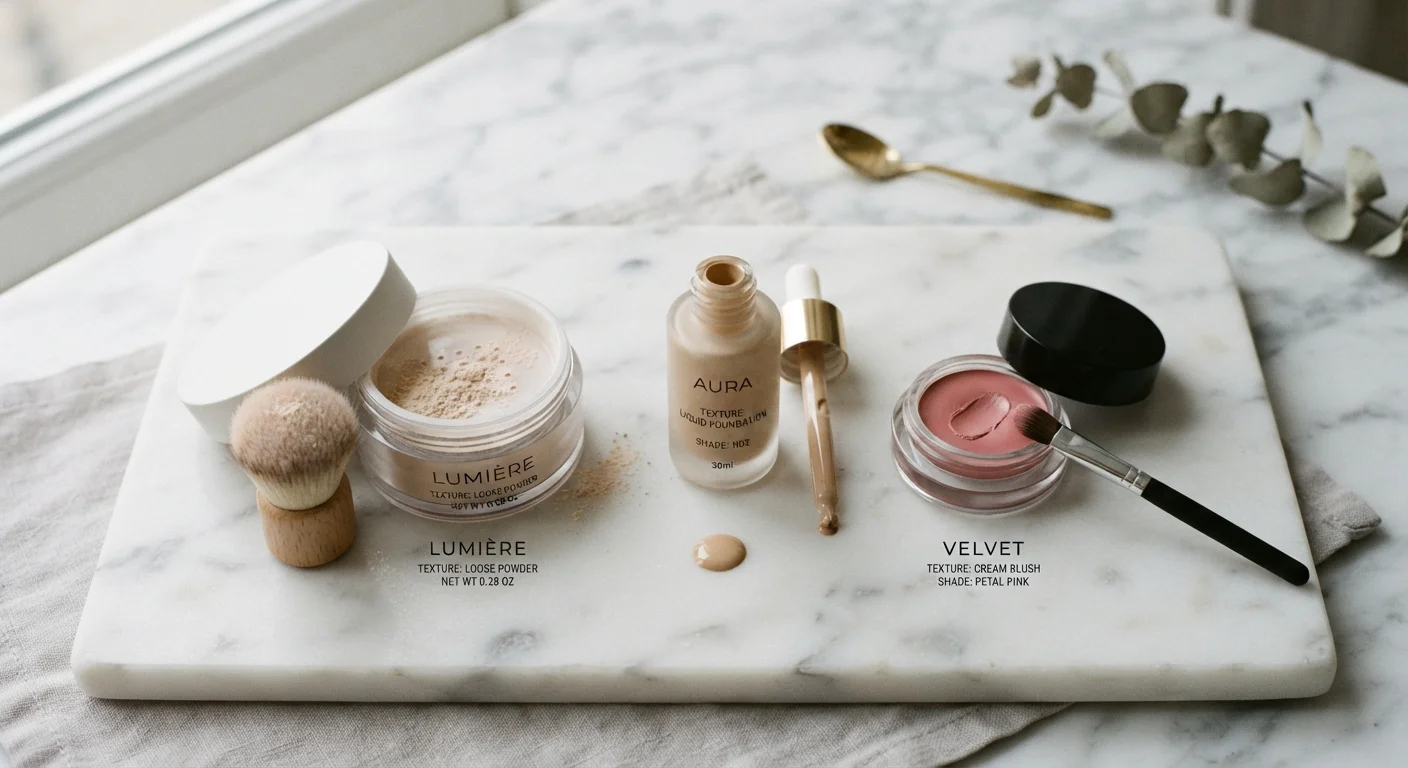
Key Takeaways
- Formula texture affects how makeup performs, wears, and interacts with your skin's oil and moisture levels.
- Oily skin generally benefits from powder-first or oil-free liquid formulas; dry skin responds better to cream and hydrating liquids.
- Combination skin often requires a hybrid approach, using different formula types in different zones.
- Layering order matters: cream formulas should precede powder, not follow them, to avoid pilling.
- Skin type can shift seasonally, so your formula choices should too.
Our Verdict
No single formula type works universally — the right choice depends on how your skin manages oil and moisture. Powders control and set; liquids balance and build; creams nourish and blend. Understanding what each formula does at a functional level lets you stop guessing and start making deliberate choices that hold up through the day.
| Best for | Recommended |
|---|---|
| Oily or acne-prone skin | Powder formulas (with oil-free liquid base) |
| Dry or mature skin | Cream and hydrating liquid formulas |
| Combination skin | Liquid base with targeted powder and cream placement |
| Sensitive or reactive skin | Minimal-ingredient cream formulas with gentle liquids |
Why Formula Type Is a Foundational Decision
When a foundation breaks down by midday or a blush disappears within hours, the instinct is to blame the product. More often, the issue is a formula mismatch — the texture interacting poorly with the skin's own chemistry. Understanding what powders, liquids, and creams are designed to do gives you a reliable framework that outlasts any trend cycle.
Formula type determines how a product sits on skin, how it interacts with sebum (the skin's natural oil) and humidity, and how it layers with other products. For a deeper look at how layering order affects performance, see our guide to layering skincare without cancelling out your products — the same principles apply to makeup layering.
| Powder | Liquid | Cream | |
|---|---|---|---|
| Best skin type | Oily, combination | All skin types (varies by base) | Dry, normal, mature |
| Finish | Matte to natural | Matte to dewy (formula-dependent) | Natural to luminous |
| Wear on oily skin | Excellent — absorbs sebum | Good with oil-free formulas | Poor to moderate — may migrate |
| Wear on dry skin | Poor — emphasises texture | Good with hydrating formulas | Excellent — blends smoothly |
| Layering order | Applied last, over liquid/cream | Middle layer, over skincare | Before powder, after skincare |
| Blendability | Low — sets quickly | High — workable window | Very high — stays blendable |
| Coverage range | Sheer to medium | Sheer to full | Light to medium |
Powder Formulas: Best for Oil Control and Setting
Powders — loose, pressed, or baked — work by absorbing excess sebum and creating a matte, light-diffusing finish. They sit on top of the skin rather than penetrating it, which makes them ideal for controlling shine without disrupting the layers beneath.
Oily skin benefits most from powders used as setting agents over a lightweight liquid or gel base. Applying pressed powder directly to bare skin can look cakey because there's no emollient layer to help it adhere smoothly.
Dry skin often finds powder formulas accentuating texture and fine lines, particularly around the eyes and mouth. If you have dry skin and need to set makeup, a light, translucent setting powder applied only to specific areas (the nose, center forehead) is preferable to an all-over application.
Combination skin can use powder strategically — concentrated in the T-zone while leaving drier cheek areas untouched or finished with a cream blush instead.
Seasonal Formula Swaps Are Worth the Effort
Skin behavior shifts with temperature and humidity. If your powder routine works well in summer but leaves skin looking flat and dry in winter, that's the formula responding to a change in the skin's moisture levels — not product failure. Consider keeping a small rotation of both liquid and powder options and adjusting based on how your skin feels each season rather than locking into one formula year-round.
Liquid Formulas: The Most Versatile Texture
Liquid foundations, concealers, and highlighters span the widest range of finishes and skin-type compatibility. The formula's base — whether water-based, silicone-based, or oil-infused — determines how it interacts with your skin.
- Water-based liquids are generally compatible with all skin types and sit well under powder.
- Silicone-based liquids (identifiable by ingredients ending in -cone or -methicone) create a smooth, blurring effect and wear well on normal-to-oily skin, but can feel heavy on dry skin over time.
- Oil-infused liquids add dewiness and are well-suited to dry or mature skin, but tend to accelerate shine on oily skin.
For a practical comparison of how liquid-adjacent products like tinted moisturisers and BB creams differ in coverage and formula weight, see our breakdown of tinted moisturiser vs. BB cream vs. foundation. And if you're navigating what coverage level you actually need, understanding what coverage really means is a useful companion read.
Cream Formulas: Rich Payoff, Skin-Dependent Results
Cream blushes, bronzers, eyeshadows, and foundations offer pigment-rich, blendable color that moves with skin rather than sitting on top of it. They're emollient by nature — meaning they contain oils or butters that soften and adhere to skin through a moisturizing mechanism.
Dry and normal skin types respond well to cream formulas across most face applications. The emollient base mimics the skin's own lipid layer and blends seamlessly without dragging.
Oily skin often finds cream products migrate, especially in warm conditions or over long wear periods. If you prefer the finish of cream products, applying them over a matte or semi-matte liquid base — and then setting lightly with powder — can extend their longevity significantly.
Sensitive skin may tolerate cream formulas better than liquids if they contain fewer preservatives and fragrance compounds, though this depends on the specific formulation, not the texture category itself. Reviewing ingredient interactions before layering multiple cream products helps avoid unexpected reactions.
A note on layering order: cream products should always be applied before powder. Reversing this — applying cream over powder — causes pilling and breaks down the powder layer.
Matching Formulas to Your Skin Type: A Practical Summary
Skin type isn't static. Hormonal cycles, climate, hydration levels, and age all shift how the skin behaves. The framework below reflects general tendencies — not fixed rules — and is most useful as a starting point for testing rather than a definitive prescription.
Building a routine around your specific skin type covers the skincare side of this picture, which directly influences how makeup formulas behave on top of it. A well-hydrated dry skin, for instance, will hold cream products very differently than dehydrated dry skin will.
The overarching principle: formula selection is functional, not aesthetic. Choose based on how you need the product to perform — control oil, add hydration, provide lasting color — and the finish will follow.
This article is for general informational and educational purposes only. Individual skin concerns, conditions, or reactions should be discussed with a qualified dermatologist or skincare professional.