

Key Takeaways
- Apply skincare from thinnest to thickest consistency to prevent heavier products from blocking absorption.
- Certain ingredient combinations—like retinol with strong acids—can cause irritation and should not be used together.
- Waiting 30–60 seconds between layers helps each product absorb properly before the next is applied.
- A shorter, well-ordered routine generally outperforms a longer, haphazard one.
- Always introduce new actives one at a time so you can identify what your skin is responding to.
The Foundational Rule: Thinnest to Thickest
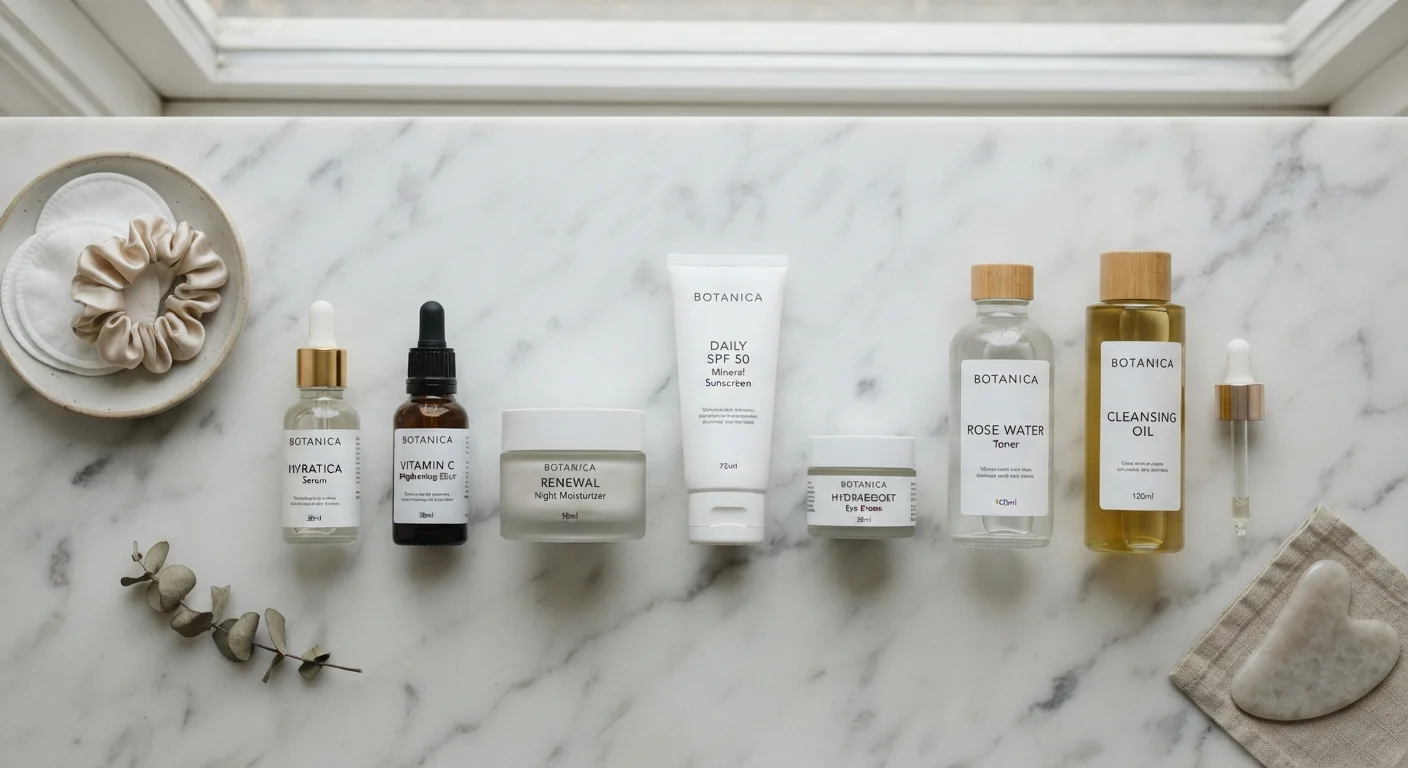
Layering skincare isn't guesswork — it follows a clear physical logic. Products with a thinner consistency (lower viscosity) should always go on before thicker ones. Water-based toners and essences come first; lightweight serums follow; then moisturizers and, in the morning, SPF as the final seal. If you reverse this order — say, applying a rich cream before a vitamin C serum — the heavier film acts as a partial barrier, reducing how effectively the active ingredients penetrate.
This sequence also maps onto ingredient function. Cleansers clear the surface. Toners restore pH balance and lightly prep the skin. Actives (niacinamide, retinol, AHAs, antioxidants) deliver targeted treatment. Moisturizers lock in hydration and support the skin barrier. Sunscreen (AM) blocks UV damage that would undo everything underneath.
For a deeper look at why each step in this sequence exists, see the logic behind a skincare routine.
The '30-Second Rule' Is Real
Giving each layer a short window to absorb before the next is applied is one of the most practical changes you can make without spending anything. It doesn't need to be precise — just enough time that your skin no longer feels wet from the previous product before you apply the next one.
Ingredient Interactions That Deserve Attention
Not every active ingredient plays well with others. Understanding a few key interactions prevents you from accidentally creating a formula that irritates your skin barrier or simply cancels out one product's benefit.
Retinol and exfoliating acids (AHAs/BHAs): Both are effective at increasing cell turnover, but combining them in the same application can overwhelm the skin. Use exfoliating acids on alternate evenings, or apply acids in the AM and retinol in the PM.
Vitamin C and niacinamide: Much-shared concern about this pairing has largely been overstated in modern research. Both are generally well tolerated together at the concentrations found in typical consumer products. However, if your skin is reactive, patch-testing before combining is a sensible precaution.
Retinol and benzoyl peroxide: Benzoyl peroxide can oxidize retinol, degrading its effectiveness. Keep these separate — different steps or different routines.
Physical and chemical sunscreens: These don't interfere with each other chemically, but layering them adds unnecessary thickness. Choose one formulation that suits your skin type.
For a more comprehensive reference on pairings, see ingredient interactions to know before building your routine.
~70%
Skin barrier disruption linked to over-layering actives
Dermatology literature consistently identifies excessive use of multiple exfoliating or active ingredients as a leading contributor to compromised skin barrier function.
30–60 sec
Recommended wait time between skincare layers
Cosmetic chemists broadly recommend a brief absorption window between each product layer to reduce product interference and improve efficacy.
Best Practices for Building and Maintaining Your Layers
Knowing the principles is one thing; applying them consistently is another. The practices below are built around what works over time, not what sounds impressive on a label.
Wait 30–60 seconds between product layers before applying the next
Rushing through your routine means products mix on the surface rather than absorbing into the skin. A brief pause allows each formula to settle and begin working before you introduce a new layer.
Introduce new actives one at a time, not simultaneously
When you add multiple new products at once, it's impossible to attribute a reaction — positive or negative — to any single ingredient. A methodical approach protects your skin and your ability to make informed adjustments.
Keep morning and evening routine actives purposefully separate
Some ingredients are photosensitive (retinol degrades in sunlight) while others—like vitamin C—work synergistically with morning SPF. Assigning actives to the appropriate routine maximizes their efficacy and reduces irritation risk.
Patch-test any new active before applying it to your full face
Even well-tolerated ingredients can cause reactions in individual skin types. A 24–48 hour patch test on a small area (inner arm or behind the ear) gives you early warning without risking widespread irritation.
Match the number of layers to what your skin actually needs
A five-serum stack isn't inherently more effective than two well-chosen ones. Overloading the skin can disrupt its barrier and make it harder to identify what's working. Restraint is a legitimate skincare strategy.
If your skin type influences which ingredients you prioritize, building a routine around your skin type covers how different skin profiles call for different layering strategies. And before you add a new product to your rotation, questions to ask before buying a new skincare product provides a practical checklist to evaluate fit.
This article is for general informational purposes only and does not constitute medical or dermatological advice. If you experience persistent irritation, breakouts, or skin concerns, consult a qualified dermatologist or healthcare professional.