

Key Takeaways
- Slow living is about intention, not inactivity — you can be busy and still practice it.
- The philosophy originated from the Slow Food movement and has since expanded into a broad lifestyle approach.
- Slow living is accessible regardless of income, location, or schedule.
- It contrasts with hustle culture by prioritizing quality of experience over quantity of output.
- Small, deliberate daily habits — not grand overhauls — are how most people begin living slower.
Slow Living
Slow living is a philosophy centered on doing things with intention rather than speed. It's about consciously choosing how you spend your time, attention, and energy — resisting the cultural pressure to optimize every moment. It doesn't require a rural retreat or a radical lifestyle overhaul; it's a shift in relationship with time, not a reduction in activity.
The slow living movement grew from the Slow Food movement founded in Italy in the 1980s, which later expanded into broader concepts of slow cities (Cittaslow) and, eventually, a philosophy applied to daily life, work, and travel.
Where the Idea Comes From
In 1989, journalist and activist Carlo Petrini staged a protest outside a new fast-food restaurant opening near Rome's Spanish Steps. His argument: that speed and standardization were eroding the pleasure, culture, and ecology of food. What began as that single act of resistance eventually became the Slow Food movement — and the philosophical seed for something much broader.
By the early 2000s, the slow prefix had attached itself to cities, fashion, parenting, travel, and eventually daily life itself. The core insight held across all of them: that modern culture's equation of speed with value was worth questioning. Doing more, faster, wasn't automatically better — and the losses along the way were real.
Today, slow living is less a movement with a manifesto and more a lens through which people are rethinking their relationship with time. It sits in productive conversation with mindful living practices and intersects with how people approach everything from daily routines to the way they travel.
What Slow Living Actually Involves
The most common misconception is that slow living means doing less. It doesn't. You can have a full calendar and still practice it. The distinction lies in how you engage — whether you're present, whether the choice is yours, and whether the activity reflects what you actually value.
In practice, slow living tends to involve a few recognizable shifts:
- Single-tasking over multitasking — giving one thing your full attention rather than fractioning it across several.
- Protecting unhurried time — building in pockets of the day that aren't optimized for output.
- Choosing depth over breadth — fewer commitments, experiences, or possessions engaged with more fully.
- Questioning default busyness — noticing when you're rushing by habit rather than necessity.
This is meaningfully different from mindfulness as a practice, which focuses on present-moment attention as a mental discipline. Slow living is a structural philosophy — it's about what you decide to do, not just how attentively you do it.
“The ability to simplify means to eliminate the unnecessary so that the necessary may speak.”
— Hans Hofmann, Painter and influential art educator known for his writings on creativity and form
Slow Living Beyond the Aesthetic
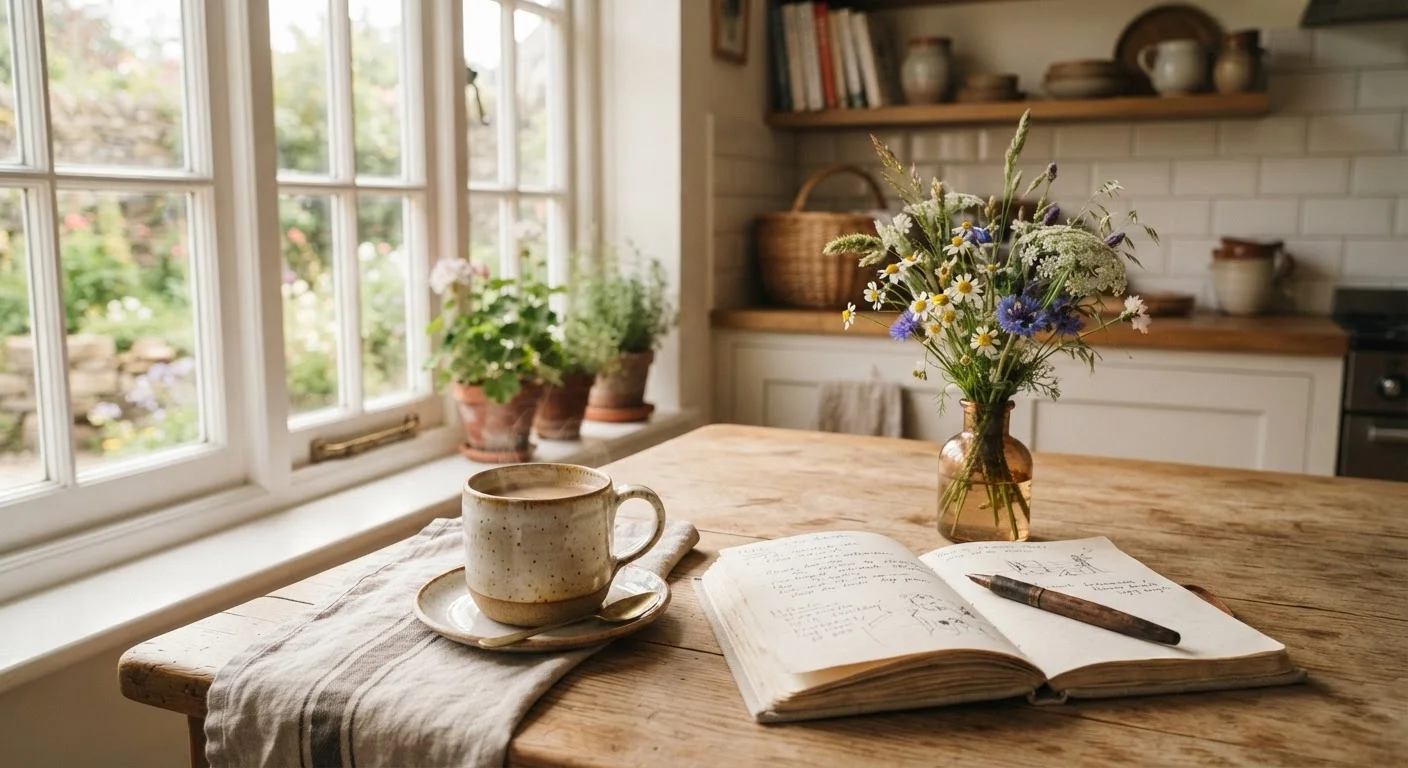
Instagram's version of slow living — linen tablecloths, sourdough starters, countryside light — is beautiful, but it's also a narrow and sometimes misleading portrait. That aesthetic can suggest that slow living requires resources, space, or a particular demographic. It doesn't.
The philosophy is available in a studio apartment, in a city, on a demanding schedule. It might look like eating lunch without your phone, or taking a longer route home on purpose, or leaving a social obligation off your calendar because you'd rather have a quiet evening. As slow living is not a luxury, the underlying principle is about alignment between your values and your time — not aesthetics and not income.
It's also worth noting that slow living and intentional living share significant overlap. Both resist accumulation for its own sake and encourage deliberate choices about environment and rhythm. Where intentional living tends to focus on the design of space and habit, slow living zooms out to the pace and texture of life overall.
Start With One Protected Ritual
Rather than overhauling your schedule, identify one recurring moment you can intentionally protect from rush — a morning coffee, an evening walk, a meal eaten without screens. Consistency with one small ritual tends to be more sustainable than a sweeping lifestyle reset, and it builds the muscle of choosing presence over productivity.
How Slow Living Shows Up While Traveling
One of the most natural expressions of slow living happens away from home. Slow travel — spending longer in fewer places rather than rushing a checklist of destinations — distills the philosophy into a concrete practice. You start to notice neighborhoods rather than landmarks. You eat where locals eat, not where the tourist map points. You leave room for the unplanned.
Slow travel changes how you experience destinations in ways that itinerary-heavy trips rarely allow. And for many women, a slower journey is often the first real encounter with what it feels like to reclaim time — which is part of why travel becomes a gateway into the broader lifestyle philosophy.
If you're curious about what this looks like practically, slow travel as a philosophy is a useful starting point — it explores whether this approach suits your travel values and how to begin experimenting with it.
72%
Adults reporting they feel rushed most of the time
A Pew Research Center survey found that roughly seven in ten U.S. adults say they feel they don't have enough time to do what they want to do.
1989
Year the Slow Food movement was formally founded
Carlo Petrini founded Slow Food in Italy in 1989; it has since grown to include chapters in over 160 countries and inspired the broader slow living philosophy.