

Key Takeaways
- Intentional living is a mindset about alignment, not a design style or minimalism mandate.
- Your home environment directly influences your habits, mood, and decision-making every day.
- The practice starts with identifying how you want to feel — then auditing whether your space supports that.
- Small, specific changes to layout and organization often outperform major overhauls.
- Intentional doesn't mean sparse — it means purposeful, whatever that looks like for you.
Intentional Living (Home)
Intentional living, as it applies to your home, means actively shaping your space around how you actually want to feel and function day to day — rather than letting clutter, habit, or default accumulate. It's the practice of making deliberate choices about what you keep, how rooms are arranged, and what routines you build into your environment. The goal isn't a perfect aesthetic; it's a home that supports the life you're trying to live.
Behavioral research consistently links environmental design to habit formation — a principle sometimes called 'choice architecture.' Your physical surroundings cue behavior, making home setup a legitimate lever for wellbeing.
The Gap Between How Your Home Looks and How It Functions
Most of us don't design our homes from intention. We accumulate. A chair lands somewhere convenient and stays for years. A junk drawer forms, then multiplies. Before long, the layout of your space reflects inertia more than anything you'd consciously choose.
Intentional living applied to the home is simply the practice of closing that gap. It asks: Does this space reflect the life I want to be living — or the one I defaulted into? That question, taken seriously, changes how you think about everything from furniture placement to morning routines.
This isn't a trend dressed in neutral linen. It's a functional shift in how you relate to your environment. Research in environmental psychology supports the idea that physical surroundings shape behavior — the layout of a kitchen influences what you eat; a cluttered desk increases cognitive load; a well-arranged entryway can set the tone for your entire day. Your home is, in effect, a system of cues. Intentional living means designing those cues on purpose.
Intentional Living Is Not One-Size-Fits-All
What counts as an intentional home varies enormously by household size, lifestyle, culture, and personal values. A home that feels purposeful to one person may feel sterile or chaotic to another. The measure isn't whether your space looks a certain way — it's whether it consistently supports the life you're trying to live. Comparing your space to curated images online is one of the fastest ways to undermine the practice.
What It Actually Involves (And What It Doesn't)
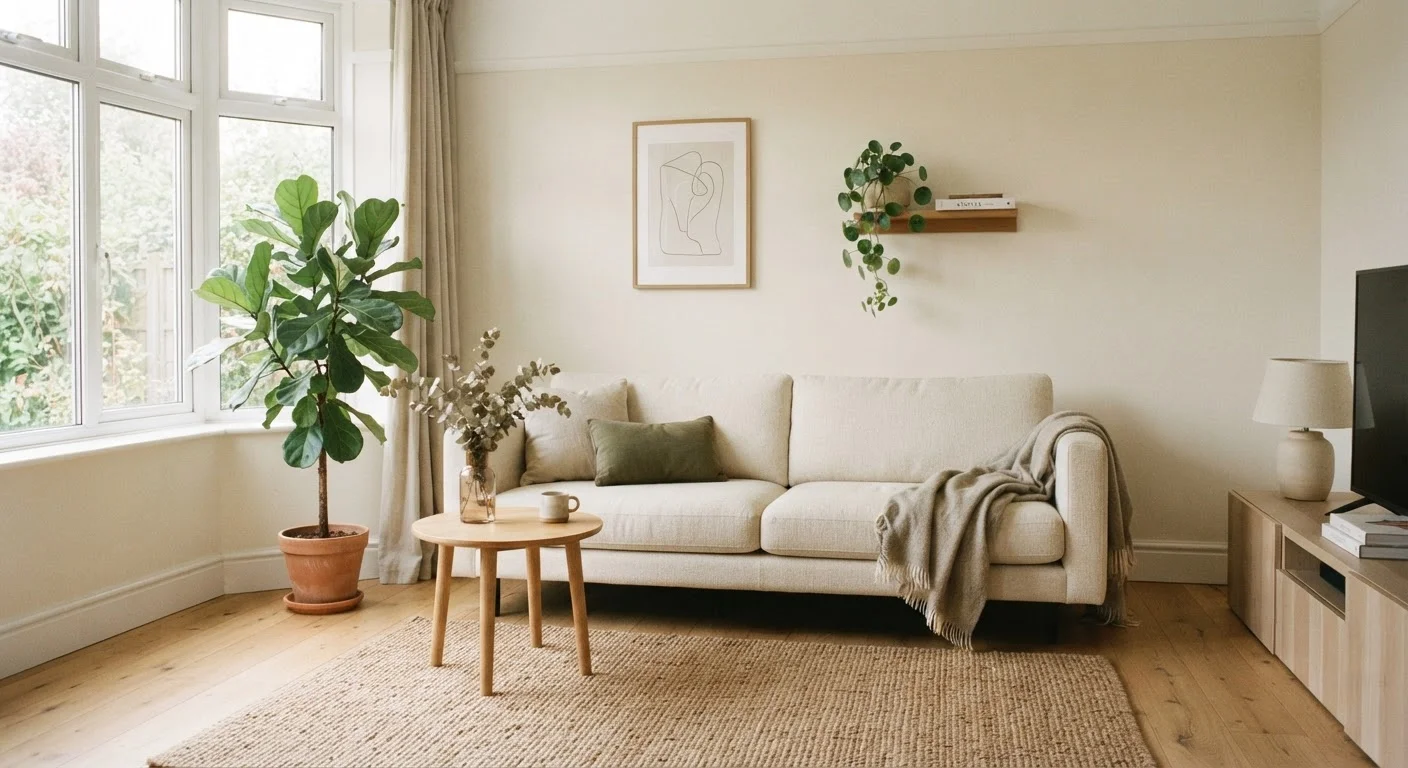
Intentional home habits are not about owning less for its own sake, or achieving the kind of photogenic sparseness that performs well online. They're about alignment — between your values, your routines, and the physical space you move through every day.
In practice, that can look like:
- Reorganizing a room so that the thing you use most is easiest to reach
- Removing objects that create visual noise or daily frustration
- Building small rituals into your home layout — a dedicated reading corner, a clear surface for a morning routine
- Choosing what comes into your space as deliberately as you'd choose anything else
What it doesn't involve: a complete overhaul, expensive storage solutions, or any particular aesthetic. Intentional living in a maximalist home looks different from intentional living in a studio apartment — but the underlying practice is the same.
It's also worth separating this from productivity culture, which prizes efficiency and output. Intentional living and hustle culture measure a well-spent day very differently — and understanding that distinction matters when you're deciding what to optimize your home for.
Start With How You Want to Feel
Before rearranging a single object, name the feeling you want your home to support — calm, energized, focused, restored. That anchor makes every subsequent decision easier and more coherent. You're not just tidying; you're designing toward a specific outcome.
How to Start Without Starting Over
The most common mistake is treating intentional living as a project with a finish line. It's better understood as an ongoing practice — a habit of noticing whether your space is working for you, then adjusting.
A useful starting point: identify your highest-friction moment of the day. The morning scramble. The evening wind-down that never quite happens. The Sunday reset that feels overwhelming. Then ask what your space is contributing to that friction.
77%
People who say clutter negatively affects their mood
A survey by the National Association of Professional Organizers found a strong majority of respondents linked household disorganization to increased stress and decreased productivity.
~40%
Daily behaviors driven by habit, not conscious decision
Research published in the journal Psychological Science estimates that roughly 40% of daily actions are habitual — meaning your environment's layout shapes nearly half your day without active thought.
From there, make one targeted change. Move the object. Clear the surface. Create the designated spot. Small, specific edits tend to stick better than whole-house resets because they're legible — you can feel the difference immediately, which reinforces the habit.
For a deeper structural approach, the idea of a capsule home — applying intentional curation to your living space is worth exploring. Like a capsule wardrobe, it applies the same editing logic to your domestic environment: keep what genuinely serves daily life, and reconsider the rest.
If you're also thinking about this at the lifestyle level — not just the home level — the honest trade-offs of intentional living are worth knowing before you commit. The practice has real benefits, but it also has friction. Going in clear-eyed makes it sustainable. More broadly, the Mindful Living hub and Home & Living hub offer practical starting points for both the space and the mindset behind it.