

Key Takeaways
- Slow living is a set of intentional habits, not an aesthetic that requires a particular home or income.
- The visual trappings of slow living on social media often obscure its accessible, practical core.
- Anyone can practice unhurried rhythms regardless of location, budget, or schedule complexity.
- Slow living does not mean doing less — it means being more deliberate about how attention is spent.
- Separating the philosophy from the trend makes it more honest, durable, and personally useful.
The Gap Between the Aesthetic and the Actual Philosophy
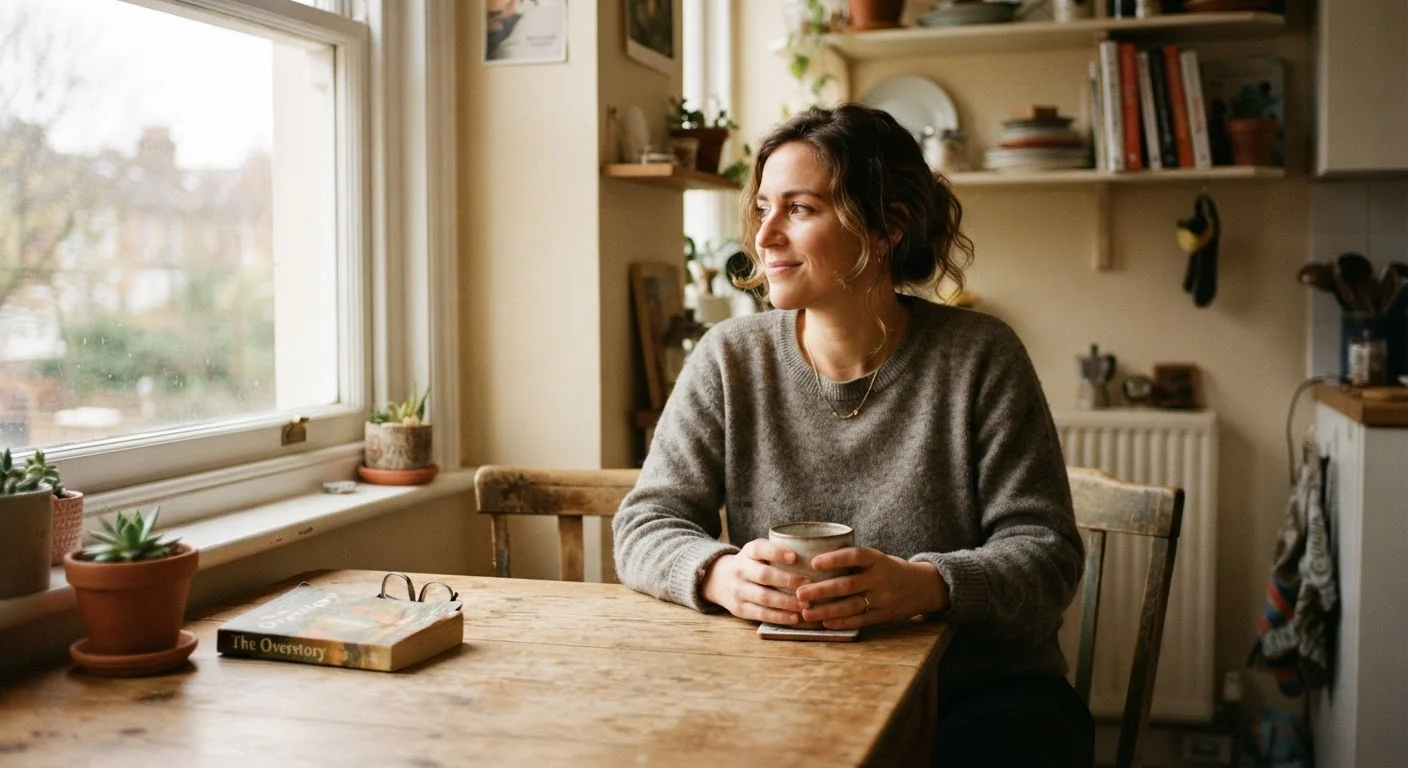
Search 'slow living' on almost any image platform and you'll find a remarkably consistent visual grammar: muted linen, ceramic mugs, light-drenched kitchens in renovated farmhouses. It's a beautiful aesthetic. It's also a narrow and often expensive one — and it has very little to do with the underlying philosophy it claims to represent.
Slow living, in its more considered forms, draws on a diverse range of cultural traditions: the Italian Slow Food movement's resistance to convenience culture, Scandinavian concepts like hygge and lagom that center sufficiency and coziness over accumulation, and broader mindfulness traditions that emphasize present-moment engagement. What these share is an orientation toward deliberateness — not a particular look for your kitchen shelves.
The disconnect matters because it creates a gatekeeping effect. When the lifestyle appears inseparable from a particular income level or housing type, it signals to most women that it isn't for them. That's both inaccurate and a loss. The actual practices at slow living's core are remarkably portable.
Myth
Slow living requires a countryside cottage, linen everything, and a lot of disposable income.
Fact
Slow living is a set of habits and a reorientation of attention — neither of which has a price tag.
The most widely circulated images of slow living — sourdough on a farmhouse counter, a garden viewed from a stone doorway — are aesthetic choices, not requirements. The actual philosophy, drawn from movements like Italy's Slow Food or the Nordic concept of lagom, centers on resisting the culture of hurry and consuming life more deliberately. That practice is available in a studio apartment, a shared house, or a busy urban neighborhood. What it asks for is intention, not income. Consider exploring European philosophies of everyday calm — many were born not from wealth, but from practicality and cultural habit.
Myth
Slow living means doing less, being less productive, and opting out of ambition.
Fact
Slow living prioritizes deliberate engagement over volume — it's about quality of attention, not quantity of output.
The confusion here is understandable. 'Slow' sounds like a pace prescription. But in practice, many people who orient their lives around intentional rhythms are highly productive — they've simply become selective about where their energy goes. The goal isn't to do fewer things; it's to be genuinely present for the things you do. This is why slow living is compatible with demanding careers and full calendars. The shift tends to be about creating daily routines with more breathing room and fewer automatic, unconsidered commitments — not abandoning ambition altogether.
Myth
You have to live in a rural or semi-rural area to practice slow living authentically.
Fact
Geography doesn't determine access to intentional living. Urban slow living is well-documented and genuinely practiced.
The pastoral imagery attached to slow living online has created a persistent myth that cities are incompatible with unhurried rhythms. In reality, intentional living in cities often looks like choosing a neighborhood market over a delivery app, building a walking commute into your morning, or simply spending one unscheduled hour at a café without a to-do list. The friction of urban life can actually sharpen awareness of where attention is going — which is the core practice. Slow travel principles apply the same logic: the shift isn't about where you are, but how deliberately you inhabit a place.
Myth
Slow living is only possible if you have flexible work or are self-employed.
Fact
Meaningful slow living practices fit within conventional work structures — they don't require schedule overhaul.
This myth discourages people who work nine-to-five, have caregiving responsibilities, or simply don't control their hours from engaging with the philosophy at all. But slow living doesn't demand large uninterrupted blocks of time. It lives in the edges: a deliberate morning before a screen comes on, a lunch eaten without multitasking, an evening not filled by passive scrolling. Digital minimalism as a slow living practice is one approachable entry point — incremental boundaries that don't require restructuring your entire life to feel meaningful.
Myth
Slow living means your home must be minimalist, neutral, and cleared of clutter.
Fact
Slow living is a relationship with time and attention, not a design directive for your living space.
The conflation of slow living with minimalist aesthetics has made the concept feel exclusive and prescriptive in ways it was never meant to be. You can live intentionally in a maximalist home full of collected objects and personal meaning — what matters is whether the space supports your wellbeing, not whether it photographs well. Our piece on what maximalism and minimalism actually mean separates these visual philosophies from lifestyle ones more clearly. A home that reflects who you are is more aligned with slow living values than a staged one that reflects a trend.
What Slow Living Actually Asks of You
Strip away the styling and the philosophy asks a straightforward question: are you living your life on purpose, or are you moving through it mostly on autopilot? That's a question available to anyone, regardless of their floor plan or their linen budget.
In practice, this tends to show up in small, unglamorous decisions. Eating a meal without your phone face-up on the table. Building a daily routine with a few unscheduled minutes built in. Choosing one activity at a time rather than layering tasks until none of them get your real attention. These habits don't require a lifestyle redesign — they require a shift in what you notice and what you decide to protect.
Slow Living Is a Practice, Not a Product
No purchase, renovation, or relocation is required to live more intentionally. The shift is attitudinal before it is environmental. If the lifestyle feels gated behind a price tag, that's the aesthetic talking — not the philosophy.
It's also worth being honest about where slow living has real friction. The honest trade-offs of intentional living are worth understanding before romanticizing the concept — living more deliberately can mean saying no more often, tolerating a slower pace of achievement, and being at odds with productivity culture in ways that aren't always comfortable.
Watch for Slow Living as Avoidance
There's a meaningful difference between intentional rest and using a 'slow living' framing to sidestep responsibilities or difficult emotions. If unhurried habits are consistently accompanied by unresolved obligations piling up, it may be worth examining the pattern. Our piece on when slow living backfires explores this distinction in depth.
The philosophy travels well beyond the home, too. Slow travel applies the same logic to movement through the world: spending longer in fewer places, prioritizing depth over coverage, letting a destination settle rather than racing through its highlights. Neither version of the practice requires an exceptional budget — just a willingness to value presence over performance.