

| Number of widely recognized interior styles | 15–20 core aesthetics (Design industry consensus varies; this guide covers the most commonly referenced) |
| Most searched interior style (globally) | Minimalism (Frequently cited in design trend reports; search volume varies by year and platform) |
| Japandi: origin blend | Japanese + Scandinavian (Term gained widespread use in design media from approximately 2019 onward) |
| Mid-Century Modern era | Approx. 1945–1975 (Dates vary slightly by source; generally refers to post-WWII through early 1970s design) |
| Key principle in wabi-sabi | Beauty in imperfection (Concept derived from Japanese Buddhist aesthetics; applied to design from the 20th century onward) |
Why Interior Style Labels Actually Help
If you've ever saved a dozen living room photos only to realize they look nothing alike, you already know the problem: interior style has a language, and without it, you're decorating by instinct alone. That's not a bad thing — instinct matters — but understanding what defines each aesthetic gives you a framework to make deliberate choices rather than reactive ones.
This guide is a plain-language reference. Use it to identify what you're drawn to, compare adjacent styles, or simply settle a debate about whether your apartment is Scandinavian or Japandi. (Spoiler: there's a meaningful difference.)
If you're still figuring out where your visual instincts land, our guide to finding your aesthetic when you like everything is a natural companion to this reference.
| Number of widely recognized interior styles | 15–20 core aesthetics (Design industry consensus varies; this guide covers the most commonly referenced) |
| Most searched interior style (globally) | Minimalism (Frequently cited in design trend reports; search volume varies by year and platform) |
| Japandi: origin blend | Japanese + Scandinavian (Term gained widespread use in design media from approximately 2019 onward) |
| Mid-Century Modern era | Approx. 1945–1975 (Dates vary slightly by source; generally refers to post-WWII through early 1970s design) |
| Key principle in wabi-sabi | Beauty in imperfection (Concept derived from Japanese Buddhist aesthetics; applied to design from the 20th century onward) |
The Major Interior Styles, Defined
The glossary below covers the terms you'll encounter most often — in design media, on social platforms, and in home décor conversations. Each one has a distinct philosophy, not just a look.
Scandinavian
Rooted in Nordic design tradition, this style combines functional simplicity with warmth. Expect pale wood, white walls, cozy textiles (called hygge in Danish culture), and a general preference for light-filled, uncluttered rooms.
Japandi
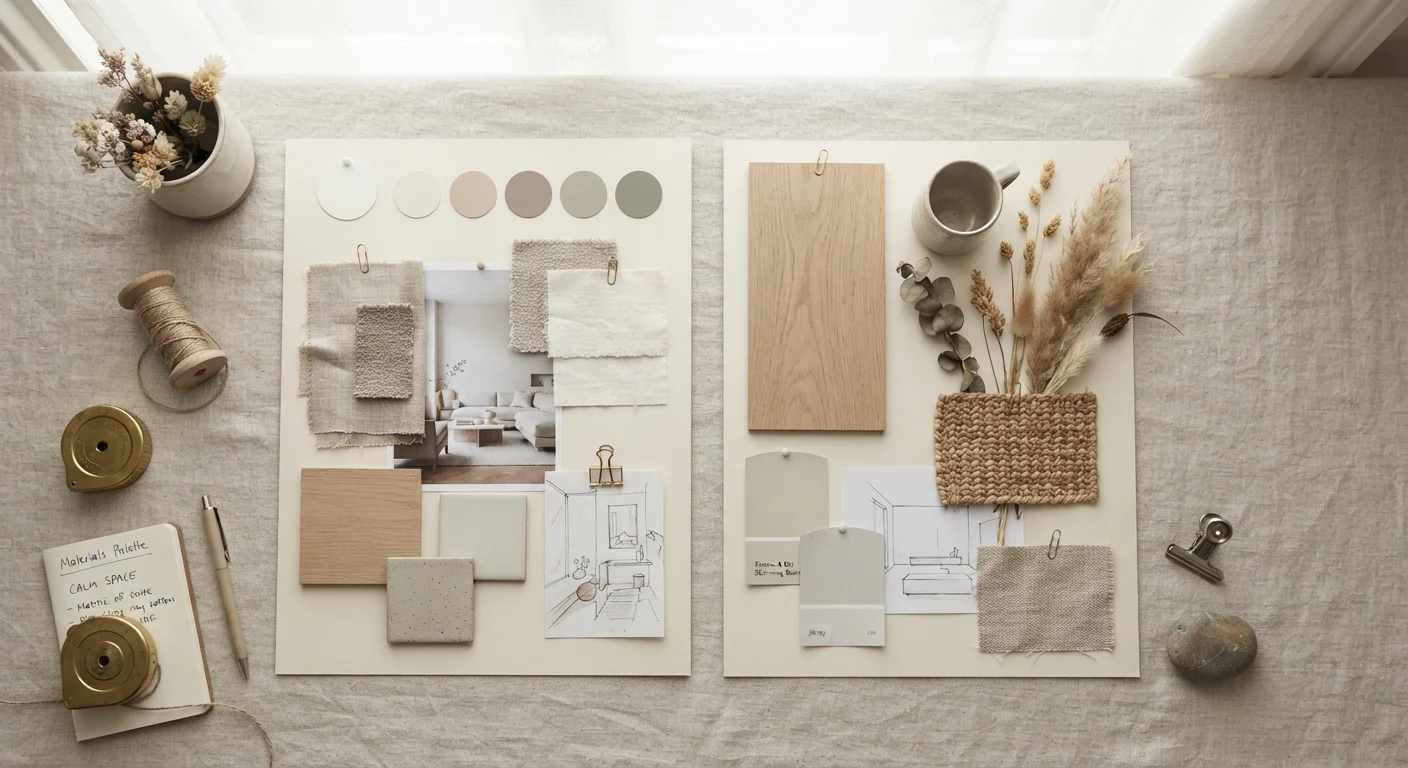
A hybrid of Japanese and Scandinavian aesthetics that emphasizes restraint, natural materials, and the wabi-sabi principle — finding beauty in imperfection and transience. Palettes lean toward muted, earthy tones; silhouettes are low and grounded.
Minimalism
A design philosophy built on reduction: only what is necessary remains. Surfaces are clear, storage is hidden, and the architecture of the space itself becomes the focal point. Color palettes are usually monochromatic or near-neutral.
Maximalism
The deliberate embrace of abundance — layered color, pattern, and object. Maximalism is not clutter; it is intentional excess with a curatorial eye. Every surface, shelf, and wall has something to say.
Bohemian (Boho)
An eclectic, globally inspired style that draws from artisan craft, vintage finds, rich textiles, and a relaxed attitude toward 'matching.' Recurring elements include macramé, rattan, layered rugs, and warm, saturated earth tones.
Mid-Century Modern
Referring to roughly the 1940s–1970s design era, this style features organic curves, tapered legs, and a faith in functional beauty. Materials include walnut wood, molded plastic, and wool upholstery. The palette mixes warm neutrals with bold accent colors.
Industrial
Inspired by converted factories and urban lofts, industrial style exposes structural elements — raw brick, concrete floors, metal pipes — rather than concealing them. Palettes are cool and muted; furniture is often oversized and utilitarian.
Coastal
A relaxed, light-saturated style evoking proximity to the sea. Think white linen, bleached wood, sea-glass hues, and natural textures like jute and rattan. The goal is airy ease, not nautical kitsch.
Cottagecore
A romantic, nature-forward aesthetic romanticizing rural domestic life — floral prints, hand-thrown pottery, open shelving with mismatched ceramics, and an abundance of plants and botanical prints. Warmth and imperfection are features, not flaws.
Transitional
A deliberately balanced blend of traditional and contemporary elements, designed to feel timeless rather than trend-dependent. Transitional interiors often mix classic architectural details with modern upholstery or streamlined furniture silhouettes.
Art Deco
A glamorous, geometry-driven style from the 1920s and 30s, characterized by bold symmetry, jewel tones, mirrored surfaces, and rich materials like velvet, lacquer, and brass. Drama and sophistication are its defining qualities.
Wabi-Sabi
Originating in Japanese philosophy, wabi-sabi as a design principle celebrates the impermanent, imperfect, and incomplete. Cracked ceramics, weathered wood, and irregular textures are intentionally valued rather than corrected.
A few styles deserve a note on overlap. Scandinavian and Japandi are frequently confused because both prize simplicity and natural materials, but Japandi draws more deliberately on Japanese wabi-sabi philosophy — the acceptance of imperfection — whereas Scandinavian design tends toward brighter, more playful interpretations of minimalism. Similarly, Bohemian and Maximalist are not the same thing: Bohemian follows its own logic (travel, handcraft, layered textiles), while Maximalism is defined by deliberate abundance across any aesthetic palette.
Lighting plays a quietly defining role in how every style reads in a real room — understanding colour temperature and natural light can be the difference between a space that feels cohesive and one that doesn't quite land.
For a deeper look at what makes rooms feel simultaneously serene and personal — regardless of which style you choose — see the principles behind rooms that feel both calm and lived-in.
Most Rooms Blend More Than One Style
The styles listed here are reference points, not rules. Most well-designed rooms borrow from two or more aesthetics — a Scandinavian bones with Bohemian textiles, or a Minimalist layout softened with Cottagecore details. The goal is coherence, not category purity. If you find yourself drawn to elements across several styles, that's worth exploring rather than resolving.