

| Warm light range | 2,700–3,000 K |
| Neutral/cool daylight range | 4,000–5,000 K |
| High-CRI threshold (recommended) | 90+ |
| Melatonin-suppressing spectrum | Blue light (~480 nm peak) (Consistent with peer-reviewed chronobiology research) |
| Lumens for typical living room | 1,500–3,000 lm total (General industry guidance; varies by room size) |
| Lumens for task lighting (desk/reading) | 450–800 lm per fixture |
Why Lighting Terminology Matters
Most of us notice when a room feels harsh or cozy, flattering or draining — but we rarely know which lighting variable to change. That gap between feeling and language is where bad lighting decisions happen: bulbs that make skin look sallow, home offices that trigger afternoon headaches, bedrooms that stay mentally activating long past bedtime.
Understanding a handful of core concepts — colour temperature, lumens, and the behaviour of natural light — gives you real leverage over how your home looks and feels. This reference guide defines each term plainly and explains how it applies to everyday rooms. For a deeper look at how these principles affect a room's overall mood, see how light quality shapes a room's feel.
| Warm light range | 2,700–3,000 K |
| Neutral/cool daylight range | 4,000–5,000 K |
| High-CRI threshold (recommended) | 90+ |
| Melatonin-suppressing spectrum | Blue light (~480 nm peak) (Consistent with peer-reviewed chronobiology research) |
| Lumens for typical living room | 1,500–3,000 lm total (General industry guidance; varies by room size) |
| Lumens for task lighting (desk/reading) | 450–800 lm per fixture |
Core Concepts Defined
These are the terms you'll encounter on packaging, in design forums, and in smart-home settings — translated into plain language.
Colour Temperature
A measure of the hue of a light source, expressed in Kelvin (K). Lower values (2,700–3,000 K) produce warm, amber-toned light; higher values (5,000–6,500 K) produce cool, bluish-white light resembling daylight.
Kelvin (K)
The unit used to measure colour temperature in lighting. It describes the perceived warmth or coolness of a light source, not its physical heat. Standard bulb packaging typically lists the Kelvin rating.
Lumens
The measure of total visible light output from a source. More lumens means a brighter light. Unlike watts, lumens directly indicate how much usable light a bulb produces.
CRI (Colour Rendering Index)
A scale from 0–100 indicating how accurately a light source renders colours compared to natural daylight. A CRI of 90+ is considered high-fidelity and is recommended for makeup, art, and cooking spaces.
Circadian Lighting
Lighting designed to align with the body's natural 24-hour biological rhythm. It typically involves warmer, dimmer light in the evening and cooler, brighter light during the day to support alertness and sleep cycles.
Ambient Light
The general, diffuse background illumination of a room — usually from overhead fixtures or natural sources. It provides overall visibility rather than focused task lighting.
Task Lighting
Focused light directed at a specific work area, such as a desk lamp, under-cabinet kitchen lights, or a reading lamp. It supplements ambient light and reduces eye strain during close work.
Accent Lighting
Directional light used to highlight specific objects or architectural features — such as a painting, a shelf, or a textured wall. It adds visual depth and dimension to a room.
One common mistake: treating lumens and watts as interchangeable. Watts measure energy consumption; lumens measure actual light output. A 10-watt LED can produce the same lumens as a 60-watt incandescent. When shopping for bulbs, lead with lumens, then check the colour temperature.
Natural light complicates things because it isn't fixed. Morning light skews cool and bluish; midday light is the brightest and most neutral; late-afternoon light shifts toward amber. This is worth remembering when you're choosing paint colours — a swatch that looks perfect at noon may appear completely different by 6 p.m.
Lighting is just one part of how a space feels to inhabit. For the sensory variables that often get ignored alongside it, see sensory levers most people overlook.
Applying This by Room
Knowing the terms is useful. Knowing where to apply them is what changes a space.
- Kitchen and workspaces: Aim for 3,000–4,000 K (cool-neutral white). Higher colour temperatures support alertness and make tasks like food prep and reading easier. Supplement with under-cabinet lighting to eliminate shadows on work surfaces.
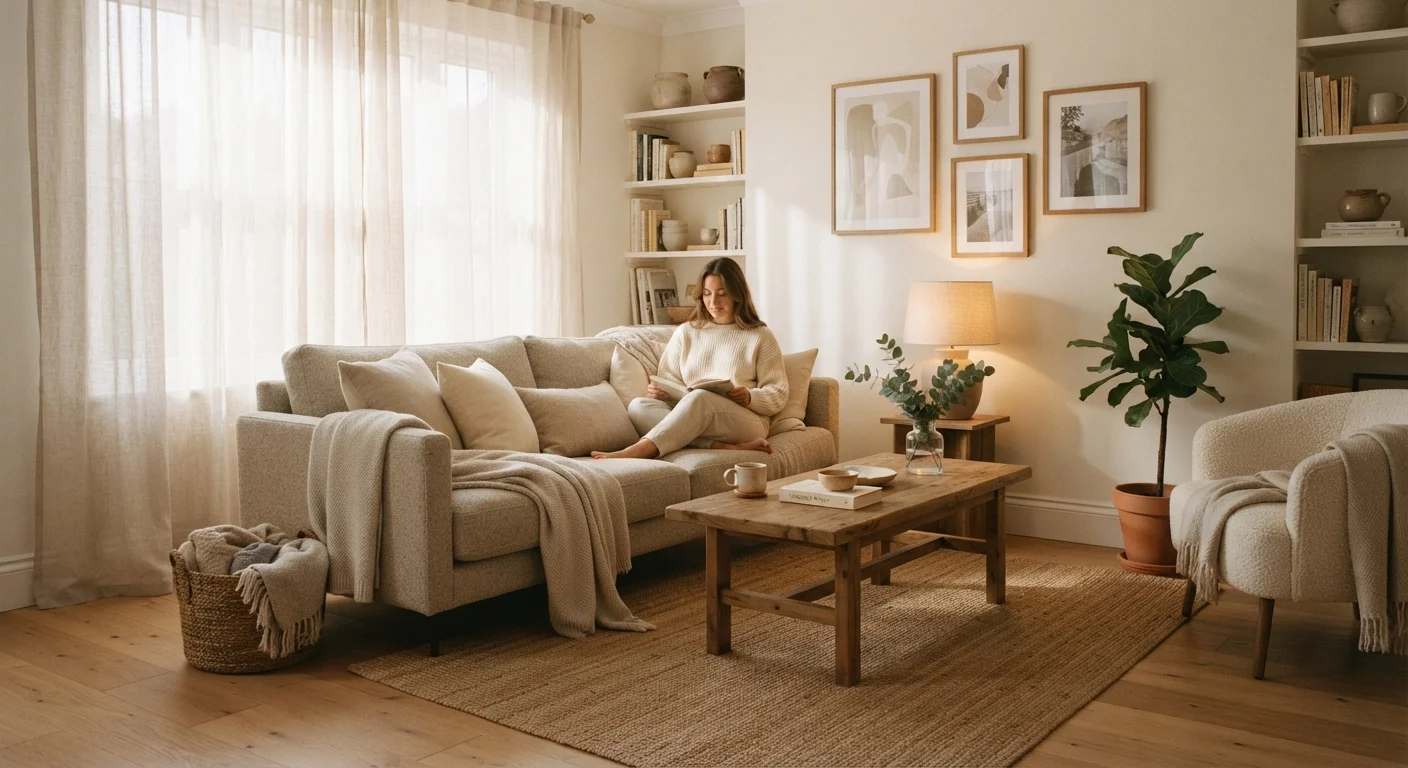
- Living room: Layer sources rather than relying on a single overhead fixture. A mix of warm (2,700–3,000 K) lamps at different heights creates depth and avoids the flat, institutional effect of ceiling-only light.
- Bedroom: Keep the colour temperature at or below 2,700 K in the evening. Research consistently shows that blue-spectrum light (above 4,000 K) suppresses melatonin production and delays the onset of sleep. Dimmer switches give you flexibility across the day.
- Bathroom: Vanity lighting is typically best at 2,700–3,000 K, positioned at eye level on the sides of a mirror rather than overhead. Overhead-only lighting casts unflattering shadows downward.
Paint and wall colour interact directly with light sources — a cool-white bulb will intensify cool-toned paint and mute warm ones. If you're navigating this alongside colour selection, colour theory for non-designers is a useful companion read.
Smart Bulbs and Colour Temperature Control
Many smart LED bulbs allow you to adjust colour temperature via an app or voice command — so a single fixture can serve as task lighting at noon and a sleep-friendly warm lamp by 9 p.m. This tunability can be especially useful in studio apartments or dual-purpose rooms where a single space has to shift function across the day. If you're exploring this option, check the bulb's Kelvin range (ideally 2,200–5,000 K) and its CRI rating before purchasing.