

Key Takeaways
- Liking many styles is a sign of visual fluency, not aesthetic confusion.
- A personal aesthetic is built from recurring themes, not a single rigid category.
- Editing your inspirations by mood and lifestyle reveals your true style core.
- Your wardrobe foundation should reflect how you actually live, not how you aspire to look online.
- Consistency comes from identifying two or three anchoring elements, not restricting your whole wardrobe.
What you will need
Why Liking Everything Is Actually an Advantage
Being drawn to minimalist interiors, maximalist fashion, vintage silhouettes, and contemporary tailoring in the same week doesn't mean you lack taste. It means you have a broad visual vocabulary — a genuine advantage when building a personal style that's layered, adaptable, and entirely your own.
The problem most women encounter isn't that they like too many things. It's that they've never taken the time to look beneath the surface of those preferences to identify the consistent thread connecting them. Once that thread becomes visible, the apparent contradiction dissolves.
Understanding why copying someone else's aesthetic rarely lands is part of the same insight: style resonates when it expresses something true about the person wearing it, not when it replicates a look from the outside in. Your wide range of inspiration is raw material. This process turns it into something wearable.
What you will need
What You'll Need Before You Start
This process requires honesty more than it requires anything else. Before you begin, gather your inspiration sources, open your wardrobe, and set aside the impulse to have your style figured out before you've done the work. The steps below are designed to reveal something that's already there — not to prescribe what your style should be.
Digital Inspiration Board
Aggregate saved images from social platforms or magazines in one place to spot visual patterns across your saves.
Notebook or Notes App
Record recurring themes, adjectives, and observations during your self-audit and inspiration review.
Full-Length Mirror
Try on current wardrobe pieces during your audit to assess fit, feel, and whether each item aligns with your emerging aesthetic.
If you're approaching personal style for the first time, the Personal Style From Scratch guide offers a grounding starting point before working through these steps.
The Step-by-Step Process
Work through each step in order. The value compounds as you move from raw collection through to a usable style statement — skipping ahead tends to produce the same vague conclusions most women already have before they start.
Gather your raw inspiration without editing
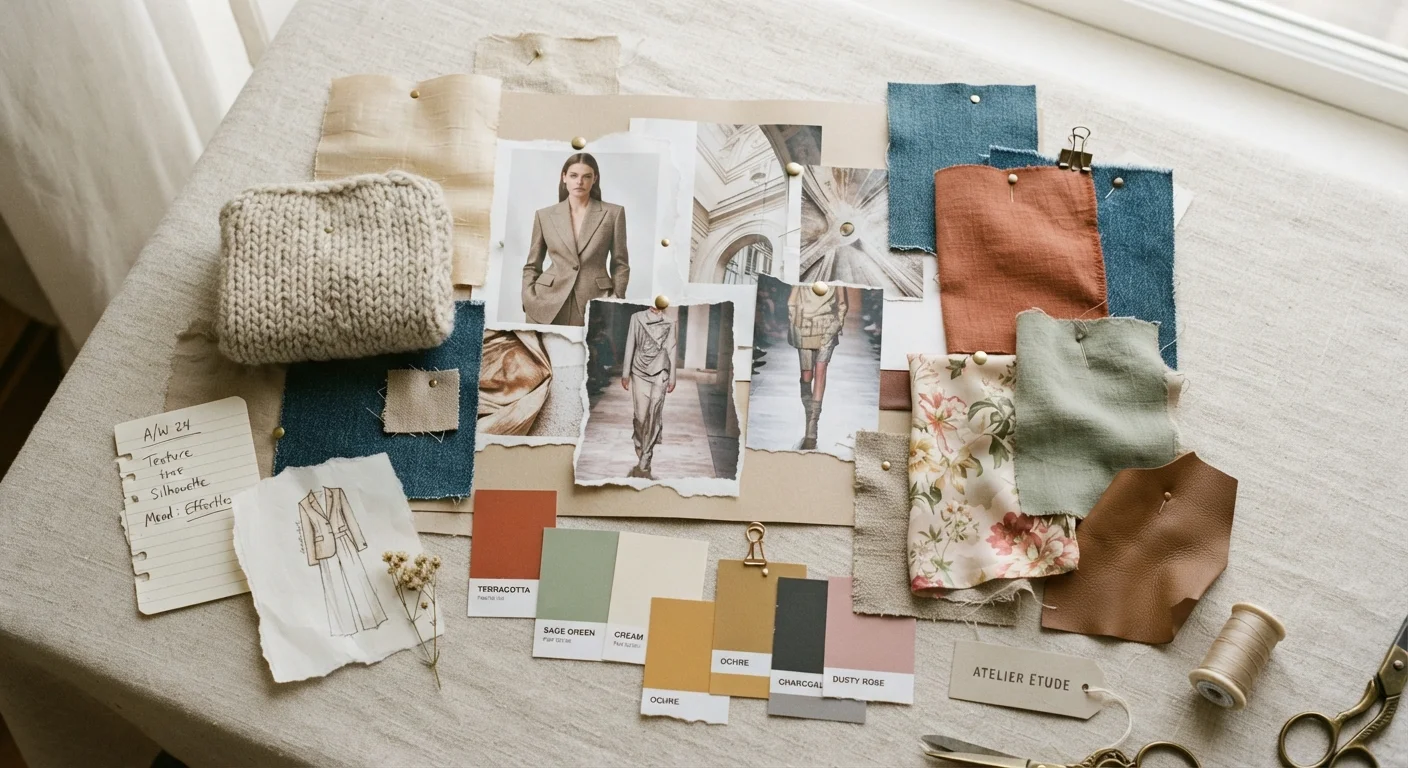
Pull together every image, screenshot, or saved pin that has appealed to you over the past six to twelve months. Resist the urge to curate at this stage — include everything, even looks that feel contradictory. You're building a data set, not a lookbook.
Look for the feeling, not the category
Scan your collection and ask what feeling each image evokes rather than what label it fits — minimalist, romantic, edgy. Notice whether you're drawn to structured silhouettes or relaxed ones, muted tones or saturated colour, layering or simplicity. The aesthetic thread is almost always emotional before it is visual.
Identify two or three recurring visual anchors
After reviewing your full collection, write down the specific elements that appear repeatedly: a particular neckline, a consistent colour family, a recurring fabric weight, a silhouette proportion. These recurring details — not the overall aesthetic label — are your true style signature. Most people find two or three anchors that connect otherwise different-looking outfits.
Audit your actual wardrobe against your anchors
Go through what you currently own and identify which pieces align with your anchors and which don't. Pieces that consistently get worn tend to reflect your real aesthetic more accurately than aspirational buys that never leave the closet. This audit is honest, not harsh — it simply reveals where your style already lives.
Draft a brief personal style statement
Write two to three sentences describing the aesthetic you've uncovered — grounded in your anchors, your lifestyle, and how you want to feel when dressed. This isn't a social media bio; it's a private reference tool. Something like: I gravitate toward relaxed structure — clean lines, natural fabrics, and a neutral base with one considered detail. I want to look intentional without feeling overdressed. Keep it practical and honest.
Allow your aesthetic to remain a blend
A coherent personal style doesn't require choosing one aesthetic and rejecting all others. What makes a wardrobe feel unified is intentionality in how different influences are combined — consistent fit standards, a reliable colour palette, or a recognisable approach to proportion. Your aesthetic can contain multitudes as long as there's a logic that connects them.
Use Words, Not Just Images
Once you've identified recurring patterns in your inspiration, try writing three to five adjectives that describe the feeling those images share — structured, warm, understated, bold, relaxed. These words become your aesthetic compass when shopping or getting dressed, far more reliably than image references alone.
Keeping Your Aesthetic Coherent Over Time
A signature style isn't fixed. It's a working document — updated as your life, preferences, and context shift. The goal isn't to lock yourself into a look you defined at thirty and maintain indefinitely. It's to have a clear enough self-understanding that adding to or evolving your wardrobe feels purposeful rather than reactive.
Aesthetic Is Not a Box to Lock Yourself In
Defining your aesthetic is about creating clarity, not constraints. A signature style should expand your confidence and ease — not eliminate the pieces or moods that genuinely reflect who you are. Revisit and refine it as you change.
For those ready to think longer-term, The Long Game: Building a Personal Style That Evolves With You explores how aesthetic identity develops over years — and how to grow it without losing the thread. For the practical next step, identifying your style base before buying will help you translate your newly defined aesthetic into smarter wardrobe decisions.