

Key Takeaways
- Neutral colours maximise outfit combinations because they work across categories and occasions without clashing.
- Building around neutrals reduces decision fatigue and extends the usable life of individual pieces.
- Neutrals are not universally flattering — skin undertone matters when selecting which ones to anchor your wardrobe.
- A neutral-only wardrobe can feel flat without intentional texture, proportion, and silhouette variation.
- Strategic colour accents prevent neutrals from feeling like a uniform rather than a personal style.
Maximum mix-and-match versatility across all pieces
Neutral pieces work with each other and with almost any accent colour, multiplying outfit combinations from a smaller wardrobe footprint.
Longer stylistic lifespan per garment
Pieces anchored in classic neutral tones are less susceptible to trend cycles, making them viable investments that hold relevance across multiple seasons.
Reduces daily decision fatigue
When the base tones of your wardrobe are compatible by default, getting dressed becomes faster and less cognitively demanding — a genuine quality-of-life benefit.
Travels exceptionally well
A neutral capsule packs light and re-wears across multiple days and occasions without looking repetitive, making it particularly practical for frequent travellers.
Makes accent colours hit harder
Against a restrained neutral base, a single colourful accessory or layer reads as a confident style choice rather than noise in a busy palette.
Risk of a flat, personality-free wardrobe
Without deliberate variation in texture and silhouette, an all-neutral wardrobe can feel visually monotonous and fail to communicate individual style.
Neutrals are not universally flattering
The 'wrong' neutral worn near the face — such as a stark cool white on a warm-toned complexion — can drain colour from the skin in ways a more considered choice would not.
Can suppress personal expression over time
Some women find that an exclusively neutral wardrobe begins to feel restrictive once the initial clarity wears off, particularly if colour is meaningful to their self-expression.
Requires more investment in quality and fit
Neutral pieces have no colour interest to carry them; fit, fabric, and construction become immediately visible, meaning poorly made basics undercut the whole strategy.
Our Verdict
A neutral wardrobe foundation is one of the most practical strategies for building a versatile, long-lasting closet — but it works best when executed with intentionality, not by default. The biggest risk is monotony, which is solved through texture layering, considered silhouette choices, and selective colour accents rather than more shopping.
Best suited to women who want a streamlined, low-maintenance wardrobe that travels well and functions across multiple contexts — and who are willing to invest thought into fit and texture rather than relying on colour for visual interest.
What We Mean by 'Neutrals' (and What We Don't)
The word neutral gets used loosely in fashion, so it's worth defining it clearly. True wardrobe neutrals are colours that don't compete with other tones — they recede, anchor, and allow surrounding elements to lead. Classic examples include white, ivory, cream, black, charcoal, grey, navy, camel, tan, stone, and warm or cool beige. Soft olive and cognac also function as neutrals within certain palettes.
What neutrals are not: safe, boring, or a single uniform shade. The spectrum is wide, and the differences between a cool dove grey and a warm greige, or between off-white and bright white, are significant — particularly when worn near the face. Understanding your skin's undertone plays a larger role in neutral selection than most guides acknowledge. For a deeper primer, see our piece on why skin undertones matter — the same principles that apply to makeup carry directly into clothing near the face.
The Genuine Advantages of a Neutral Foundation
The practical case for anchoring a wardrobe in neutrals is strong, and it rests on a few durable principles rather than trend logic.
Maximum mix-and-match versatility across all pieces
Neutral pieces work with each other and with almost any accent colour, multiplying outfit combinations from a smaller wardrobe footprint.
Longer stylistic lifespan per garment
Pieces anchored in classic neutral tones are less susceptible to trend cycles, making them viable investments that hold relevance across multiple seasons.
Reduces daily decision fatigue
When the base tones of your wardrobe are compatible by default, getting dressed becomes faster and less cognitively demanding — a genuine quality-of-life benefit.
Travels exceptionally well
A neutral capsule packs light and re-wears across multiple days and occasions without looking repetitive, making it particularly practical for frequent travellers.
Makes accent colours hit harder
Against a restrained neutral base, a single colourful accessory or layer reads as a confident style choice rather than noise in a busy palette.
20%
Average wardrobe items worn regularly
Wardrobe research consistently suggests most people regularly wear a small fraction of the clothes they own, underscoring the value of versatile foundational pieces.
3x
Outfit combinations from interchangeable pieces
Styling principles hold that a cohesive tonal palette can triple effective outfit options from the same item count compared to an uncoordinated mix.
The combinatorial math is compelling. Five neutral tops and four neutral bottoms, if they genuinely work together, produce significantly more outfit options than the same count of unrelated colourful pieces that only pair with one or two others. That flexibility is the core argument — and it holds up in practice for most women navigating multi-context lives (office, casual, travel, occasions).
Neutrals also tend to age better stylistically. A well-cut camel trench, a crisp white Oxford, or a charcoal knit mid-layer rarely reads as dated in the way a highly on-trend coloured piece can within a season or two. For more on building outfits around colour logic, the colour relationships that make outfits look intentional offers a useful framework.
The Real Limitations You Should Know
Honest wardrobe advice requires naming what neutrals don't do — because the limitations are real, and ignoring them leads to closets that feel like a uniform rather than a personal style.
Risk of a flat, personality-free wardrobe
Without deliberate variation in texture and silhouette, an all-neutral wardrobe can feel visually monotonous and fail to communicate individual style.
Neutrals are not universally flattering
The 'wrong' neutral worn near the face — such as a stark cool white on a warm-toned complexion — can drain colour from the skin in ways a more considered choice would not.
Can suppress personal expression over time
Some women find that an exclusively neutral wardrobe begins to feel restrictive once the initial clarity wears off, particularly if colour is meaningful to their self-expression.
Requires more investment in quality and fit
Neutral pieces have no colour interest to carry them; fit, fabric, and construction become immediately visible, meaning poorly made basics undercut the whole strategy.
The most common complaint from women who go full-neutral is that dressing becomes unmemorable. When every item speaks the same tonal language, the visual result can flatten rather than refine. This is where colour as a tool for self-expression becomes relevant — even a predominantly neutral wardrobe benefits from deliberate colour decisions, even if those colours appear only in accessories or one statement layer.
There's also a skin-tone dimension that's frequently glossed over. Not every neutral is neutral on every person. Bright white washes out cool-toned complexions; warm beiges can muddy certain olive skins. The solution is personalised neutral selection, not avoidance — but it does require some self-awareness and, ideally, trying pieces in natural light before committing.
Making a Neutral Wardrobe Feel Like Your Own
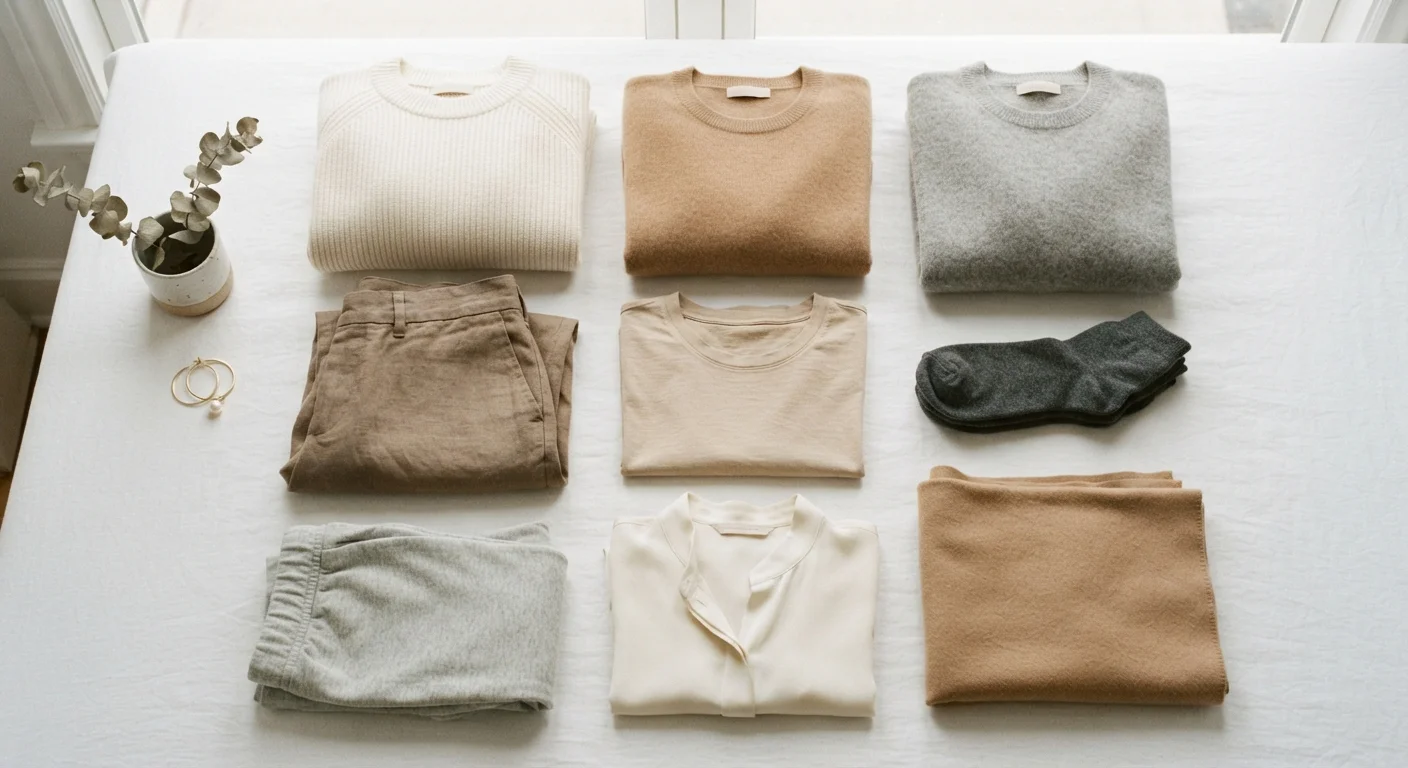
The women who wear neutral wardrobes most successfully treat texture, silhouette, and proportion as their primary design tools — because colour is no longer doing that work. A chunky linen weave, a structured wool blazer, and a fluid silk blouse can all be ivory, yet read as entirely distinct garments because their surfaces and shapes create the visual interest.
Texture Is the Design Tool in a Neutral Wardrobe
When tonal colour is removed as a variable, surface texture carries the visual weight. Ribbed knitwear, matte linen, polished satin, and brushed suede can all exist in the same neutral family while creating layered, dynamic outfits. Prioritising fabric variation when building a neutral wardrobe isn't optional — it's the strategy that prevents uniformity. Think of it as the same logic applied to a neutral eyeshadow palette: see how technique unlocks range from limited colour.
Colour accents, when used selectively, hit harder against a neutral base than they ever would in a wardrobe already saturated with colour. A single rust bag, a forest-green scarf, or a burgundy heel can define an outfit more decisively when everything else is restrained. That principle — scarcity increases impact — is one reason a neutral foundation actually expands your expressive range rather than limiting it.
If you're working on defining your personal style, neutrals are a productive starting point precisely because they make it easier to isolate what you actually want colour to do in your wardrobe — which clarifies taste faster than accumulating colourful pieces at random.