

Key Takeaways
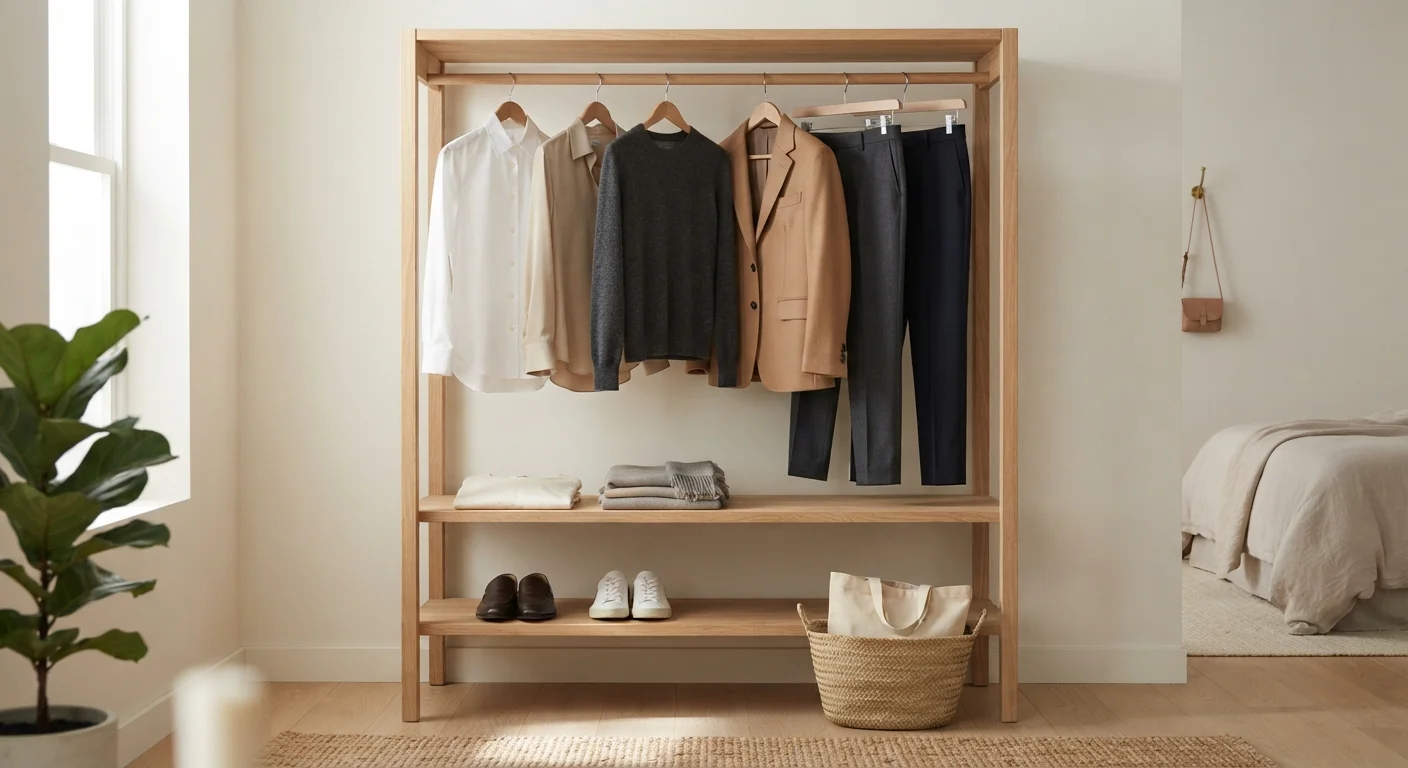
- A smaller wardrobe of well-made pieces typically generates more wearable outfit combinations than a cluttered, mismatched one.
- Higher upfront cost per item doesn't automatically mean greater total wardrobe spend over time.
- Quantity-led wardrobes work best when anchored by a few durable foundational pieces rather than trend items alone.
- Your lifestyle, budget rhythm, and relationship with clothing should drive the approach you choose.
- Most real wardrobes benefit from a hybrid strategy rather than a rigid commitment to either extreme.
Option A
Quality-First Wardrobe
The deliberate, investment-led approach to dressing.
Best for: Women who want long-lasting versatility, lower decision fatigue, and pieces that hold up through years of wear.
Option B
Quantity-Led Wardrobe
The high-volume, trend-responsive approach to dressing.
Best for: Women who prioritize variety, enjoy experimenting with trends, and prefer lower upfront spending per item.
If you want maximum outfit flexibility from minimal closet space
Quality-First Wardrobe
A tight edit of versatile, well-made pieces in a cohesive palette generates far more daily combinations than a volume-heavy wardrobe full of items that don't connect.
If you're still discovering your personal style
Quantity-Led Wardrobe
Lower-cost pieces let you experiment with silhouettes, colors, and aesthetics without the pressure of a high-stakes purchase. Just keep foundations quality-focused.
If you dress across multiple contexts — office, casual, occasion
Quality-First Wardrobe
Well-made foundational pieces that can be styled up or down eliminate the need for separate wardrobes for each context, saving both money and mental energy.
If your budget is tight right now but growing
Quantity-Led Wardrobe
A pragmatic volume approach makes sense short-term — but prioritize replacing worn pieces with quality versions over time rather than continuing to add more.
If you want your wardrobe to work across every season without a major overhaul
Quality-First Wardrobe
Seasonally agnostic fabrics and classic cuts in quality construction mean fewer swap-outs and more continuity year-round.
The Real Difference Between These Two Approaches
The quality-vs.-quantity debate isn't really about being frugal or indulgent — it's about how you want your wardrobe to function. A quality-first approach means deliberate, selective purchasing: fewer pieces chosen for construction, fabric integrity, versatility, and longevity. A quantity-led approach prioritizes volume and variety, often at a lower cost per item, with more frequent turnover.
Neither is inherently wrong. Both serve different priorities. But they carry meaningfully different trade-offs in terms of total spend, outfit flexibility, and the mental overhead of getting dressed every day. Understanding what each approach actually delivers — rather than what it promises — is the starting point for building a wardrobe that genuinely works for your life.
For a thorough grounding in what foundational wardrobe-building looks like in practice, this guide to wardrobe essentials is worth reading before committing to either strategy.
| Criterion | Quality-First Wardrobe | Quantity-Led Wardrobe |
|---|---|---|
| Upfront cost per item | Higher | Lower |
| Total long-term wardrobe spend | Often lower over time | Can accumulate quickly |
| Outfit combinations | High — cohesive, versatile pieces | Variable — depends on curation |
| Trend flexibility | Lower — classic-focused | Higher — easier to rotate |
| Decision fatigue | Low — fewer, reliable choices | Can be high — more to manage |
| Longevity per piece | High — built to last | Lower — faster wear and turnover |
| Style experimentation | Slower — higher stakes per buy | Easier — lower risk per item |
| Closet space required | Minimal | Substantial |
The Case for Investing in Quality
A quality-first wardrobe operates on a straightforward principle: fewer items, each doing more work. When pieces are well-constructed — with durable stitching, quality fabric, and considered fit — they resist wear, hold their shape, and remain wearable across multiple style contexts. A well-made tailored trouser, for example, reads as polished at work, elevated for evening, and relaxed with a simple tee on weekends.
The outfit math also favors quality. A wardrobe of 20 cohesively chosen pieces can generate significantly more wearable combinations than 50 disconnected trend items that don't share a color story or silhouette logic. Maximising combinations from fewer pieces is a skill that a quality-focused wardrobe naturally encourages.
~$1,700
Average annual US clothing spend per person
According to the US Bureau of Labor Statistics Consumer Expenditure Survey, apparel spending varies significantly by household income, but the average sits in this range for working-age adults.
~30%
Clothes in the average wardrobe worn regularly
Research from wardrobe-audit studies consistently suggests that the majority of items owned see little or no regular rotation, regardless of wardrobe size.
Cost-per-wear
Most useful metric for evaluating clothing value
Dividing purchase price by number of wears gives a more accurate picture of value than price alone — a principle widely cited by professional stylists and wardrobe consultants.
The cost-per-wear argument is also compelling. A piece worn 200 times over four years at a higher upfront price frequently costs less per wearing than a cheaper item worn 15 times before it loses its shape or appeal. That said, this logic only holds when you actually wear the piece — a quality item bought speculatively and worn rarely is still wasted spend.
Where Quantity Legitimately Wins
The quantity approach isn't simply a compromise — it has genuine advantages in the right circumstances. Trend experimentation carries real risk, and lower-cost pieces let you test an aesthetic before committing serious money to it. If you're actively refining your personal style — something the personal style tips hub explores in depth — a volume approach gives you room to make mistakes cheaply.
Volume wardrobes also allow for more visible variety, which matters to some women professionally or socially. If you're in a highly visual role or simply find genuine joy in wearing something new frequently, a higher-volume strategy can be personally valid — provided it doesn't create financial strain or closet chaos.
The problem arises when quantity becomes default rather than intentional: when buying more is a reflex rather than a response to an actual gap. A wardrobe full of impulse purchases in incompatible colors and silhouettes doesn't produce outfit options — it produces decision fatigue. Before adding to any wardrobe, a pre-purchase checklist can keep buying purposeful regardless of your overall approach.
How Most Real Wardrobes Should Actually Be Built
In practice, the most functional wardrobes aren't purely one approach or the other — they use a tiered strategy. Foundational pieces (well-fitting trousers, a structured blazer, quality knitwear, a versatile coat) warrant the quality investment because they anchor everything else. Trend-adjacent pieces or highly specific occasion items — where you're less certain of longevity — can reasonably be approached with less spend.
This tiered logic also applies across seasons. Pieces that carry through multiple seasons — a quality merino knit, a linen shirt — justify higher investment because their cost-per-wear compounds with time. For a deeper look at how this plays out year-round, building a wardrobe that works across seasons covers the approach comprehensively.
If you're starting from scratch, the most practical entry point is defining a small core of reliable outfit formulas, then shopping to fill them rather than filling a closet and hoping outfits emerge. Outfit building from scratch walks through exactly this process. The quality-vs.-quantity decision becomes far clearer once you know what role each piece needs to play.