

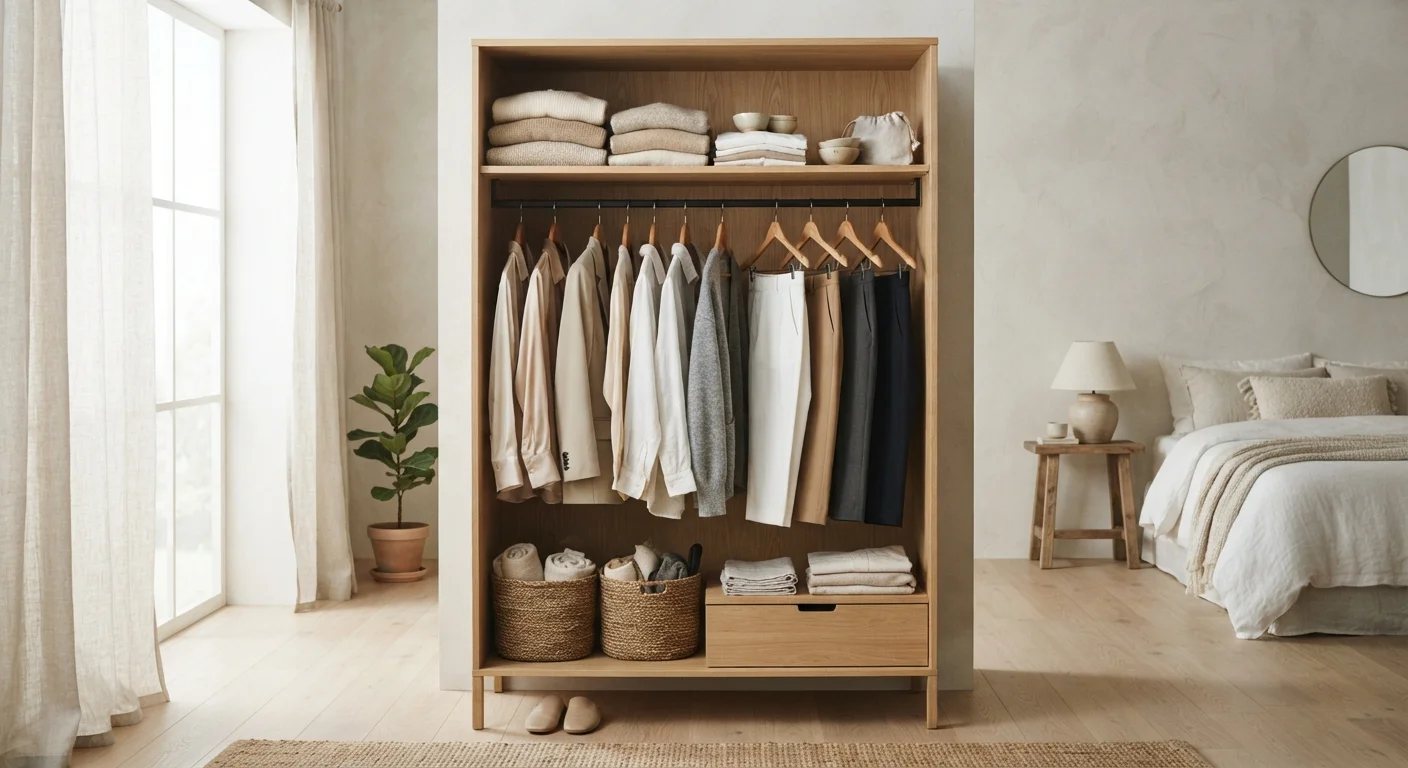
Key Takeaways
- A wardrobe of 15–20 strategic pieces can generate far more outfits than a larger, uncoordinated closet.
- Color cohesion is the single most powerful multiplier for outfit combinations.
- Versatile layering pieces expand any outfit's range without adding bulk to your wardrobe.
- Tops typically outnumber bottoms in effective mix-and-match wardrobes, often at a 3:1 ratio.
- Auditing your existing wardrobe before shopping prevents redundant purchases and closet bloat.
What you will need
Why Fewer Pieces Can Mean More Options
Most people assume wardrobe size and outfit variety move in the same direction. In practice, the opposite is often true. A closet full of one-off statement pieces, impulse purchases, and trend-driven items tends to produce decision fatigue rather than creative freedom — because nothing works together systematically.
Mix-and-match dressing is built on a different logic: every piece you own should be combinable with at least three others. When that principle guides your wardrobe, even 15 items can yield over 30 distinct outfits. It's basic combinatorics applied to your closet. If you're starting to think strategically about outfit-building, our practical starting point for real wardrobes lays a useful foundation before you begin editing.
The goal isn't minimalism for its own sake — it's intentionality. Every piece earns its place by working hard across multiple outfits and occasions.
What You'll Need Before You Start
Before reworking your outfit combinations, gather the essentials for a productive wardrobe audit.
What you will need
Full-length mirror
Allows you to assess how combinations actually look on your body rather than on a hanger.
Notepad or spreadsheet
Track your piece inventory and calculate potential outfit combinations mathematically.
Clothing rack or bed space
Lay out all pieces visibly so you can assess the wardrobe as a whole system.
Color swatch reference
Helps identify whether existing pieces sit within a cohesive palette or fragment across too many tones.
Step-by-Step: Building a High-Combination Wardrobe
Follow these steps to restructure what you already own — and identify exactly what's worth adding. For a proven formula to apply once your wardrobe is in order, see the outfit formula that works for almost every occasion.
Conduct a Complete Wardrobe Inventory
Remove every wearable item from your closet and group pieces by category: tops, bottoms, dresses, outerwear, layering pieces, and shoes. Count each category separately. This single act often reveals imbalances — a surplus of tops with very few viable bottoms, or a collection of coats with almost no occasion-appropriate core pieces beneath them.
Identify Your Core Color Palette
Look across all your pieces and note which colors appear most frequently. These are your natural anchors. Aim to identify two neutral bases (navy, black, white, camel, grey, or tan are the most versatile) and one to two accent colors that genuinely appeal to you and that recur across pieces you already love to wear. Pieces that fall entirely outside this palette are immediate combination blockers — they exist in isolation and resist pairing.
Apply the Three-Outfit Rule to Each Piece
Hold up each item and name three distinct outfits it could anchor or support using pieces you currently own. If you cannot identify three combinations — not counting outfits you'd never realistically wear — that piece is not pulling its weight in a small wardrobe. Set it aside for donation or storage rather than letting it take up visual space and cause decision fatigue.
Prioritise Layering Pieces
Layering pieces — blazers, cardigans, denim or utility jackets, lightweight trench coats — are the most powerful outfit multipliers in a small wardrobe. A single well-chosen blazer in your core neutral can transform a casual top-and-jeans pairing into something work-appropriate, and a relaxed dress into a structured daytime look. Ensure you have at least two layering options in your wardrobe before adding more core pieces.
Calculate Your Outfit Count and Set a Target
Use a simple formula: multiply the number of tops (including layering pieces) by the number of bottoms to get a baseline combination count. For example, 9 tops × 3 bottoms = 27 top-and-bottom combinations before adding shoes, outerwear, or accessories. Track your number now, then set a realistic target — many stylists consider 30–40 viable outfit combinations a functional threshold for a working wardrobe. Use this number to guide future purchases rather than shopping by impulse or trend.
Shop Only to Fill Identified Gaps
With your inventory, palette, and combination count in hand, you can shop with genuine purpose. If your audit revealed three bottoms and nine tops, your next purchase should be a bottom in one of your core neutrals — not another top, however appealing. Shopping to fill structural gaps rather than aesthetic impulses is what keeps a small wardrobe functional rather than stagnant. Revisit your inventory every season and apply the three-outfit rule to any item you're considering adding.
The Power of a Shared Undertone
Even within a neutral palette, pieces can clash if their undertones differ. Cool-toned whites (bright, blue-white) resist pairing with warm-toned creams (yellow-white). When building a cohesive palette, look not just at hue but at warmth — keeping undertones consistent across your base pieces makes mixing feel intuitive rather than forced.
Common Wardrobe Mistakes That Limit Combinations
Even well-intentioned wardrobes can fall into patterns that cap outfit potential. The most common culprit is color fragmentation — owning pieces in too many distinct palettes so that nothing pairs intuitively. A burgundy blazer, a rust-orange blouse, and a cherry-red skirt may each be individually attractive but resist pairing with one another or with a shared base.
A second frequent issue is category imbalance. Many wardrobes are heavy on tops or heavy on bottoms — rarely is the ratio deliberately calibrated. An effective mix-and-match wardrobe typically holds tops and layering pieces in a ratio of roughly 3:1 over bottoms, since bottoms (particularly trousers and jeans) can repeat more naturally across outfits without being noticed.
Finally, consider the role of occasion mismatch. If 80% of your pieces are occasion-specific — work-formal or weekend-casual — and don't cross over, your effective wardrobe is smaller than it looks. Foundational pieces that work across occasions are what bridge these contexts, and they're worth prioritising when you shop. For a broader view on how wardrobe composition affects long-term value, our piece on quality versus quantity in wardrobe building offers useful perspective.
Shopping Before Auditing Compounds the Problem
Adding new pieces to an unexamined wardrobe almost always deepens the combination problem rather than solving it. New purchases made without knowing your existing inventory tend to duplicate what you already have or introduce yet another color that nothing else matches. Always audit before you shop — even if that shopping feels like a wardrobe 'refresh.'