
Classic Cuts vs. Trend-Led Silhouettes: Making the Right Call for Your Wardrobe

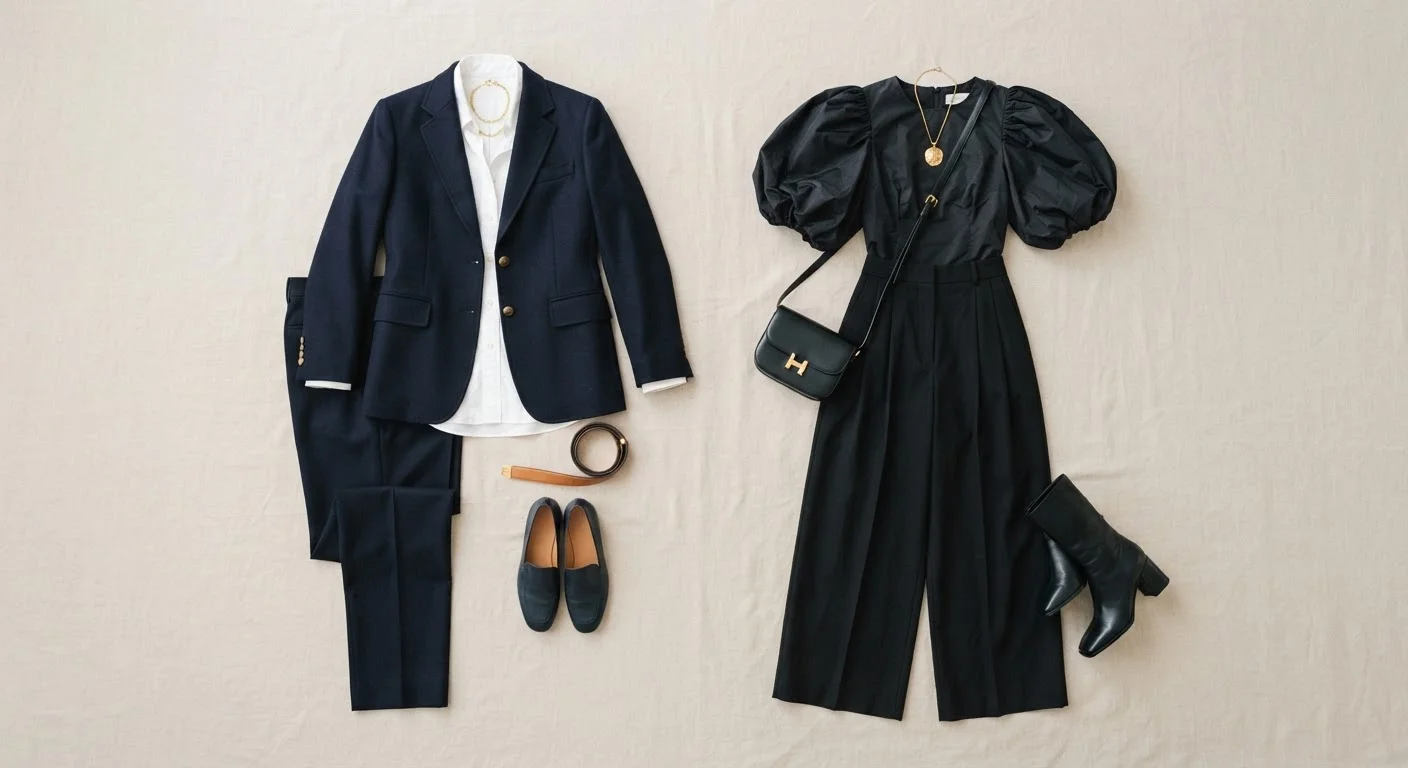
Key Takeaways
- Classic cuts like straight-leg trousers and tailored blazers consistently outlast trend cycles by years.
- Trend-led silhouettes offer creative expression but typically have a shorter wardrobe lifespan.
- The strongest wardrobes balance foundational classics with selective, intentional trend pieces.
- Silhouette is one of the most powerful — and underestimated — tools for personal style.
- Cost-per-wear, not purchase price, is the most useful measure of a garment's true value.
Our Verdict
Classic cuts deliver durability, versatility, and consistent confidence — they are the structural framework every wardrobe needs. Trend-led silhouettes have genuine value when chosen deliberately and worn with purpose, but they require honest self-assessment before investing. The most effective approach is not either-or but a considered ratio: a strong classic foundation with occasional trend pieces that genuinely reflect who you are.
| Best for | Recommended |
|---|---|
| Those building a wardrobe from scratch or re-editing an overcrowded closet | Classic Cuts |
| Those with an established wardrobe seeking seasonal creative refreshes | Trend-Led Silhouettes |
| Those prioritising cost-per-wear and long-term value | Classic Cuts |
| Those who feel confident in their personal style and want to experiment | Trend-Led Silhouettes |
What Makes a Silhouette 'Classic'?
A classic silhouette is one that has demonstrated staying power across decades of fashion cycles — not because it is boring, but because it flatters a wide range of body proportions and integrates easily with other garments. Think straight-leg trousers, the A-line skirt, the single-breasted tailored blazer, or the fitted crewneck. These shapes have proven their versatility through cultural shifts and trend rotations precisely because they prioritise proportion and balance.
As explored in our guide to silhouette as a building block, silhouette is the architectural decision behind every outfit — the foundation on which texture, colour, and pattern do their work. Getting it right means the rest follows more naturally.
| Classic Cuts | Trend-Led Silhouettes | |
|---|---|---|
| Wardrobe lifespan | 5+ years typical | 1–3 seasons typical |
| Outfit versatility | High — mixes broadly | Lower — often needs specific pairings |
| Cost-per-wear | Very favourable over time | Depends on trend longevity |
| Creative expression | Through styling and accessories | Built into the garment itself |
| Risk of feeling dated | Low — proportions remain relevant | Higher as trend cycle moves on |
| Best use case | Foundation and everyday dressing | Intentional seasonal refreshes |
The Case for Trend-Led Silhouettes
Trend-driven shapes — balloon sleeves, extreme wide-leg trousers, micro-lengths, sculptural shoulders — are not inherently wasteful or foolish choices. They reflect cultural moments, push creative boundaries, and can inject genuine energy into a wardrobe that has become too predictable. The issue is not the trend itself but the reasoning behind the purchase.
When a statement silhouette genuinely resonates with your aesthetic — rather than simply appearing everywhere at once — it can be a meaningful addition. The key distinction: are you drawn to this shape because it excites you, or because the visual repetition of trend saturation has made it feel necessary? A balanced look at what you gain and lose by chasing trends offers a useful framework for this self-assessment.
Test a Trend Silhouette Before Committing
Before purchasing a bold trend-led shape, try styling it in a fitting room with pieces you already own — or borrow or rent the garment for a real-world wearing. If the silhouette works with your existing wardrobe and you reach for it naturally, it has earned its place. If it demands a supporting cast of new purchases to function, that is a signal worth heeding.
How to Evaluate Your Investment
The most practical measure of any silhouette's value is cost-per-wear — the purchase price divided by the number of times you realistically expect to wear it. A well-constructed straight-leg trouser worn twice a week across three years has a dramatically lower cost-per-wear than an exaggerated trend piece worn six times before the moment passes.
Three questions sharpen this evaluation:
- Does this silhouette work with at least five pieces already in my wardrobe? Classic cuts almost always do; trend silhouettes frequently require new supporting pieces.
- Is this shape flattering across multiple styling contexts — dressed up, dressed down, at work, on weekends?
- Will I still want to wear this in two to three years?
For a structured pre-purchase checklist, these questions for intentional buying are worth keeping close. And if you're rethinking your approach more broadly, the quality versus quantity debate puts the investment logic in fuller context.
Building the Right Ratio for Your Life
No wardrobe philosophy survives contact with real life if it is too rigid. The most functional approach is a deliberate ratio: roughly 70–80% classic foundational silhouettes that mix freely across outfits, with 20–30% reserved for pieces with more personality, experimentation, or trend influence.
This ratio is not fixed — it adjusts based on your lifestyle, profession, and personal style identity. Someone navigating a formal workplace may lean more heavily on classics; someone with a creative role and strong aesthetic clarity may push the ratio toward the expressive end. Two contrasting approaches to intentional dressing explore how different frameworks handle this balance, and the Personal Style Tips hub offers ongoing guidance for refining your own approach.
What matters is that every piece — classic or trend-driven — is chosen with intention rather than impulse. Silhouette is not a superficial consideration; it is the architecture of how you present yourself to the world.