

Key Takeaways
- One intentionally clear surface can reduce the mental load of an imperfect home.
- The habit works because of its simplicity — one small commitment, maintained daily.
- Location matters: choose a surface you see repeatedly throughout your day.
- The anchor surface isn't about perfection; it's about having one reliable point of calm.
- This approach is compatible with shared homes, busy routines, and non-minimalist lifestyles.
The Anchor Surface Habit
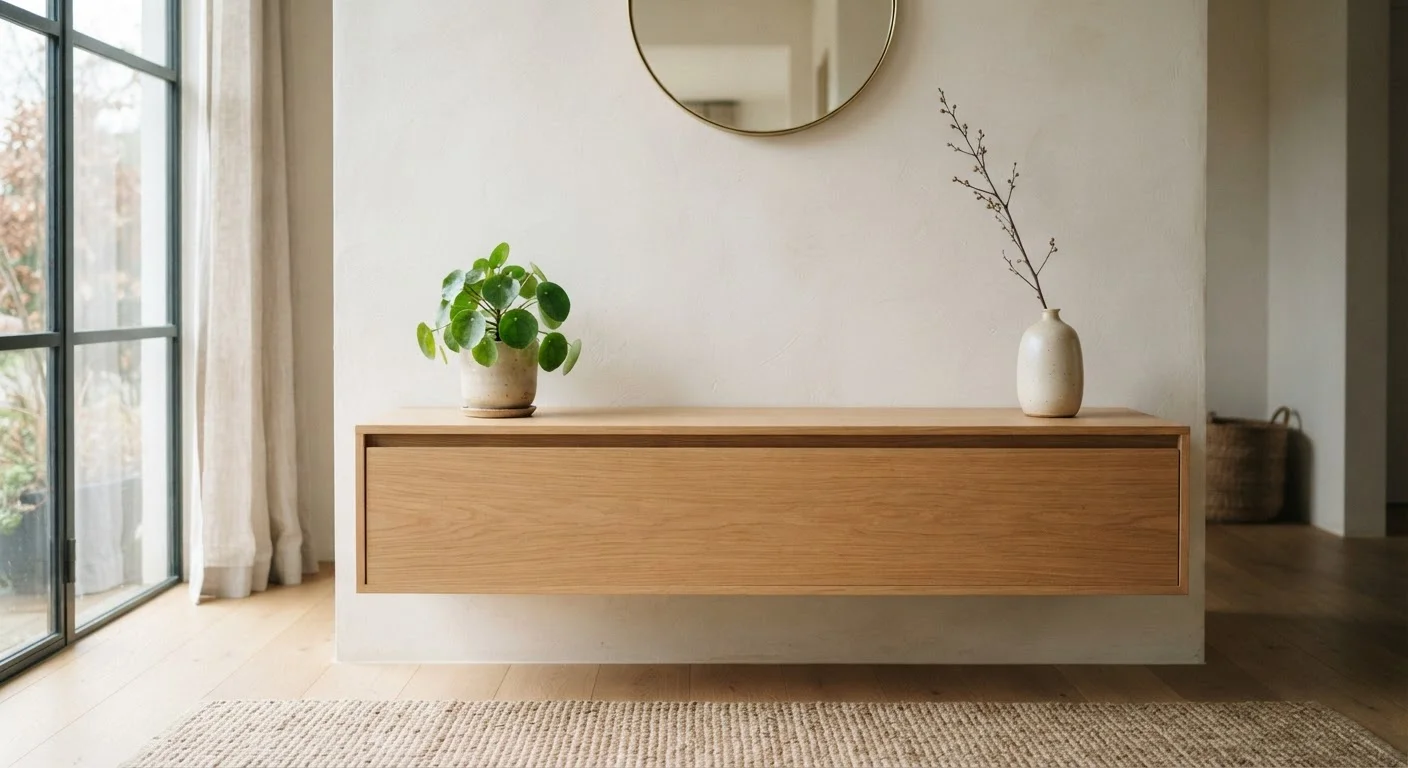
The anchor surface habit is the practice of designating one surface in your home — a kitchen counter, an entryway console, a bedside table — and committing to keeping it intentionally clear. It doesn't require a perfectly organised home or a minimalist aesthetic. It simply means that one specific surface holds almost nothing, and you return it to that state daily. That single act of maintenance becomes a behavioral anchor for how you relate to the rest of your space.
In habit research, a 'keystone habit' is a routine that triggers a cascade of other positive behaviors. An anchor surface functions similarly — its daily reset primes consistent, low-effort tidying across the broader environment.
Why One Surface Does More Than You'd Expect
Most organisation advice starts big: clear the whole room, rethink your systems, haul everything out. And while a full declutter has its place — sequencing decluttering before organising matters for lasting results — most of us don't have a free Saturday to overhaul our homes. What we do have is two minutes, repeated daily.
That's the actual premise of the anchor surface habit: low commitment, high perceptual payoff. Research in environmental psychology consistently points to visual complexity — the number of distinct objects in a field of view — as a driver of stress and reduced cognitive focus. A clear surface doesn't eliminate the clutter elsewhere. But it gives your eyes and brain one place to land without processing a pile. That matters more than it sounds.
Think of it less as an organisation strategy and more as a daily act of self-respect for your attention. If you've ever walked into a hotel room and exhaled before you even put your bag down, you already understand the effect. The furniture is minimal, nothing is stacked, and your nervous system responds immediately. You can create a small version of that within your real, fully-lived-in home.
77%
Adults who say clutter negatively affects mood
According to a survey by the American Psychological Association, a substantial majority of adults report that a disorganized home contributes to feelings of stress and anxiety.
66 days
Average time to form a new automatic habit
Research published in the European Journal of Social Psychology found that habit automaticity typically requires around 66 days of consistent repetition, not the often-cited 21.
Choosing the Right Surface for Your Life
Location determines whether this habit sticks. The surface you designate should be one you encounter naturally throughout your day — not tucked in a guest room you rarely enter. Common high-impact choices include the entryway console (first thing you see when you arrive home), the kitchen counter closest to where you prep meals, or the bedside table you look at first thing in the morning.
The test is simple: does clutter on this surface reliably affect your mood? If seeing a pile on your kitchen counter creates a low-grade sense of overwhelm even when you're trying to ignore it, that's your anchor surface. A tidy-looking home can still feel mentally chaotic for exactly this reason — the specific placement of visual noise matters, not just the overall volume of it.
Once chosen, the rule is simple: this surface holds almost nothing. One or two intentional objects — a plant, a candle, a small tray — are fine. What stays off it are the accumulating objects of daily life: mail, chargers, bags, miscellaneous items that land somewhere temporarily and stay permanently.
Make It Obvious Before It's Automatic
In the first week, place a small visual cue on or near your anchor surface — a sticky note, a single stone, anything that signals 'this stays clear.' Once you've reset the surface daily for a couple of weeks without the reminder, remove it. The habit will already be forming in the background.
Making the Reset a Daily Habit, Not a Chore
The maintenance of an anchor surface should take under two minutes. If it's regularly taking longer, the surface has accumulated too much, or you haven't found the right homes for the things that tend to land there. Solving the storage problem upstream — giving those items an actual place to live — is what turns a daily reset from effortful to automatic.
Attach the reset to something you already do. Clear the surface after your morning coffee. Do a 90-second pass before you sit down for the evening. Habit stacking — linking a new behavior to an existing one — is one of the more reliable ways to make small routines stick without relying on motivation alone.
In shared homes, this habit requires a brief conversation rather than unilateral enforcement. Shared spaces involve competing needs for order and personal territory, and claiming one surface as a shared calm zone works better with buy-in than with friction. It's a reasonable ask: one surface, intentionally clear, maintained together.
What This Habit Is — and Isn't
The anchor surface habit isn't a path to minimalism. It doesn't require you to own less, rethink your décor, or adopt any particular aesthetic. Your home can be warm, full, and deeply personal — rooms can feel both calm and genuinely lived-in without looking staged or stripped back. The anchor surface is simply one exception within that fullness: one place the eye can rest.
It also isn't a substitute for addressing deeper organisation challenges. If clutter is affecting your quality of life broadly, a room-by-room decluttering process may be a more complete solution. But for many people — especially those who feel overwhelmed by where to start — one clear surface is a legitimate, evidence-adjacent starting point. It builds the daily reset reflex, demonstrates that the habit is sustainable, and often creates momentum toward broader change.
Start with one surface. Keep it clear for two weeks. Notice whether the rest of your home — or at least your experience of it — shifts in any meaningful way. That's the quiet case for a single uncluttered surface: it costs almost nothing, and it tends to return more than it asks.