

Key Takeaways
- Most leases permit far more personalisation than tenants assume — start by reading yours carefully.
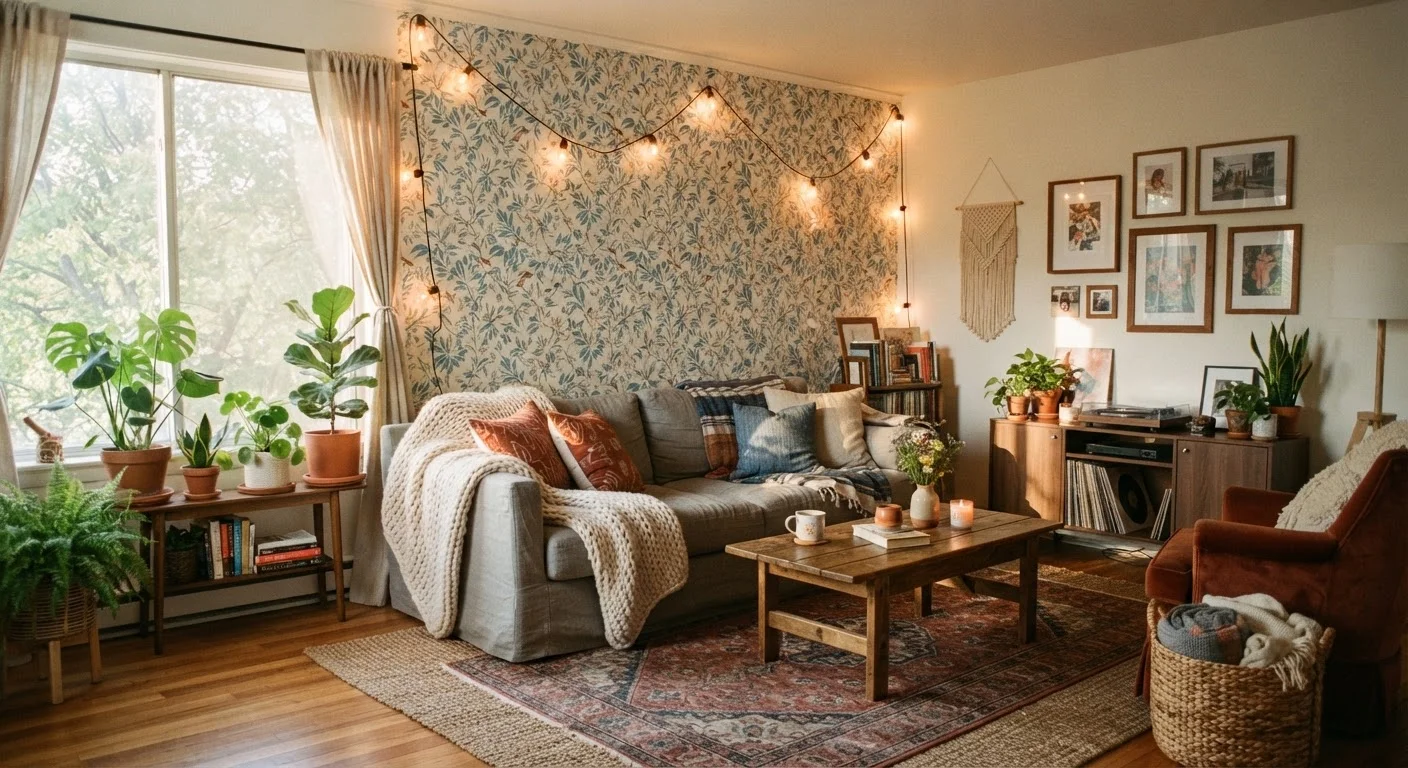
- Removable products like peel-and-stick wallpaper and adhesive hooks create significant visual impact without permanent damage.
- Furniture arrangement and scale are the single most underused tools available to renters.
- Layering lighting, textiles, and scent transforms how a space feels without touching a single fixture.
- Intentional home habits — not just décor — are what make a rented space genuinely liveable.
Start here
What Your Lease Actually Allows
Next
Reversible Changes That Have Real Impact
Then
Furniture and Layout as Your Primary Tool
Layer in
Lighting, Textiles, and Scent: The Sensory Layer
Sustain it
Building Intentional Home Habits as a Renter
What Your Lease Actually Allows
The first mistake most renters make is treating the lease as a blanket prohibition on personalisation. In reality, most standard leases restrict permanent structural changes — not every decision about how the space looks and feels. Before assuming something is off-limits, read your lease with a specific question in mind: does this clause apply to what I want to do?
Common lease restrictions typically cover painting walls without permission, drilling large holes or installing anchors, altering fixtures, and making structural modifications. They rarely cover furniture arrangement, the addition of rugs, hanging lightweight items with adhesive products, or introducing textiles and plants.
Permanent alteration
Any change to a rental property that cannot be fully undone before moving out, such as painting walls, drilling large holes, or removing fixtures. Most leases prohibit these without written landlord permission.
Reversible change
A modification to a space that can be completely removed or returned to its original state, leaving no lasting evidence — for example, adhesive hooks, removable wallpaper, or rearranged furniture.
Security deposit
A sum of money paid to a landlord at the start of a tenancy, held as insurance against damage beyond normal wear and tear, and typically returned at move-out if the property is in acceptable condition.
Lease addendum
A written document added to a lease agreement that records any special permissions or modifications both parties have agreed to — such as approval to paint a wall in a specific color.
Normal wear and tear
Minor deterioration of a property that occurs through ordinary use over time, such as light scuffs or small nail holes. Most leases and jurisdictions do not hold tenants financially responsible for this type of deterioration.
When you're unsure, ask in writing. A brief email to your landlord asking whether a specific change is permitted creates a paper trail and often surfaces more flexibility than you'd expect — particularly if you frame the request as something reversible and low-risk. For a deeper look at the full range of legal, stylistic options available to renters, see our complete guide to personalising a rented space.
Reversible Changes That Have Real Impact
The market for renter-friendly products has expanded significantly over the past decade. Peel-and-stick wallpaper, removable tile stickers, adhesive picture-hanging strips, and tension rods now make it possible to meaningfully transform a space without leaving a trace. The key is understanding what each product is rated for and testing before committing fully.
- Removable wallpaper: Works best on smooth, flat, well-primed walls. Apply a small test section and leave it for 48 hours before covering a full wall.
- Adhesive hooks and strips: Rated by weight — match the product to the item. They work on most painted drywall but can fail on heavily textured surfaces.
- Tension rods: Useful for hanging curtains, room dividers, or even open shelving inside deep closets — no drilling required.
- Removable tile stickers: A practical option for kitchens and bathrooms, where the existing tile may be dated or generic.
Always Document Before You Decorate
Take timestamped photos of every wall, floor, and fixture on the day you move in. Store them somewhere accessible, like a cloud folder. If any deposit dispute arises at move-out, clear before-and-after documentation is your strongest protection.
Document everything before and after. Photograph the walls, floors, and fixtures at move-in and again at move-out. This protects your deposit and makes any conversations about damage straightforward.
Furniture and Layout as Your Primary Tool
Most renters underestimate how much of a space's personality comes from furniture arrangement rather than wall color or fixtures. A thoughtfully placed sofa, a rug that anchors a seating area, or a bookshelf used as a room divider can completely redefine how a generic apartment feels — none of which requires landlord permission.
Scale matters more than quantity. One well-proportioned piece in the right spot does more than several small items fighting for attention. If you're working with a compact footprint, our small-space living guide covers furniture selection and arrangement strategies in depth.
In shared rentals, furniture layout also becomes a tool for defining personal zones and negotiating shared use — a challenge explored in our guide to shared spaces.
Lighting, Textiles, and Scent: The Sensory Layer
Standard rental lighting is almost universally unflattering — overhead fixtures with harsh bulbs are the norm. The good news: you don't need to touch the existing wiring to fix it. Plug-in sconces, floor lamps, table lamps, and battery-operated LED strip lights can entirely replace your reliance on overhead fixtures and transform the mood of a room in under an hour.
Textiles are your next lever. A large area rug visually anchors a room and softens hard floors. Curtains hung high and wide — using tension rods or removable hooks — make windows look larger and ceilings feel taller. Layering throws and cushions introduces texture, color, and warmth that no landlord can object to. For more ideas on making compact living rooms feel generous and intentional, see our styling guide for small living rooms.
Scent is often overlooked as a design tool. Candles, diffusers, and fresh plants contribute to how a space feels on a sensory level — and that feeling is a significant part of what makes a home yours rather than just somewhere you live.
Building Intentional Home Habits as a Renter
Personalising a rental isn't just a one-time styling project — it's an ongoing practice. The homes that feel most alive and liveable are shaped by daily habits as much as by décor choices. A clear surface you maintain, a morning routine that uses your space with intention, or a weekly reset that keeps clutter from accumulating all contribute more to how your home feels than any single purchase.
Think of your rental as a laboratory for understanding what you actually need from a home. What storage configurations work for your daily rhythm? Which areas do you genuinely use, and which feel unused or uncomfortable? Renters who engage with these questions often make sharper decisions when they eventually have more control over their space — whether that's a different rental or a home they own.
Style and home are more connected than they might seem at first. The same intentionality you apply to curating a wardrobe — knowing what works for your life, not just what looks good in theory — applies to curating a home. If you're exploring how that aesthetic sensibility translates across contexts, our personal style tips hub is a useful companion read.
This article is for general informational purposes only. Lease terms vary significantly by landlord, property, and location — always review your specific lease and seek appropriate professional or legal guidance for your individual situation.