

Key Takeaways
- Research destination-specific customs before you arrive, not after an awkward moment.
- Dress codes at religious sites are non-negotiable and should be prepared for in advance.
- Learning a few words in the local language signals genuine respect and goodwill.
- Photography etiquette varies widely — always ask permission before photographing people.
- Mindful travel behaviour shapes how local communities experience tourism over time.
What you will need
Why Cultural Etiquette Is a Travel Essential, Not an Optional Extra
Respectful travel is less about following a rigid rulebook and more about arriving with genuine curiosity and humility. Every destination carries its own social codes — around dress, greeting, dining, and public behaviour — and the gap between what feels natural at home and what reads as respectful abroad can be wider than most travellers expect.
The good news: a little intentional preparation goes a long way. Approaching a new culture with the same openness you bring to mindful living at home helps frame etiquette not as a constraint, but as a form of connection. When you understand why a custom exists, following it stops feeling performative and starts feeling meaningful.
This guide walks through the key areas where cultural awareness matters most — and how to navigate each one without second-guessing every step.
What you will need
Before You Go: Research That Actually Makes a Difference
Effective pre-trip research isn't about memorising a list of dos and don'ts. It's about understanding context. Knowing that removing your shoes is expected inside many homes and temples across East and Southeast Asia matters less if you don't also understand the underlying ideas around cleanliness and sacred space.
Start with government travel advisories for entry requirements and general safety context, then move into cultural resources — travel memoirs, local blogs, documentary content, or even community forums written by people from that place, not just people passing through it. Pair your cultural homework with smart practical preparation, and see our packing guide for the logistics side of getting trip-ready.
Identify the specific cultural norms of your destination
Focus on the areas most likely to cause unintentional offence: dress codes (especially at religious sites), greetings and physical contact norms, dining customs, and expectations around public behaviour such as noise, affection, or alcohol consumption. Cross-reference at least two sources — ideally including one written by locals or long-term residents.
Pack a modesty layer you can reach quickly
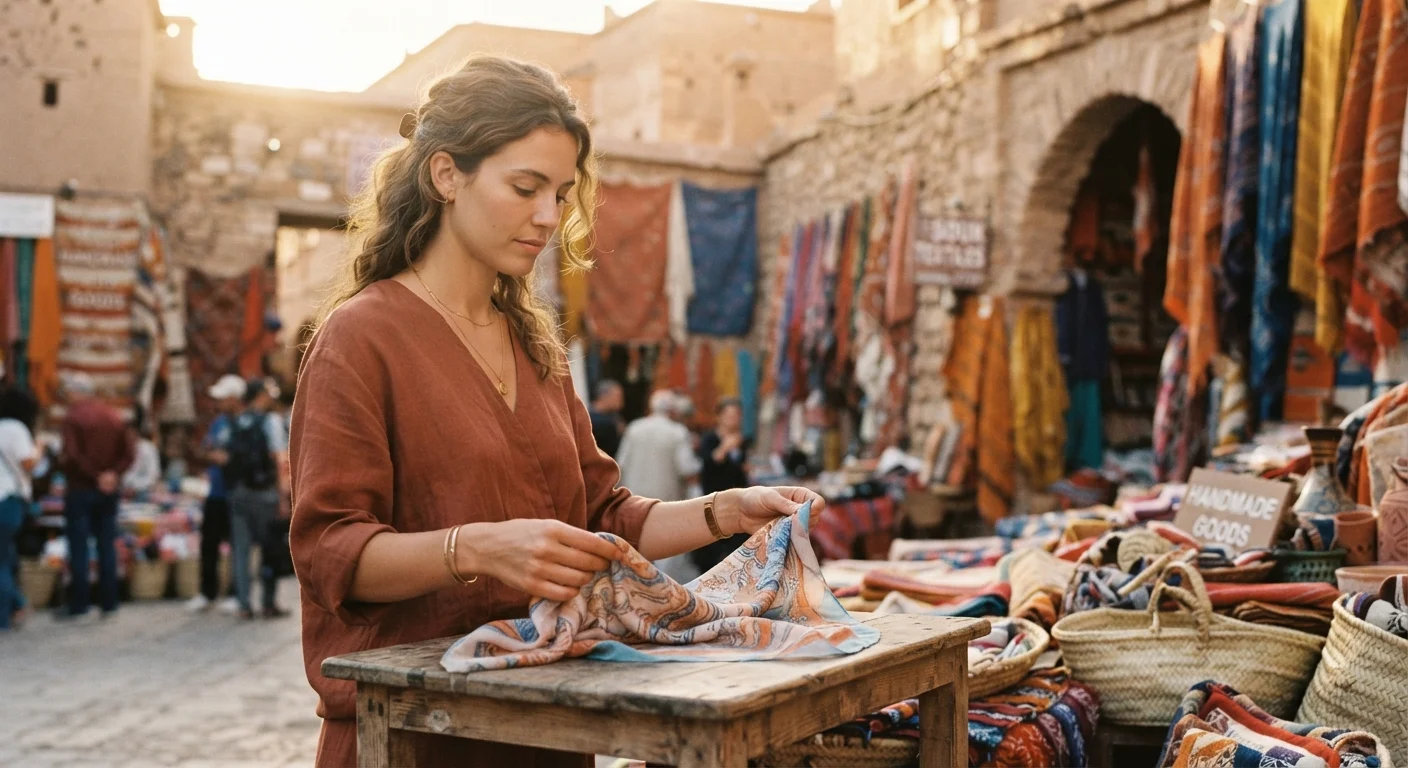
A lightweight scarf, wrap, or long cardigan is the single most versatile piece you can carry. It functions as a shoulder cover, a head covering when entering mosques or temples, a lap cover in conservative rural areas, and a practical layer in over-air-conditioned transport. Keep it in your day bag, not buried in your luggage.
Learn a handful of key phrases in the local language
Hello, thank you, please, excuse me, and I'm sorry carry enormous social weight. Attempting even basic phrases in someone's language communicates effort and respect in ways that no translation app can fully replicate. Pronunciation doesn't need to be perfect — the attempt is what matters.
Observe before you participate
Arrive at a new cultural setting as a quiet observer first. Watch how locals interact, how they move through a space, how they handle transactions or greetings. This brief pause prevents most accidental missteps and signals that you're paying attention — which communities notice and generally appreciate.
Ask for permission, and accept refusals gracefully
Whether requesting to photograph someone, join a ritual, or enter a private space, always ask clearly and be genuinely prepared to hear no. A refusal isn't a personal rejection — it's often a boundary rooted in cultural or spiritual significance. Thanking someone for their time, even after a no, leaves the interaction on respectful terms.
Reflect and adjust as you go
Respectful travel is iterative. If something felt off in an interaction, take a moment to consider why — not to spiral into self-criticism, but to recalibrate. Keeping a brief travel journal can help you track patterns, notice where you're thriving in cross-cultural connection, and identify where more awareness would serve you.
Common Pitfalls and How to Navigate Them Gracefully
Even well-intentioned travellers slip up — it's what happens next that defines the interaction. If you've unknowingly committed a faux pas, a calm acknowledgement and genuine apology usually defuses the moment. Defensiveness rarely does.
Curiosity Is the Best Default Setting
When you're unsure whether something is appropriate, lead with a question rather than an assumption. Locals are generally more forgiving of genuine curiosity than of confident ignorance. Asking 'Is this okay?' or 'Is there a custom I should follow here?' is almost always welcomed. It signals that you're trying — and that effort matters.
Photography is one of the most common flashpoints. In many communities, particularly in rural or religiously significant areas, photographing people without explicit consent is considered invasive or spiritually harmful. The default position should always be to ask — and to accept a no graciously. The same principle applies to religious ceremonies, sacred objects, and private moments in public spaces.
Dress is another area where missteps happen most visibly. Beyond modest dress at religious sites, many destinations have expectations around shoulder coverage, hemlines, or the presence of a head covering that apply throughout the day, not just at formal locations. Planning a versatile, culturally aware wardrobe connects directly to the broader idea of dressing with personal style and intention — where thoughtfulness about context is always part of the equation.
Finally, tipping, bargaining, and dining customs vary significantly. In some cultures, tipping is expected and meaningful; in others it can be seen as condescending. In many markets, gentle bargaining is a form of social exchange — but aggressive haggling is not. Observe first, engage second.
For a broader view of how individual behaviour shapes destination communities, sustainable tourism offers a useful framework that extends well beyond environmental impact.