

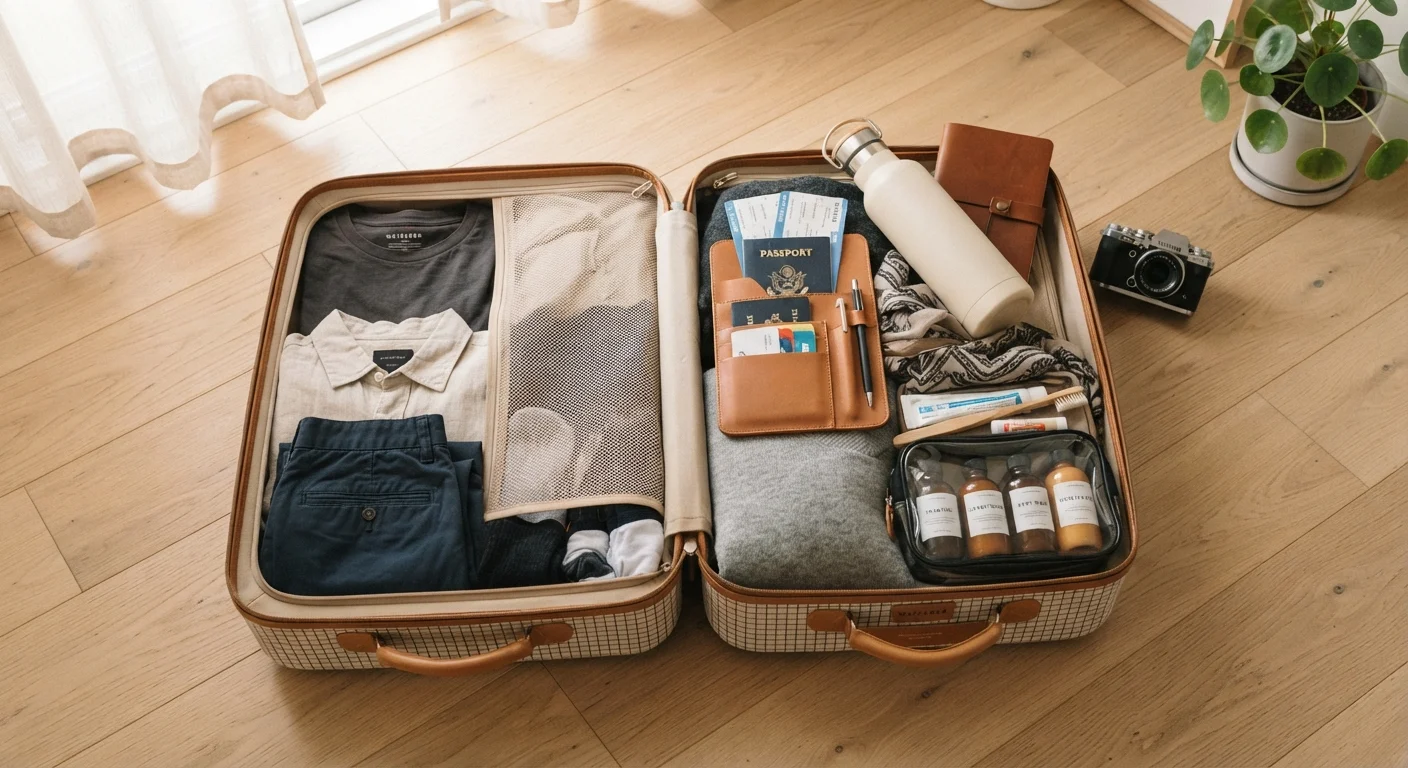
Key Takeaways
- Packing from a structured checklist prevents both overpacking and forgetting essentials.
- Clothing choices should be guided by versatility and destination context, not quantity.
- Documents, wellness items, and comfort tools deserve their own dedicated packing category.
- Reviewing your checklist 48 hours before departure catches overlooked gaps in time to fix them.
- A leaner bag means less fatigue, faster movement, and more mental bandwidth on arrival.
Summary
32 items · 30–60 minutes
Why Most Packing Lists Work Against You
The average packing list is either a generic inventory copied from a travel blog or a frantic mental scramble the night before departure. Neither approach serves you. One leads to a bag stuffed with things you never touch; the other leaves you buying overpriced toiletries at an airport pharmacy because you forgot deodorant.
The checklist below was built around a different premise: that packing is a design problem. You're designing a mobile wardrobe and a portable life-support system for a finite number of days. When you approach it that way, every item earns its place — or it doesn't make the cut.
Before you open your suitcase, do a quick mental audit of your destination's cultural context. How you dress is part of how you show up as a guest. Our guide on respectful travel behaviour is worth a read before finalising your clothing choices. Equally, if your itinerary is still a work-in-progress, consider how over-scheduling affects your trip — because what you pack should match what you'll actually do, not an overly ambitious agenda.
Travel Documents & Financial Essentials
Clothing & Footwear
Toiletries & Personal Care
Health & Wellness
Technology & Connectivity
Comfort & In-Transit Essentials
How to Use This Checklist Without Overthinking It
Run through each category in order, starting with documents — because nothing else matters if you can't board the plane. Clothing comes next, using the rule of versatility over volume: if a piece only works with one other item in your bag, it probably doesn't belong there. For deeper thinking on choosing pieces that genuinely earn their place, the closet audit checklist applies the same logic to your everyday wardrobe.
Packing Cubes
Compress and organise clothing by category so your suitcase stays structured throughout your trip.
Clear Liquids Bag (TSA-compliant)
Required for carrying toiletries in carry-on luggage through airport security.
Digital Document Storage (secure cloud or app)
Backs up passports, visas, insurance details, and itineraries so you can access them if physical copies are lost.
Portable Luggage Scale
Prevents costly overweight bag fees at check-in by letting you weigh your bag before leaving home.
Packable Day Bag
Provides a lightweight, foldable option for day excursions without carrying your full luggage.
Mark items as packed rather than simply checking them off a list you'll lose. A notes app, a printed sheet in your bag, or even a photograph of your packed suitcase all work. The goal is confidence — knowing that what you need is there, and that what isn't there was a deliberate choice, not an oversight.
Finally, set a hard reminder to review your checklist 48 hours before you travel. That window is long enough to restock a prescription, order a travel adapter, or reconsider that fourth pair of shoes. It's a small habit that pays off every single time.
Don't Leave Health Prep to the Last Minute
Vaccination requirements and travel health recommendations vary widely by destination and can change. Some vaccines require multiple doses spaced weeks apart. Consult a travel health clinic or your healthcare provider at least four to six weeks before departure — earlier if your itinerary includes remote or high-risk regions. Always verify entry health requirements with official government sources before you travel.