

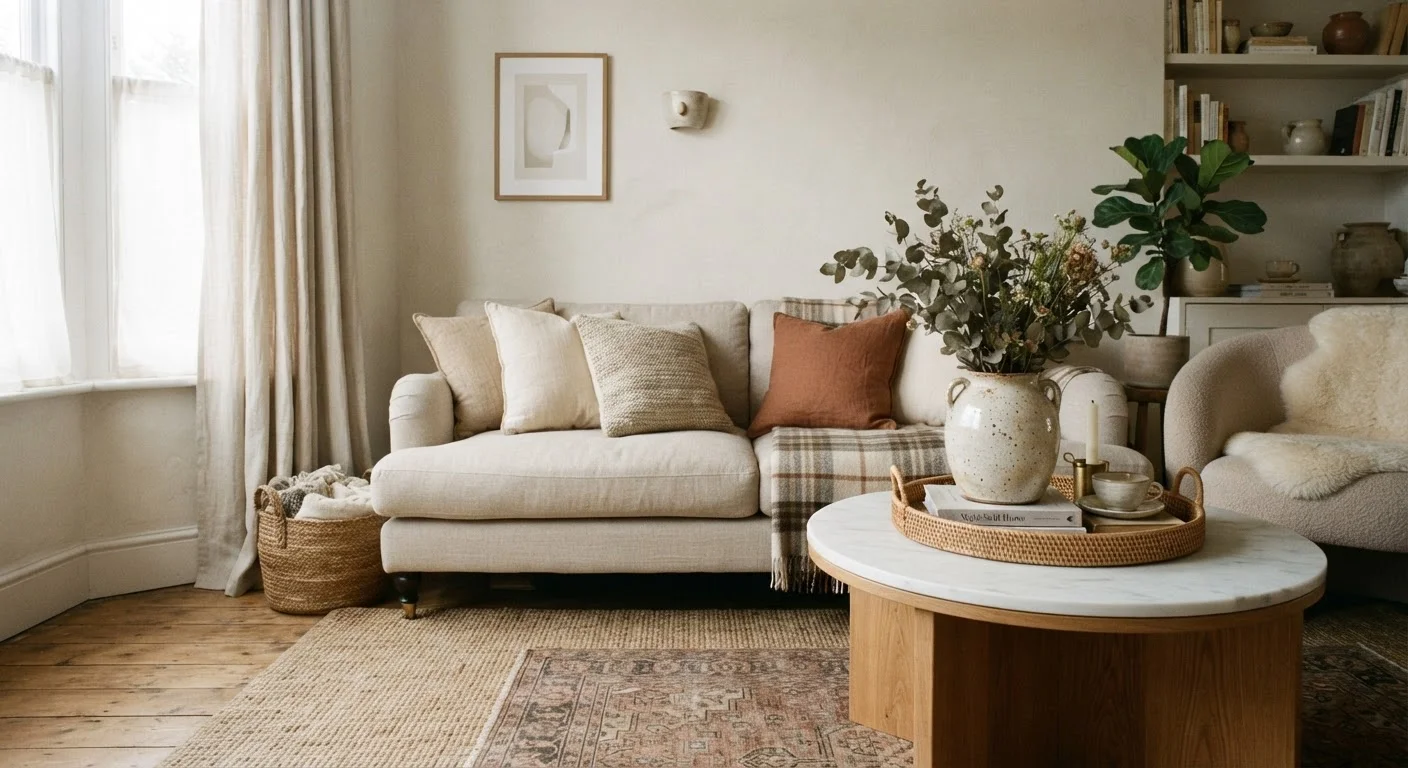
Key Takeaways
- Texture does more than color to prevent a room from feeling flat or sterile.
- Mixing materials across three distinct tactile families creates visual and sensory balance.
- Odd numbers and varied scale keep a layered arrangement from looking too deliberate.
- Existing pieces — throws, trays, books — are often enough to start building texture.
- Lighting interacts directly with surface texture, amplifying or softening its effect.
What you will need
Why Texture Is the Element Most Rooms Are Missing
Color gets nearly all of the attention in interior design conversations, and for good reason — it's the first thing most people notice. But color can only carry a room so far. What determines whether a space feels alive or flat, warm or clinical, is almost always texture: the quality and variety of surfaces that light bounces off, that hands brush against, that the eye reads even from across the room.
A room painted in a rich, considered color but furnished entirely in smooth, matte-uniform surfaces will still feel one-dimensional. Conversely, a room in near-neutral tones — cream, sand, warm white — can feel deeply layered and richly interesting if its surfaces vary: rough-weave linen beside smooth marble, weathered oak beside polished ceramic. This interplay of surfaces is what interior designers often call tactile variety, and it's the quiet architecture beneath everything else you see.
The same logic applies beyond the home. Texture as a building block is what makes an outfit feel considered rather than assembled — proof that this design principle travels across disciplines. And if you're thinking holistically about how a space actually feels to be in, consider pairing your visual work with the sensory levers most people overlook — scent, sound, and warmth — to complete the picture.
Start With What You Own
Texture layering doesn't require new purchases. Before shopping, do a full audit of what's already in your home — linen napkins, a wicker basket, ceramic mugs, stacked books with varying spine thicknesses. Redistributing existing objects across a room is often more effective than introducing something new.
What follows is a practical toolkit for building texture into any room, starting with what you already own.
What you will need
Gather your tools before you start:
Linen or cotton throw
Adds a soft, matte textile layer to sofas, chairs, or beds without visual weight.
Woven or rattan tray or basket
Introduces organic, irregular texture that contrasts with smoother furnishings.
Ceramic or stoneware object
Provides dense, tactile surface interest — matte glazes especially catch light differently than wood or fabric.
Natural wood element
Grounds a layered arrangement with warmth and grain variation.
A stack of books or magazines
Adds height variation and a paper texture that softens harder surfaces nearby.
A textured cushion cover (boucle, velvet, or knit)
Quickly shifts the tactile quality of a seating area at low cost and effort.
How to Layer Materials With Intention
The steps below are designed to work in any room — living spaces, bedrooms, home offices — and at any budget. The goal is a deliberate, cumulative approach rather than an overhaul.
Audit the textures already in the room
Walk through the space and mentally categorize every surface by its tactile quality: smooth (glass, lacquer, polished stone), soft (fabric, wool, cotton), and rough or organic (wood grain, rattan, unglazed ceramic, brick). Note which category dominates. Most rooms that feel flat are heavy in one category — typically smooth — and starved in the others.
Identify your three-texture foundation
Aim to anchor every zone — a coffee table vignette, a shelf, a bed — with at least one element from each tactile family: something soft, something rough or woven, and something smooth or hard. This triangulation is what prevents monotony. A linen cushion, a ceramic bowl, and a wooden coaster on a side table is a simple but complete example of this principle in practice.
Vary scale and height within each layer
Texture alone isn't enough if every object is the same size. Group items in odd numbers and vary their height. A tall ceramic vase next to a low wooden bowl next to a small woven coaster creates movement even before anyone touches anything. Scale contrast makes the eye travel, which is what gives a curated shelf or surface its sense of life.
Introduce softness through layered textiles
Textiles are the fastest way to shift a room's feel. Layer a chunky knit or linen throw over the arm of a sofa rather than folding it squarely — a casual drape reads as lived-in rather than staged. Add a second textile in a different weave: a flat-woven cotton rug under a slightly shaggier jute runner, for instance. The contrast between the two surfaces does the work quietly.
Cushion covers are worth rotating seasonally — a boucle or velvet for cooler months, a loose-weave linen in summer — so the room's texture shifts without a significant investment. The same principle applies to personal style: texture as a building block works as powerfully in fashion as it does in interiors.
Ground the arrangement with natural and raw materials
Where possible, bring in at least one element that is genuinely raw or minimally processed: an unglazed ceramic pot, a piece of rough-edged stone, a basket with visible weave irregularities. These materials carry visual warmth that manufactured surfaces can't replicate. They also age and patina in ways that make a room feel more personal over time. For guidance on how these choices connect to a broader sense of calm, see the principles behind rooms that feel calm and lived-in.
Step back and edit ruthlessly
Once you've built up your layers, remove two or three items and observe the effect. Good texture layering doesn't look effortful — it should feel as though each object simply belongs. If the grouping looks cluttered, the issue is usually repetition of scale rather than too much texture. Remove items that duplicate height or material rather than those that add contrast.
Avoid Repeating the Same Surface
When every element in a room shares the same finish — all matte, all smooth, all shiny — the space reads as flat no matter how carefully it's arranged. Variety in surface quality is as important as variety in color or form. Aim for at least three distinctly different tactile surfaces within any single zone.
Let Light Do the Talking
Texture is most visible when light rakes across a surface at an angle. Position a floor lamp or table lamp close to a textured wall, basket, or fabric to make its surface quality pop. This is especially effective in the evening when natural light fades. For a deeper look at how light shapes mood, see our piece on natural and artificial light.
Texture layering, like most design work, rewards patience over speed. The rooms that feel most personal and most beautiful are usually assembled slowly — one considered addition at a time, with plenty of space between choices to let the arrangement settle. Trust the process, and trust your own eye more than any trend.