

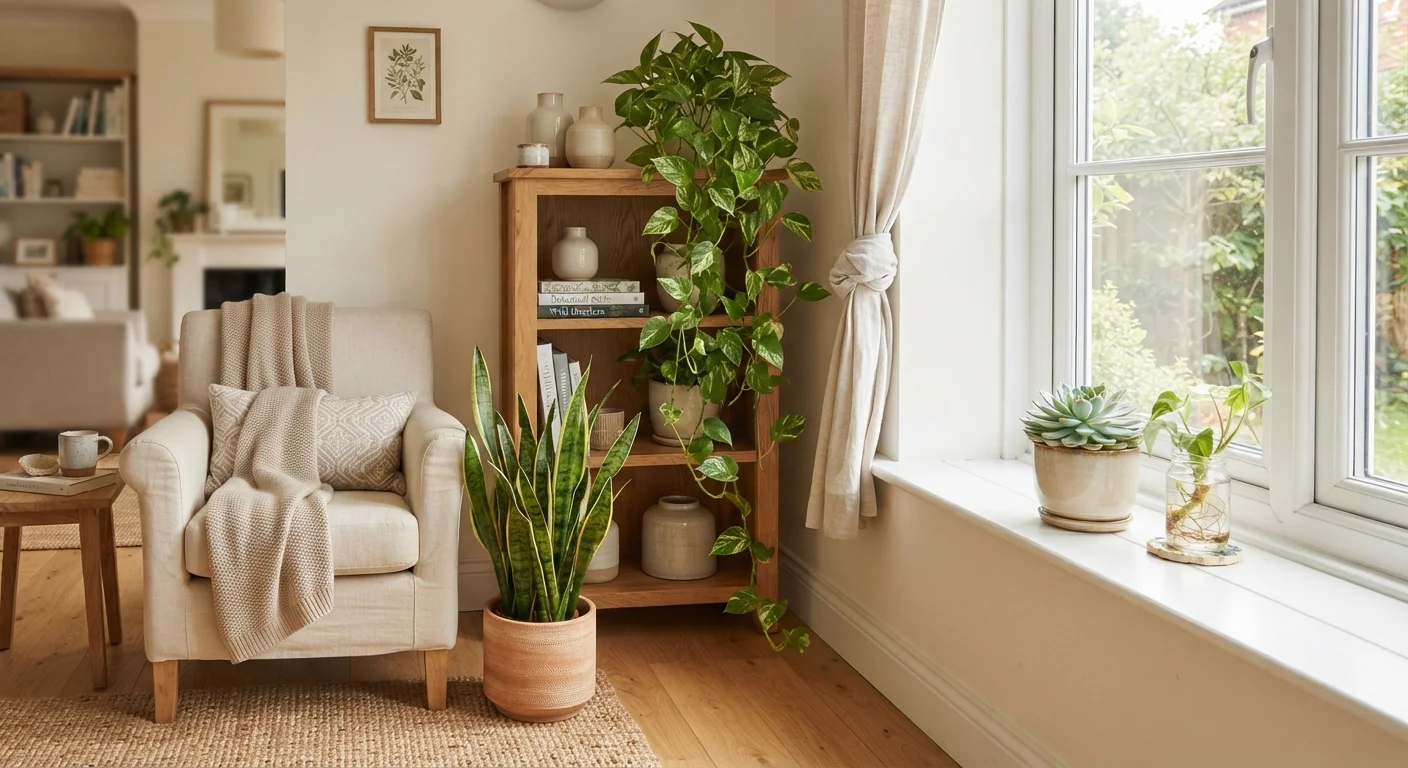
Key Takeaways
- Most "easy" houseplants fail because of overwatering, not neglect — less is usually more.
- Light conditions matter more than any fertiliser or special soil mix.
- Each plant has one or two non-negotiable needs; meet those and it will tolerate almost everything else.
- Common care myths — like misting tropical plants or placing cacti in dim corners — cause more harm than good.
- A small collection of well-chosen plants can meaningfully improve how a space looks and feels.
Why "Low-Maintenance" Is Relative
Walk into almost any home décor conversation and someone will mention how they "can't keep plants alive." Usually, the culprit isn't neglect — it's mismatched expectations. A plant labeled low-maintenance at the nursery was selected for resilience in ideal conditions, not for survival in a north-facing apartment with irregular watering. The good news: there genuinely are plants that absorb mistakes gracefully, as long as you understand what each one actually needs rather than what the internet insists it needs.
Plants are one of the most accessible ways to make a space feel intentional and alive. Whether you're working with a compact studio — the kind of environment explored in our guide to small-space living — or a shared apartment where greenery softens the edges of a busy household, the right plants reward low effort with outsized visual return. The key is pairing each variety with the conditions you already have, not the ones you wish you had.
Pothos (Epipremnum aureum)
Pothos is genuinely difficult to kill, which makes it the ideal starting point for anyone rebuilding their confidence with plants. It tolerates low light, infrequent watering, and the occasional complete neglect — though it won't thank you for all three at once.
What it actually needs: Indirect light (bright is better, but it adapts), watering only when the top inch or two of soil feels dry, and a pot with drainage. Skip the misting — pothos doesn't benefit from it in most home environments, and wet leaves in low-airflow spaces can invite fungal issues.
Common myth: That it thrives in very low light. It survives it; it doesn't thrive in it. Variegated varieties especially will lose their patterning without adequate indirect light.
Pothos survives neglect, but bright indirect light is where it genuinely thrives.
Snake Plant (Dracaena trifasciata)
Few plants are as architecturally striking and as forgiving as the snake plant. Its upright, sword-like leaves add structure to any corner, and it tolerates irregular watering better than almost any other common houseplant.
What it actually needs: Well-draining soil is non-negotiable — root rot from sitting water is the number one snake plant killer. Water sparingly: once every two to four weeks in winter, slightly more in summer. It prefers indirect light but tolerates low-light rooms reasonably well.
Common myth: That it's a "bedroom plant" because it converts CO₂ to oxygen at night. All plants do some gas exchange at night; the effect in a standard bedroom is not meaningfully different from other species. It's a great bedroom plant for its size and aesthetics — not for any special air-purifying superpower.
Root rot is the snake plant's only real enemy — always choose a pot with drainage holes.
ZZ Plant (Zamioculcas zamiifolia)
The ZZ plant has become a design staple for good reason: its glossy, deep-green leaves look polished in almost any interior, and it stores water in its rhizomes — underground root structures — allowing it to go weeks without attention.
What it actually needs: Let the soil dry out completely between waterings. In a typical home, this may mean watering once a month or less in cooler months. It handles low light better than most, though growth slows considerably without brighter indirect light.
Common myth: That it's toxic and therefore dangerous to have in the home. ZZ plants are indeed mildly toxic if ingested, so they're worth keeping away from pets and young children — but casual contact or proximity poses no risk to adults. Wash hands after handling the sap, and you're fine.
The ZZ plant's rhizomes act as a water reservoir — overwatering is a far greater risk than underwatering.
Rubber Plant (Ficus elastica)
If you want something bold and sculptural without moving into high-maintenance territory, the rubber plant delivers. Its large, waxy leaves — deep burgundy in some varieties, bright green in others — make it a visual anchor in living rooms and home offices alike.
What it actually needs: Consistent bright indirect light is where rubber plants perform best. They dislike being moved frequently, so choose a location and commit to it. Water when the top layer of soil is dry, and wipe the leaves occasionally with a damp cloth — this isn't aesthetic fussiness, it allows the plant to photosynthesize more efficiently.
Common myth: That rubber plants are fragile and difficult. They're actually quite resilient once established. The main error people make is moving them repeatedly while they adjust to a new home, which causes unnecessary leaf drop.
Pick one bright spot and leave it there — rubber plants settle into stability rather than frequent relocation.
Aloe Vera
Aloe vera occupies a unique place in the houseplant world: it's both decorative and genuinely functional, since the gel inside its leaves is widely used as a topical soothing agent for minor burns and skin irritation. It also happens to be one of the most forgiving plants you can grow indoors.
What it actually needs: Plenty of direct or very bright indirect sunlight — a south- or west-facing windowsill is ideal. Use a well-draining cactus or succulent mix and water deeply but infrequently, allowing the soil to dry out completely between waterings. Overwatering in heavy soil is the most common way aloe dies.
Common myth: That any succulent-style plant can sit happily in a dim corner. Aloe needs real light — without it, it stretches thin and pale trying to reach the source, a process called etiolation, which weakens the plant over time.
Aloe needs more sunlight than most people give it — a genuinely bright window is non-negotiable.
Peace Lily (Spathiphyllum)
The peace lily is one of the few flowering plants that tolerates lower light conditions, making it a useful option for rooms that don't get much direct sun. Its white blooms appear seasonally and require no special intervention to encourage.
What it actually needs: Consistent moisture without waterlogging — peace lilies are one of the few plants that prefer their soil to stay slightly damp rather than dry out fully between waterings. They communicate clearly: drooping leaves mean they're thirsty. They recover quickly after watering once you learn their timing.
Common myth: That peace lilies are powerful air purifiers, based on a widely cited but often misrepresented NASA study from 1989. While the research did identify some air-filtering capacity in controlled chamber conditions, the effect in a typical home with normal ventilation is minimal. Grow them for their beauty — not as a substitute for fresh air.
Peace lilies droop visibly when thirsty — they're one of the most readable plants for beginners.
Building a Plant Practice That Sticks
The goal isn't to become a plant expert — it's to build a small, deliberate collection that fits into your life without becoming another task on an already full list. Think of it the way slow living practitioners think about any daily habit: sustainable over spectacular. Our piece on slow living as a practical mindset makes the same argument — intention matters far more than aesthetic perfection.
Start with one or two plants from the list above, observe how they respond to your actual space over four to six weeks, and adjust from there. A struggling plant is almost always giving you clear signals: yellowing leaves often indicate overwatering or insufficient light, while crispy brown tips point to dry air or underwatering. Learning to read those signals is the real skill — and it develops faster than most people expect.
Group Plants With Similar Needs
Clustering plants that share watering schedules — such as ZZ plants and snake plants — makes it easier to build a consistent care routine without remembering individual rules for every pot. It also creates a more cohesive visual display, which can make even a small collection feel intentional and designed rather than scattered.
Whatever you choose, resist the urge to over-accessorise. A single healthy snake plant on a shelf makes a stronger statement than five stressed ones competing for the same dim corner. Fewer plants, genuinely thriving, will always feel more considered than a crowded collection held together by hope.