

Key Takeaways
- Skin prep — moisture balance and oil control — is the single biggest factor in how long makeup wears.
- Layering products in the correct order builds a structure that resists fading, transfer, and creasing.
- Setting techniques differ by product type; using the wrong method for your formula undermines longevity.
- A few targeted finishing steps extend wear without requiring an entirely new product collection.
- Consistency in technique matters more than premium products for achieving all-day results.
Summary
18 items · 15–25 minutes
Why Wear Time Starts Before the First Product
Most makeup breakdown happens not because of poor formulas, but because of what the skin underneath is doing. Excess sebum migrates into foundation and breaks it apart. Dehydrated skin absorbs pigment unevenly, causing patches to fade faster. Understanding this means your morning checklist has to begin with the skin, not the makeup.
This checklist is organised to follow the logical sequence of a morning routine — from skin prep through application to final setting. Work through each group in order; skipping ahead typically undermines steps that come later. If you want to understand which products are genuinely essential versus optional, our look at common makeup myths is worth reading alongside this.
Skin Prep
Base Application
Colour and Definition
Setting and Final Checks
Tools and What You'll Actually Need
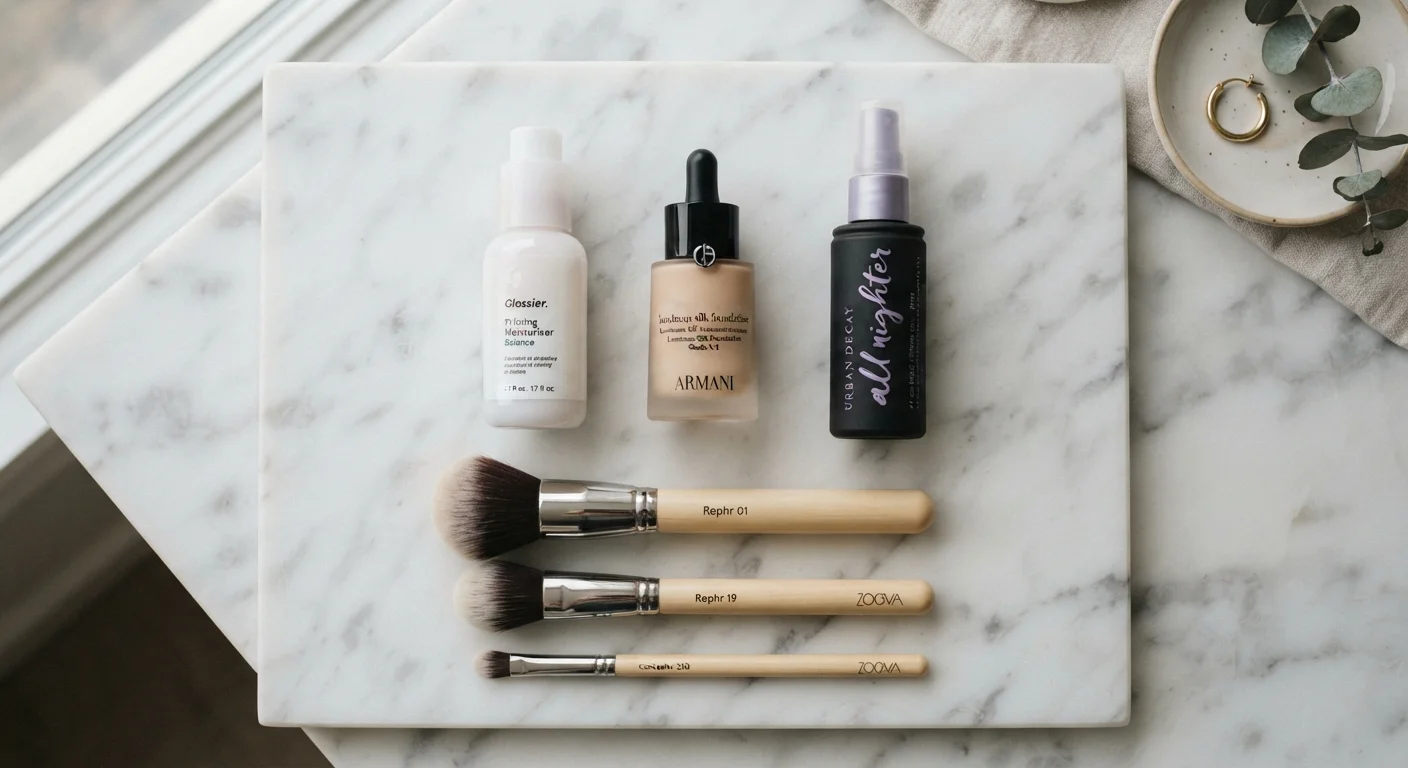
Long wear doesn't require a professional kit. The tools below cover the full checklist without duplication. If you're still building your collection, the five foundational products guide outlines exactly where to start.
Damp makeup sponge
Blends liquid and cream base products seamlessly without lifting them off the skin.
Flat concealer brush
Allows precise, controlled application of concealer to specific areas without over-blending.
Fluffy powder brush
Distributes loose or pressed setting powder lightly and evenly across the base.
Small packing brush
Applies eye shadow with more intensity and precision than a large fluffy brush.
Setting spray
Unifies the finished look, reduces the powdery appearance, and slows product breakdown throughout the day.
Eyelash curler
Lifts and opens the lash line before mascara for a longer-lasting curl.
Application Order and the Logic Behind It
The sequence in this checklist follows one core principle: each layer should adhere to a stable surface and not compete chemically with the layer beneath it. Water-based products go before oil-based ones. Powder is used to set — meaning it goes over cream and liquid formulas, not beneath them. Setting spray goes last to unify texture and slow evaporation.
Two zones need particular attention: the T-zone (forehead, nose, chin) and the under-eye area. The T-zone produces the most sebum and breaks down foundation first. The under-eye area is delicate, moves constantly, and tends to crease concealer if hydration isn't balanced there. Both zones benefit from targeted prep before product goes on.
Avoid Overloading Moisturiser Before Foundation
Applying too much moisturiser — or not allowing it to fully absorb — creates a slippery surface that prevents foundation from adhering properly. This is one of the most common reasons makeup slides or separates by mid-morning. A pea-sized amount of moisturiser, fully absorbed, is sufficient for most skin types before makeup application.
For a broader look at technique progression — including how to approach eye makeup, contouring, and more complex steps once the basics are solid — the skill-level guide to makeup techniques covers each stage in detail.
Mascara smudging is one of the most common wear complaints and is almost always a prep and formula issue rather than a product quality issue. If that's a recurring problem, the dedicated guide to mascara smudging walks through the specific causes and fixes.
Skincare Routine Quality Directly Affects Makeup Wear
No amount of setting spray or primer compensates for a skin surface that is significantly dehydrated, congested, or uneven in texture. If your makeup consistently breaks down despite following application best practices, the underlying daily skincare routine is the most productive place to investigate. Consistent skin health over time creates a surface that genuinely holds makeup better.
This article is for general informational purposes only. If you have a diagnosed skin condition, consult a qualified dermatologist or healthcare professional before changing your skincare or makeup routine.