
Solo Travel at a Slower Pace vs. Group Itineraries: How Each Shapes the Experience

Key Takeaways
- Solo travel at a slower pace offers deep autonomy but requires more planning and comfort with uncertainty.
- Group itineraries provide built-in social connection and logistics support, but limit flexibility.
- Neither format is universally better — the right choice depends on your travel goals and energy.
- Slow solo travel tends to deepen immersion; group itineraries tend to maximize coverage.
- Both approaches can be adapted — the most intentional travellers borrow elements from each.
Our Verdict
Solo travel at a slower pace and structured group itineraries are not competing philosophies so much as different instruments for different moods. One gives you depth; the other gives you breadth and companionship. The most satisfying trips often come from knowing which one your current season of life actually calls for.
| Best for | Recommended |
|---|---|
| Those who want deep immersion and full daily autonomy | Solo travel at a slower pace |
| Those seeking built-in social connection and handled logistics | Group itinerary travel |
| First-time independent travellers building confidence | Group itinerary travel |
| Travellers prioritising rest, reflection, and unhurried exploration | Solo travel at a slower pace |
Two Very Different Rhythms
There is a moment every traveller knows: standing in an unfamiliar city, deciding what the day will actually be. For a solo traveller moving slowly, that moment is wide open. For someone on a group tour, it is already decided. Neither experience is lesser — they simply produce different kinds of trips, and different versions of you at the end of them.
The growing interest in slow travel reflects a real shift in what many women want from time away: not a checklist, but a change of perspective. Understanding how solo slow travel and group itineraries actually differ — in practice, not just in theory — helps you choose the format that fits where you are right now.
What Solo Travel at a Slower Pace Actually Looks Like
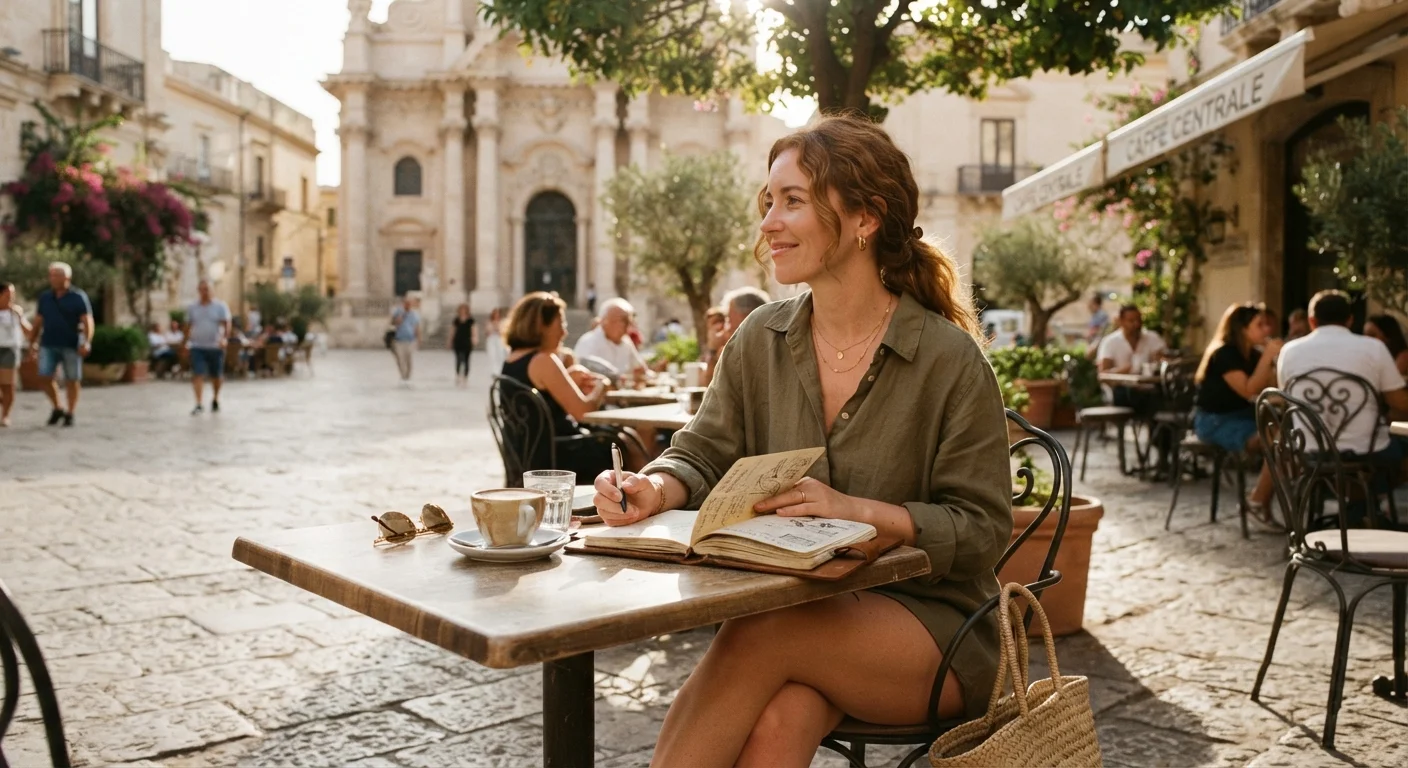
Slow solo travel is less a style and more a permission structure. You choose the destination, the accommodation, the daily start time, and — crucially — when to do absolutely nothing. A morning market can take two hours or twenty minutes depending on what you find there. A neighbourhood you didn't plan to visit can become the centre of your trip.
This kind of freedom rewards curiosity. It also demands a tolerance for ambiguity. Meals happen when you find them. Plans dissolve. Some days feel rich; others feel quiet in ways that can tip toward lonely if you're not prepared. Building that confidence before you go — emotionally as much as logistically — matters more than most itinerary advice acknowledges.
The financial picture is genuinely mixed. Without group rates or pre-negotiated packages, some costs run higher. Others drop because you're moving less, eating locally, and not paying for experiences that don't interest you. Spending less while travelling well is entirely possible at a slow solo pace — it just requires intentional choices at each step.
Start Slow Before You Go Full Solo
If you're drawn to slow solo travel but uncertain about extended independent time, try a hybrid approach: book two to three nights in a single neighbourhood before any onward travel. Getting comfortable in one unfamiliar place before moving — or deciding not to move — builds the tolerance for openness that slow travel genuinely requires. Even seasoned travellers use this warm-up technique when entering a destination they haven't visited before.
What Group Itineraries Actually Deliver
A well-designed group itinerary removes a significant cognitive load. Transfers are arranged. Entry tickets are booked. Someone else has researched which sites close on Mondays. For travellers who find logistics draining — or who are visiting a genuinely complex destination for the first time — this is not a compromise. It is the entire point.
Group travel also provides an instant social container. You arrive alone and within hours have people to eat with, compare notes with, and navigate awkward moments alongside. For women who want connection woven into the trip itself rather than something they have to manufacture, that structure is valuable. The honest trade-offs of group versus solo travel include this social dimension — and it deserves honest weight.
The constraint, of course, is pace. Group itineraries tend toward breadth: more cities, more sites, more movement. That coverage can feel exhilarating or exhausting depending on your disposition and where you are in the trip. Itinerary overload is a genuine risk in heavily scheduled formats, and worth factoring into the decision before you book.
| Solo Slow Travel | Group Itinerary | |
|---|---|---|
| Daily autonomy | Complete — you set the pace and agenda | Limited — schedule set in advance |
| Social connection | Self-directed, requires effort | Built-in through shared group experience |
| Logistics burden | High — all planning falls to you | Low — handled by tour organiser |
| Depth of immersion | Deep — fewer places, more time each | Shallower — breadth over depth |
| Flexibility mid-trip | Total — plans change as you choose | Minimal — deviations affect the group |
| Best suited for | Confident, curious, rest-seeking travellers | First-timers, social travellers, complex destinations |
How Each Format Shapes the Experience Over Time
The differences between these two approaches compound across the length of a trip. A slow solo week in one city produces familiarity — a favourite café, a shortcut through the market, the vendor whose name you eventually learn. A group itinerary covering four cities in seven days produces a panorama: you will have seen more, experienced wider variety, but known each place only at the surface.
Neither outcome is wrong. The question is which kind of memory you are trying to build. Travelling at quieter times of year amplifies the slow solo experience particularly well — fewer crowds mean the unhurried rhythms you're cultivating aren't constantly interrupted. For group travel, shoulder season can make the logistics smoother and the shared experience more intimate.
It's also worth acknowledging that these formats don't have to be permanent identities. Some trips call for structure; others call for space. The most intentional travellers — and the most rested ones — tend to read the moment rather than commit to a single style for life. Exploring the full range of travel inspiration with that flexibility in mind opens up more of what travel can actually offer.