

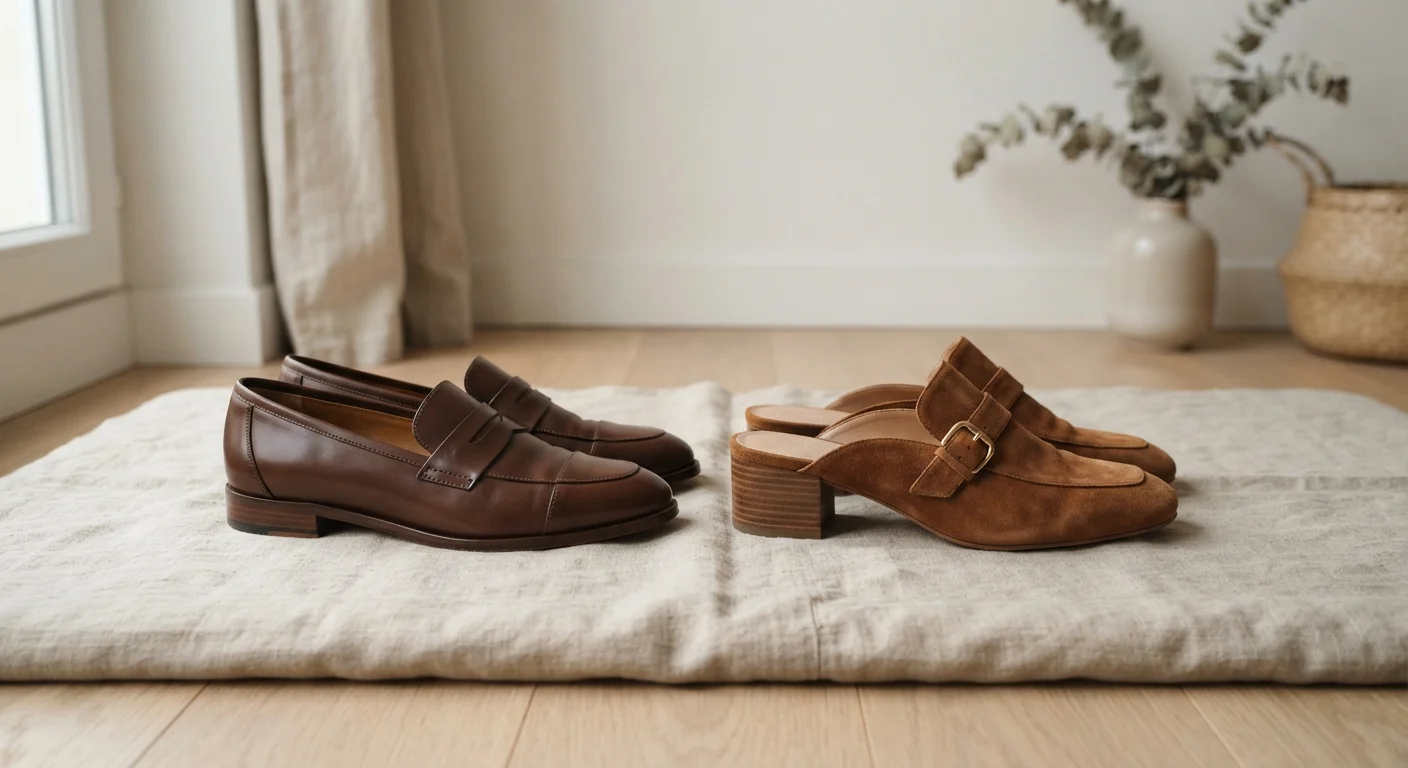
Key Takeaways
- Flat shoes generally offer superior all-day comfort and are well-suited to high-activity schedules.
- Low heels add visual elongation and formality, making them versatile across professional and social contexts.
- Both silhouettes can anchor reliable outfit formulas — the right choice depends on your actual daily demands.
- Fit and construction quality matter more than heel height when it comes to long-term wearability.
- Owning one well-chosen style in each category covers the widest range of everyday occasions.
Option A
Flat Shoes
The grounded, effortless everyday staple.
Best for: High-step days, long commutes, and anyone who prioritises physical ease without sacrificing a polished look.
Option B
Low Heels
The refined, versatile lift that bridges casual and formal.
Best for: Office-to-evening transitions and anyone who wants added visual structure without the fatigue of a full heel.
If you're on your feet most of the day
Flat Shoes
Minimal heel-to-toe drop reduces strain on the feet and lower back over extended periods. A structured flat like a leather loafer keeps the look polished without compromising endurance.
If your day moves from desk to dinner
Low Heels
A block or kitten heel reads more formal than a flat without demanding the effort of a full stiletto. It elevates a simple daytime outfit into evening-appropriate territory with no outfit change required.
If you're building a minimal, versatile wardrobe
Flat Shoes
A single pair of quality flats — loafer, ballet flat, or pointed-toe — pairs with more outfit categories, from tailored trousers to midi dresses, making them the more flexible foundational investment.
If you want a visual leg-lengthening effect
Low Heels
Even a 1.5–2 inch heel shifts the body's silhouette and creates a longer leg line. Nude-toned low heels in particular achieve this subtly under trousers or cropped hemlines.
If you're navigating unpredictable terrain or weather
Flat Shoes
Flat soles provide better stability on uneven surfaces, wet pavement, or cobblestone. Practical grounding matters on days when you can't predict your path.
Why Shoe Height Is a Practical Dressing Decision
The flat-versus-low-heel debate is rarely about aesthetics alone. It's a functional wardrobe question — one that sits at the intersection of physical comfort, outfit architecture, and the realistic demands of your day. As explored in dressing for your actual day, the outfits that consistently work are built around your real schedule, not an aspirational version of it.
That principle applies directly to footwear. The shoe that photographs beautifully at 9 a.m. but leaves you limping by noon isn't a wardrobe asset — it's a liability. Both flats and low heels can be polished, intentional choices; the key is understanding what each genuinely offers.
| Criterion | Flat Shoes | Low Heels |
|---|---|---|
| All-day comfort | Generally superior for extended wear | Comfortable if well-constructed; varies by style |
| Visual formality | Polished when silhouette is structured | Slightly more formal by default |
| Outfit versatility | Pairs across casual to smart-casual | Bridges smart-casual to semi-formal |
| Office suitability | Yes, with tailored pieces | Yes, across most office dress codes |
| Evening wearability | Depends on style and outfit | Strong — transitions easily after hours |
| Stability on varied terrain | High — flat sole grips most surfaces | Moderate — block heels more stable than tapered |
| Leg-lengthening effect | Minimal without tonal dressing tricks | Noticeable, even at 1.5–2 inches |
The Case for Flat Shoes
Flat shoes — loafers, ballet flats, pointed-toe flats, and leather sneakers — have long anchored the most dependable everyday wardrobes. Their primary advantage is endurance: a well-constructed flat allows natural foot movement and distributes weight evenly, making them the default choice for high-step days.
Structurally, flats also work as wardrobe neutrals. A leather loafer moves from cropped tailored trousers to a midi skirt to dark jeans without stylistic friction. That flexibility makes them one of the highest-utility pieces in an everyday outfit formula — see the outfit formula that works for almost every occasion for how foundational pieces like these function as anchors rather than afterthoughts.
The common misconception is that flats read as casual or underdressed. In practice, silhouette and fabrication do most of the formality work. A pointed leather flat with tailored separates signals intention just as clearly as a heel — often more so.
1–2.5"
Heel height range classified as 'low heel'
Podiatric and footwear industry guidance generally defines low heels as those falling within this range, considered lower-risk for everyday wear than mid or high heels.
~8,000–10,000
Average daily steps for an active adult
According to general public health guidance from organisations including the CDC, moderate daily step counts highlight why footwear support and construction quality matter for everyday wearers.
The Case for Low Heels
A low heel — typically defined as anything from 1 to 2.5 inches — occupies a genuinely useful middle ground. It provides the visual lift and elongation of a heel without the postural demands of a stiletto, making it a realistic option for days that require a slightly more elevated register.
Block heels, kitten heels, and stacked-sole mules in this range are particularly versatile. They read as polished in professional environments, work under tailored trousers, and translate easily to social occasions without needing a complete rethink of the outfit. For women whose days involve genuine transitions — a client meeting followed by a casual dinner, for example — a low heel often solves both contexts in one pair.
Comfort caveats still apply. Not all low heels are created equal; heel placement, insole cushioning, and toe box shape matter as much as height. A poorly constructed kitten heel can be more fatiguing than a well-made flat, so construction quality deserves scrutiny when evaluating any specific pair.
How to Decide for Your Wardrobe
Rather than declaring a universal winner, treat this as a question of wardrobe architecture. If your day involves significant walking, standing, or physical transitions, flats are the rational foundation. If your schedule is more desk-anchored with occasional formal demands, a low heel earns its keep. Ideally, having one strong option in each category covers the full spectrum of everyday occasions without over-complicating the wardrobe.
When assessing whether a shoe genuinely fits your daily outfit ecosystem, the everyday outfit checklist offers a practical framework for evaluating wearability before you commit. Apply the same lens to footwear: does this shoe actually work for where I'm going today — not where I imagine I might go?
Understanding how each element of an outfit functions together, including the role footwear plays in completing or disrupting a look, is covered in depth in the anatomy of an everyday outfit. Footwear is a finishing element that carries significant visual and functional weight — choosing it with intention is one of the simplest ways to make daily dressing feel more resolved.