

Key Takeaways
- Meditation is a scheduled practice; mindfulness is an ongoing quality of attention.
- Mindfulness can be cultivated through meditation, but meditation is not the only path to it.
- Both practices have meaningful research support for reducing stress and improving focus.
- You don't need to choose one — most people benefit from using both in complementary ways.
- Even brief daily meditation sessions can strengthen your baseline mindfulness throughout the day.
Option A
Meditation
The dedicated, structured practice.
Best for: Anyone who wants to build a consistent mental training habit with measurable depth over time.
Option B
Mindfulness
The always-available awareness skill.
Best for: Anyone who wants to stay grounded and present throughout daily life without carving out dedicated time.
If you want a structured daily mental wellness routine
Meditation
Formal meditation sessions create the deliberate repetition needed to train attentional control and build lasting mental habits.
If your schedule rarely allows uninterrupted quiet time
Mindfulness
Mindfulness can be practiced during commutes, meals, or conversations — no mat, timer, or silence required.
If you struggle with stress that spikes throughout the day
Mindfulness
Moment-to-moment awareness lets you catch stress responses early, before they escalate — without waiting for your next meditation window.
If you're building a long-term mental wellness foundation
Meditation
Research consistently links regular formal meditation to structural changes in attention, emotional regulation, and stress resilience over time.
If you're completely new to either practice
Mindfulness
Starting with simple mindful moments — one conscious breath, one unhurried meal — builds the awareness muscle that makes formal meditation easier to sustain.
They're Not the Same Thing — Here's the Core Distinction
The terms get used interchangeably in wellness content, but conflating them creates a practical problem: you end up applying the wrong tool to the situation. Understanding the difference helps you use both more deliberately.
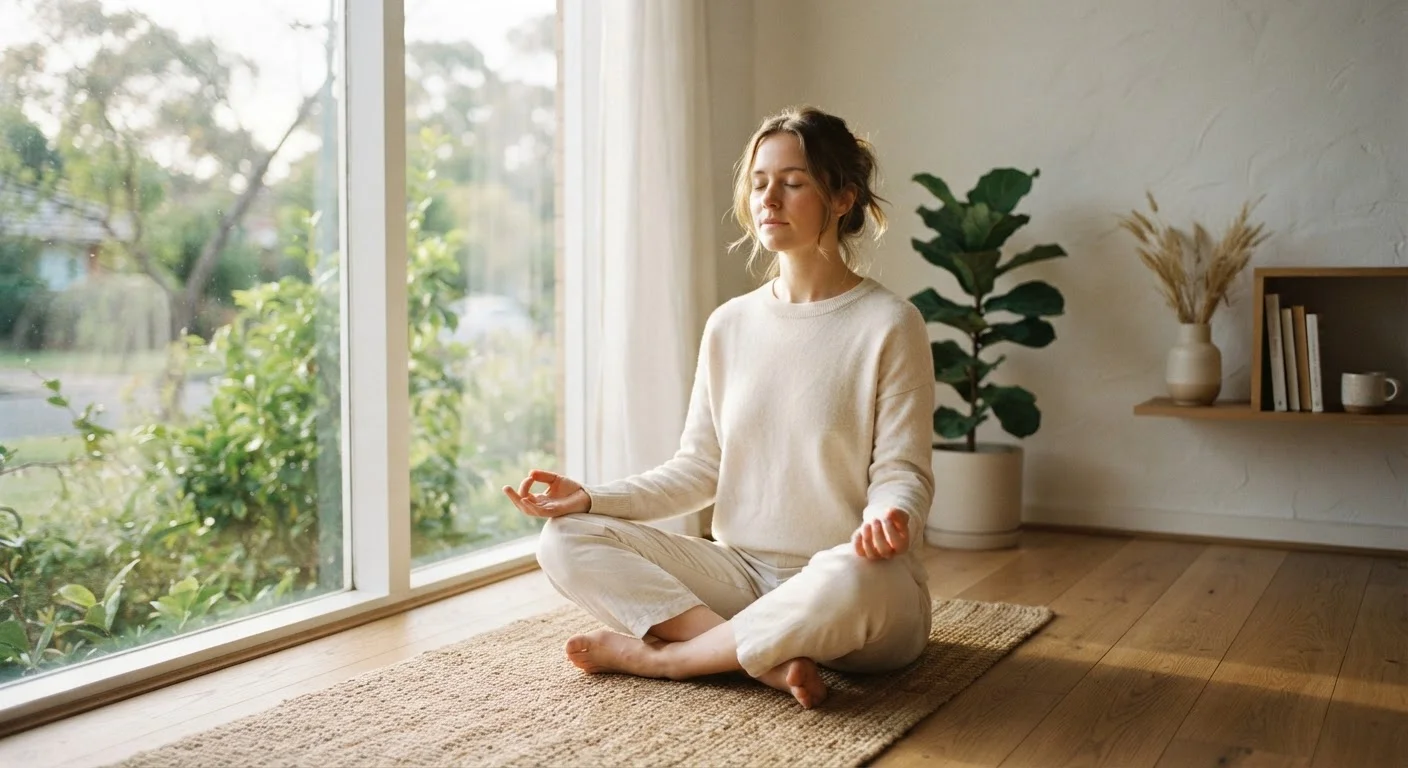
Meditation is a formal, time-bound practice. You sit (or lie down), you set an intention, and you engage in a structured mental exercise — following your breath, repeating a mantra, doing a body scan. It has a beginning and an end. It asks you to show up on purpose.
Mindfulness is a quality of attention — the capacity to be fully present with whatever is happening, without judgment. It can be practiced during meditation, but it doesn't require it. Washing dishes with full attention, listening to a colleague without mentally composing your reply, noticing tension in your shoulders before a meeting: all of that is mindfulness in action.
A useful way to frame it: meditation is a training ground for mindfulness. Regular formal practice strengthens your ability to access present-moment awareness throughout the rest of your day — but the awareness itself is the goal, not the sitting.
For a broader orientation to the concepts, see our complete starting-point guide for women new to the practice.
What the Research Actually Says About Each
Both practices have genuine scientific backing — but the evidence base looks different for each, and it's worth being clear about what's established versus what's still emerging.
Formal meditation, particularly mindfulness-based stress reduction (MBSR) — an eight-week structured program developed by Jon Kabat-Zinn at the University of Massachusetts Medical School — has the most robust clinical research behind it. Studies have associated regular practice with reductions in self-reported stress, improvements in attentional control, and changes in emotional reactivity. Neuroimaging research has also observed structural differences in the brains of long-term meditators compared to non-meditators, though researchers caution against overstating causality in these studies.
Mindfulness as a trait — how present and aware you tend to be in daily life — is associated with lower rates of rumination and anxiety in psychological research. Importantly, trait mindfulness can be developed without formal meditation; cognitive behavioral approaches and even certain physical practices like yoga incorporate it. That said, the most reliable way to deliberately cultivate it remains consistent formal practice.
8 weeks
Duration of the standard MBSR program
Mindfulness-Based Stress Reduction, developed at UMass Medical School, uses this timeframe as its evidence-based benchmark for measurable change.
~10 min
Minimum session length studied for focus benefits
Multiple attention studies have found meaningful effects on focus and stress response from sessions as short as 10 minutes of focused breathing practice.
58%
Of U.S. adults who meditate report doing so to reduce stress
According to a National Center for Health Statistics survey, stress reduction is the most frequently cited motivation for taking up meditation.
The practical upshot: if your goal is meaningful mental wellness benefit, occasional informal mindfulness moments help — but they work best as a complement to, not a replacement for, some structured practice. Even short daily sessions (research has examined sessions as brief as 10 minutes) show measurable effects on focus and stress response.
How They Fit Into a Packed Schedule — Differently
The most common reason people abandon meditation is the belief that it requires significant uninterrupted time. It doesn't — but it does require some dedicated time. Mindfulness, by contrast, slots into the gaps of any schedule.
| Criterion | Meditation | Mindfulness |
|---|---|---|
| Format | Scheduled, structured session | Ongoing quality of attention |
| Time required | Dedicated block (5–45 min) | No extra time needed |
| Where it happens | Quiet, intentional setting | Anywhere, anytime |
| Learning curve | Moderate — technique matters | Low — begins with one breath |
| Primary benefit | Builds attentional control | Sustains present-moment awareness |
| Research depth | Extensive clinical studies | Strong trait-level evidence |
| Works best when | Practiced consistently over weeks | Applied throughout daily moments |
A realistic approach for a busy week might look like this: two or three short meditation sessions (even 10 minutes) anchor the week, while mindfulness practices — a deliberate pause before opening your laptop, one meal eaten without a screen — fill in the daily texture. Neither practice needs to dominate your calendar to be useful.
If you're weighing other reflective habits, our piece on journalling vs. meditation is a useful companion read. And if the language around mindfulness still feels fuzzy, what mindful living actually means cuts through the noise.
For more practical mental wellness strategies, explore the Mind & Stress hub — and if structured sitting appeals to you, app-guided vs. unguided meditation covers which format suits different starting points.
This article is for general informational purposes only and is not a substitute for professional medical or mental health advice. If you are experiencing significant anxiety, depression, or other mental health concerns, please consult a qualified healthcare professional.