
Sulfate-Free vs. Regular Shampoo: Which Cleanse Does Your Hair Actually Need?

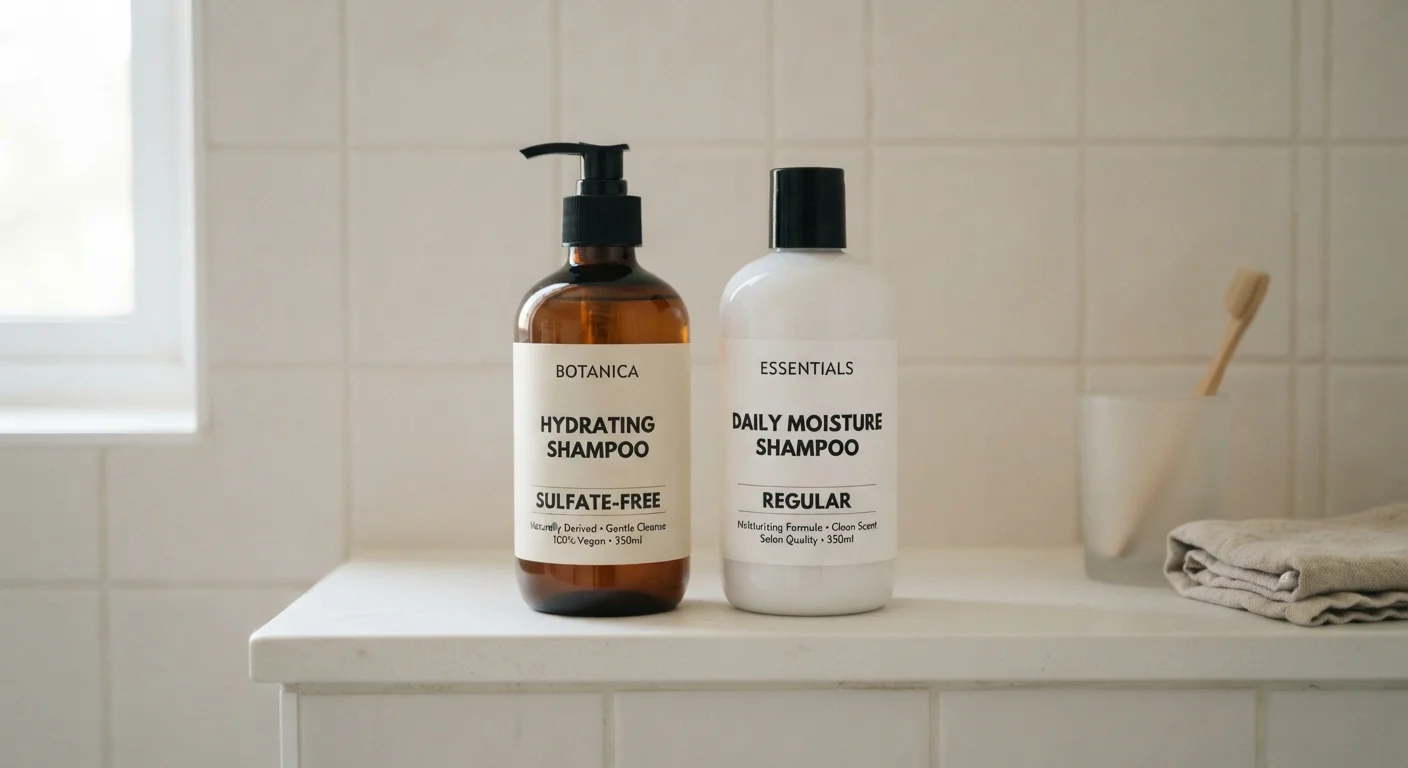
Key Takeaways
- Sulfates are surfactants that clean effectively but can strip natural oils from scalp and hair shaft.
- Sulfate-free formulas use milder surfactants and are better suited to dry, curly, or color-treated hair.
- Regular shampoos typically clean more thoroughly and suit oily scalps or heavy product users.
- Hair type, scalp condition, and styling habits — not marketing claims — should determine your formula choice.
- Neither formula is universally superior; the right pick depends on your individual hair profile.
Option A
Sulfate-Free Shampoo
The gentler cleanse for sensitive and fragile hair types.
Best for: Best for dry, color-treated, chemically processed, or curl-pattern hair that needs moisture preservation alongside cleansing.
Option B
Regular (Sulfate-Containing) Shampoo
The thorough, high-lather cleanse for oily or product-heavy hair.
Best for: Best for oily scalps, fine hair, or anyone who uses heavy styling products that require deep removal.
If your hair is color-treated or chemically relaxed
Sulfate-Free Shampoo
Sulfates accelerate color fade and can disrupt chemically altered bonds. A milder surfactant preserves both color vibrancy and structural integrity of processed strands.
If you have a naturally oily scalp or use heavy silicone-based styling products
Regular (Sulfate-Containing) Shampoo
Sulfates cut through sebum and silicone buildup more effectively than mild surfactants, preventing the scalp congestion that leads to limp, greasy roots.
If your hair is tightly coiled or naturally very dry
Sulfate-Free Shampoo
Coily hair is structurally more prone to moisture loss; a gentle cleanser preserves the natural oils the curl pattern needs to stay defined and healthy.
If you wash daily or every other day
Sulfate-Free Shampoo
High-frequency washing with sulfates can chronically strip the scalp's lipid barrier. A gentler formula reduces cumulative dryness without sacrificing cleanliness.
If you have fine, straight hair with no chemical treatments
Regular (Sulfate-Containing) Shampoo
Fine hair flattens quickly under product and oil buildup; a thorough sulfate cleanse resets the scalp and restores volume more reliably than milder alternatives.
What Sulfates Actually Do — and Why It Matters
Sulfates — most commonly sodium lauryl sulfate (SLS) and sodium laureth sulfate (SLES) — are anionic surfactants, meaning they carry a negative charge that attracts both oil (sebum, product residue) and water simultaneously. This dual attraction is why they rinse away grime so effectively. The trade-off is that they don't discriminate: along with dirt and excess oil, they also remove the scalp's natural lipid layer, which acts as a protective barrier for both the scalp skin and the hair shaft's outer cuticle.
Sulfate-free shampoos substitute milder surfactant alternatives — such as cocamidopropyl betaine or sodium cocoyl isethionate — that cleanse through a similar mechanism but with significantly lower irritation potential and less stripping action. They produce less lather (foam is a byproduct of surfactant type, not cleaning power), which can feel unfamiliar at first, but doesn't indicate reduced efficacy for the right hair type.
Understanding this distinction is the foundation of a smarter shampoo choice. For a broader look at how cleansing fits into a full hair routine, see building a low-product hair routine.
Head-to-Head: How the Two Formulas Compare
The differences between sulfate-containing and sulfate-free shampoos extend beyond ingredient labels. Here's how they stack up across the criteria that matter most to your daily routine:
| Criterion | Sulfate-Free Shampoo | Regular Shampoo |
|---|---|---|
| Cleansing strength | Mild to moderate | Moderate to strong |
| Lather production | Low to moderate | High |
| Color retention | Better; less cuticle disruption | May accelerate color fade |
| Moisture preservation | Higher; less lipid stripping | Lower; can dry out hair shaft |
| Silicone/product buildup removal | Less effective | More effective |
| Ideal wash frequency | Every 2–3 days or more frequent | Every 3–7 days suits most hair |
| Best scalp type | Dry, normal, or sensitive | Oily or normal |
| Best hair type | Curly, coily, dry, or treated | Fine, straight, or untreated |
One factor the table can't fully capture is cumulative effect. A single wash with a sulfate shampoo won't damage your hair, but using it daily on dry or fragile strands over weeks can progressively degrade the cuticle. Equally, relying on a sulfate-free formula when your scalp genuinely over-produces sebum can lead to buildup that affects scalp health in its own way.
Reading Your Hair Profile to Make the Call
Marketing has made this decision harder than it needs to be. Here's a practical framework based on three variables:
- Scalp oil production: If your roots look greasy within 24–48 hours of washing, your scalp is actively producing high levels of sebum. Sulfate-free surfactants may not fully clear that load, especially if you also use dry shampoo or leave-in products. A regular formula, used at your actual wash frequency rather than daily, will serve you better.
- Hair structure and treatment history: Fine, straight, and untreated hair tolerates sulfates well. Thick, coily, bleached, permed, or relaxed hair has a more vulnerable cuticle and benefits from the gentler cleanse. Color-treated hair in particular loses dye molecules faster when the cuticle is repeatedly disrupted by strong surfactants.
- Product load: If your routine includes heavy butters, waxes, or silicone-based sealants, sulfate-free formulas may not fully emulsify them — leading to buildup that eventually dulls the hair and irritates the scalp. In this case, an occasional clarifying wash (sulfate-based) can be used strategically even if your default shampoo is sulfate-free.
The Clarifying Wash Compromise
If you primarily use a sulfate-free shampoo but notice gradual dullness or product buildup, a monthly clarifying wash with a sulfate-based formula can reset the scalp without making sulfates your daily default. This hybrid approach works well for curly or color-treated hair types that need occasional deep cleansing. Think of it as a scheduled reset rather than a routine switch.
If you're uncertain where your hair falls, a structured weekly hair audit can help you track how your scalp and strands respond to formula changes over time.
A Note on Scalp Conditions and Specific Hair Goals
Some scalp conditions add nuance to this decision. Those managing dandruff caused by the Malassezia fungus often use medicated shampoos that contain specific active ingredients (such as zinc pyrithione, selenium sulfide, or ketoconazole); in these cases, the sulfate question is secondary to the therapeutic ingredient. Always follow guidance from a dermatologist for medicated regimens.
Conversely, those with seborrheic dermatitis or contact dermatitis may find that SLS specifically triggers irritation. Research has identified SLS as a potential skin irritant at higher concentrations — though formulated shampoos are typically well within safe use ranges. If your scalp feels persistently itchy, inflamed, or reactive after washing, it's worth consulting a dermatologist rather than self-diagnosing ingredient sensitivity.
For evidence-based guidance on caring for different scalp types — from oily to dry to sensitive — see scalp care practices by type. And if you're building a hair routine from scratch, this complete starting point covers the full picture from wash frequency to ingredient priorities.
This article provides general hair care information for educational purposes only. For persistent scalp concerns, skin reactions, or hair loss, consult a qualified dermatologist or healthcare professional.