

Key Takeaways
- Every effective hair routine rests on three functional pillars: cleanse, condition, and protect.
- Most hair concerns can be addressed without more than four to five products total.
- Choosing products based on hair porosity and scalp type yields better results than following trends.
- Consistency with fewer, well-chosen products outperforms a rotating arsenal of specialty treatments.
- Scalp health drives hair quality — neglecting it undermines every other step.
What you will need
Why Fewer Products Produce More Reliable Results
The hair care industry generates enormous variety — serums, masks, glosses, primers, scalp tonics — and the pressure to use multiple products is persistent. But adding layers rarely solves the underlying issue and often creates new ones: build-up, product interference, and a routine so complex it becomes inconsistent.
Consistency is one of the most under-discussed factors in hair health. A routine you can maintain every wash cycle will outperform an elaborate one that gets skipped or modified regularly. The same principle applies to skincare — as explored in when a minimal routine outperforms a complex one.
A low-product hair routine doesn't mean cutting corners. It means identifying what your hair and scalp actually require — cleansing, conditioning, and protection — and selecting one well-matched product per function rather than multiples competing for the same job.
More Products Can Mean More Problems
Layering multiple styling products increases the risk of build-up, which can weigh down strands, clog follicles, and make it harder to accurately read how your hair is actually responding. If you're troubleshooting a hair concern, simplify first before adding anything new.
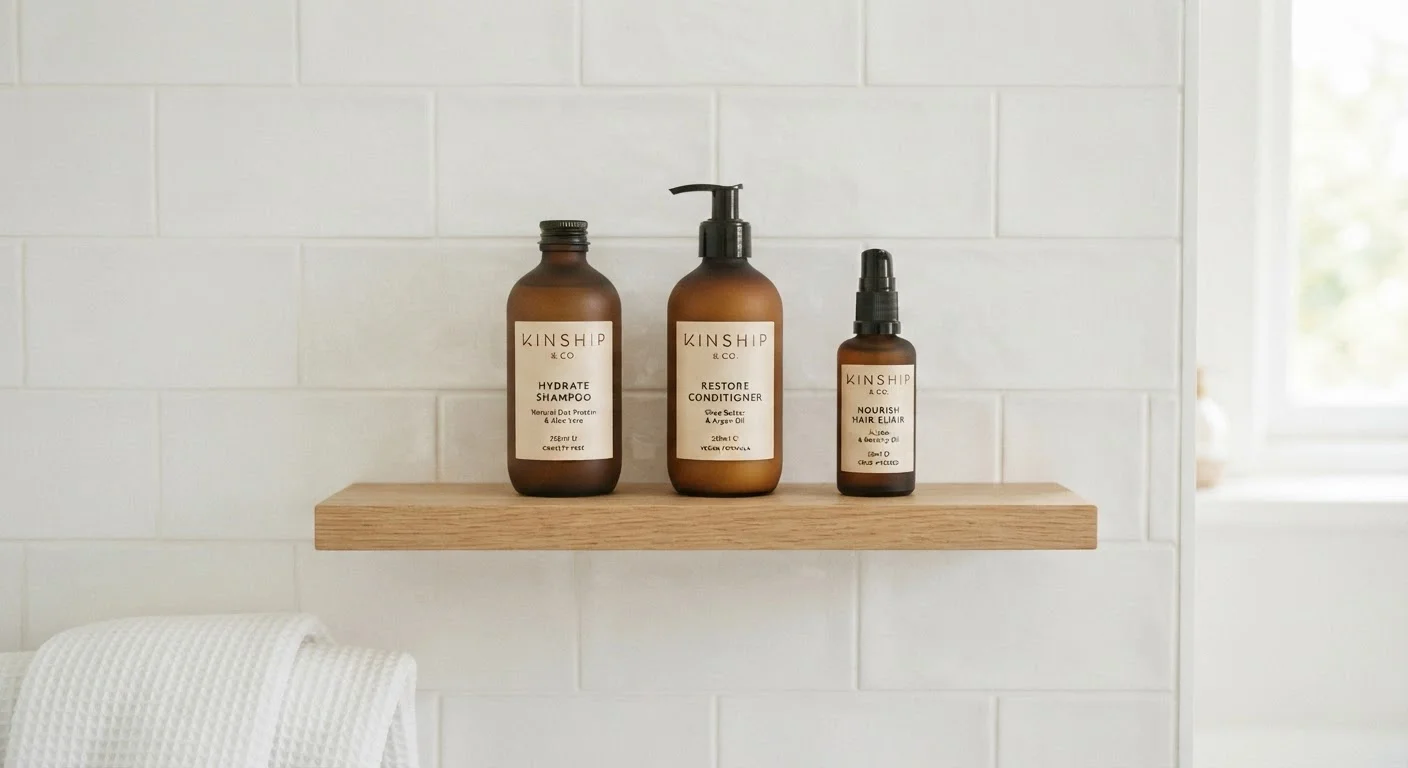
Understanding your scalp and hair type is the prerequisite for every decision that follows. Without that baseline, product selection becomes guesswork. The tools below represent a complete functional routine for most hair types.
Sulfate-free or gentle clarifying shampoo
Removes product build-up, sebum, and environmental residue from the scalp without stripping the hair shaft excessively.
Rinse-out conditioner
Replenishes moisture to the mid-lengths and ends after cleansing, improving slip and reducing mechanical damage during detangling.
Leave-in conditioner or lightweight hair oil
Provides a protective layer that seals moisture and reduces friction and environmental damage on dry hair.
Wide-tooth comb or detangling brush
Reduces breakage during detangling, especially when hair is wet and most vulnerable to mechanical stress.
Heat protectant (if heat styling)
Creates a barrier between the hair shaft and direct heat, reducing structural protein damage from tools above 300°F / 150°C.
Building and Refining Your Routine Over Time
Once the three core steps — cleanse, condition, protect — are in place with products matched to your hair type, the main variable to adjust is frequency, not product count. Wash frequency is highly individual and depends on scalp activity, exercise habits, and hair texture. Finer textures typically need more frequent cleansing; coarser and curly textures can often go longer between washes.
Resist the urge to troubleshoot problems by adding products. If your hair feels dry, the solution is more likely adjusting conditioner application or wash frequency than adding a mask on top of a leave-in on top of an oil. Before adding anything new, ask whether the current routine has had sufficient time to show results.
Audit Before You Add Anything
Before introducing a new product, spend at least three weeks tracking your hair's response to your current routine. Look at shine, breakage, scalp feel, and manageability. The weekly hair care audit framework is a practical way to collect that feedback systematically.
The scalp deserves specific attention here. A healthy scalp — balanced in oil production, free of irritation, and properly cleansed — is the foundation from which hair grows. Neglecting it while focusing exclusively on the lengths is one of the most common mistakes in hair care routines.
Scalp Conditions Need Professional Assessment
Persistent scalp flaking, significant hair loss, or inflamed patches are not routine concerns — they may indicate conditions such as seborrheic dermatitis, psoriasis, or alopecia. This article covers general hair care education only and is not a substitute for medical advice. Consult a dermatologist if you have ongoing scalp or hair loss concerns.
This article is for general informational and educational purposes only. It does not constitute medical advice. If you have concerns about scalp health, significant hair loss, or any other medical condition, please consult a qualified healthcare professional.