

Key Takeaways
- Hormones act directly on follicle receptors, making hair changes biological — not a product problem.
- Estrogen prolongs the growth phase; its decline after pregnancy or during menopause triggers shedding.
- Androgens can miniaturize follicles over time, producing finer, shorter strands in susceptible individuals.
- Thyroid imbalances are among the most common hormonal causes of diffuse hair thinning.
- Most hormone-related shedding is temporary; persistent or patchy loss warrants a clinician's evaluation.
- Understanding the mechanism helps you choose care strategies that support the hair you have now.
Hormonal Hair Changes
Hormonal hair changes refer to the documented shifts in hair texture, thickness, density, and growth cycle timing that occur when the body's hormone levels fluctuate. These fluctuations happen at predictable life stages — puberty, pregnancy, postpartum, perimenopause — and also within the monthly menstrual cycle. The changes are driven by hormones acting directly on hair follicles, altering how and how fast each strand grows.
Androgens (including testosterone and dihydrotestosterone), estrogens, progesterone, thyroid hormones, and prolactin each interact with androgen receptors on follicle cells, influencing the duration of the anagen (active growth), catagen (transition), and telogen (resting) phases of the hair growth cycle.
The Follicle as a Hormonal Target
Hair follicles are not passive structures — they are hormonally active tissue. Each follicle contains receptors for multiple hormones, which means circulating hormone levels can directly alter the follicle's behavior, independent of how you wash, condition, or style your hair. Understanding this is the foundation of understanding why hair changes at different life stages.
The hair growth cycle has three phases: anagen (active growth, lasting two to seven years), catagen (a short transitional phase), and telogen (resting, followed by shedding). At any given time, roughly 85–90% of scalp hairs are in anagen. Hormones regulate how long each follicle stays in each phase — and disrupting that timing is the primary mechanism behind most hormonally driven hair changes. To understand what the follicle is working with structurally, our overview of hair strand composition provides a useful foundation.
85–90%
Scalp hairs in active growth phase at any time
This proportion can shift significantly during hormonal transitions, which is why large-scale shedding becomes visible during events like postpartum recovery.
3–4 months
Typical onset of postpartum hair shedding
Telogen effluvium after delivery generally peaks around three to four months postpartum as retained anagen hairs collectively enter the resting phase.
~50%
Of women report noticeable hair thinning by age 50
Research into androgenetic and estrogen-related hair loss consistently finds that hair density changes become apparent to many women by the time they reach menopause.
Estrogen, Androgens, and What They Do
Estrogen generally supports hair by prolonging the anagen phase. Higher estrogen levels — as seen during pregnancy — can produce noticeably fuller, thicker-seeming hair because fewer follicles are cycling into telogen simultaneously. When estrogen declines (postpartum, perimenopause, or following certain hormonal contraceptive changes), follicles that were held in anagen collectively shift to telogen, resulting in a shed that can feel alarming even when it is biologically normal.
Androgens — including testosterone and its more potent derivative dihydrotestosterone (DHT) — have a more complex relationship with hair. On the scalp, androgens can progressively shrink (miniaturize) follicles in individuals with androgen-sensitive receptors, producing strands that become progressively finer and shorter with each growth cycle. This is the mechanism behind androgenetic alopecia, which affects women as well as men, though the pattern typically differs. Conversely, androgens stimulate body and facial hair growth in the same individuals.
Track Changes Alongside Life Events
If you notice a shift in hair texture, density, or shedding rate, note where you are in your hormonal timeline — postpartum, a new contraceptive, approaching perimenopause. This context is genuinely useful for a clinician assessing whether a change is expected and self-resolving or worth investigating further. A simple photo log taken in consistent lighting every few weeks can also help quantify changes that are otherwise easy to misjudge.
Life-Stage Hormonal Shifts and Their Hair Signatures
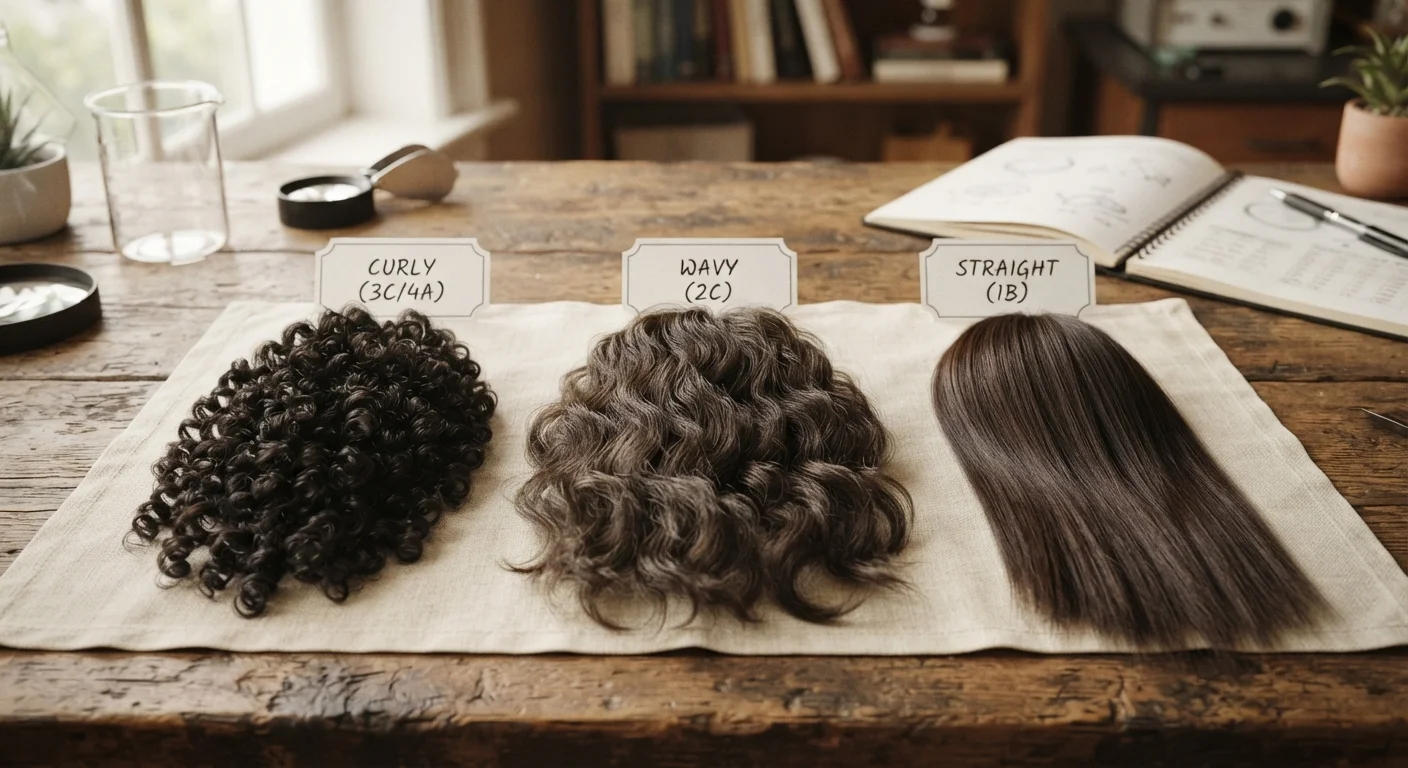
Puberty marks the first major hormonal shift affecting hair. Rising androgens alter sebum production, which can change scalp oiliness, and may shift hair texture — particularly in individuals with a genetic predisposition to androgen sensitivity. Hair that was straight in childhood can become wavier as follicle shape changes.
Pregnancy and postpartum represent the most dramatic and well-documented cycle. The postpartum shed (telogen effluvium) is among the most common hair concerns clinicians see and is typically self-resolving. Adjusting expectations — rather than adding new products — is usually the most useful response during this period. For broader context on how hormone fluctuations affect the body beyond hair, our article on hormones and sleep across the cycle illustrates the wider picture.
Perimenopause and menopause bring sustained estrogen decline. Hair may become drier (partly because estrogen influences scalp sebum), finer in individual strand diameter, and slower-growing. Density may decrease gradually rather than in a sudden shed. Focusing on understanding your hair's current density and porosity helps you adapt care to what your hair actually needs at this stage.
Thyroid and Prolactin: Often Overlooked
Thyroid hormones regulate cellular metabolism throughout the body, including in follicles. Both hypothyroidism (underactive thyroid) and hyperthyroidism (overactive) can cause diffuse hair thinning — the kind that affects the entire scalp rather than a specific zone. Because the shedding pattern resembles stress-related or nutritional hair loss, thyroid dysfunction is sometimes missed without blood testing. If hair thinning is unexplained and accompanied by fatigue, weight changes, or temperature sensitivity, a clinician's evaluation is warranted.
Elevated prolactin — a hormone primarily associated with lactation — can also suppress estrogen and disrupt the growth cycle. Prolactin levels outside of pregnancy and breastfeeding can rise due to certain medications, pituitary issues, or stress, and hair changes may be one of several signals that something warrants investigation.
Medications Can Also Affect Hair Cycles
Some medications — including certain hormonal contraceptives, blood pressure drugs, and antidepressants — are associated with hair shedding or texture changes. This is not a reason to stop any medication, but it is worth discussing with a prescribing clinician if hair changes coincide with starting or switching a drug. Never discontinue a prescribed medication based on hair concerns alone.
What You Can — and Cannot — Control
Hormonal hair changes are biological, not failures of your hair care routine. That said, hair in a state of hormonal flux does respond to how it is handled. Fine, low-density hair benefits from lighter formulas that do not weigh strands down. Dry or porous hair — more common post-menopause — responds well to moisture-focused care and reduced heat frequency. Hair that has become structurally weaker may benefit from periodic protein support, though it is worth understanding when protein helps versus harms before incorporating treatments; our guide on protein treatments covers this in detail.
What cannot be resolved through products alone: follicle miniaturization, active telogen effluvium, or thinning driven by an underlying endocrine condition. In these cases, a dermatologist or endocrinologist is the appropriate first contact. The goal of understanding the mechanism is not to find a product solution but to distinguish what is a routine adaptation from what merits professional attention.
This article is for informational and educational purposes only and does not constitute medical advice. If you are experiencing significant or unexplained hair changes, consult a qualified healthcare professional for an assessment appropriate to your individual situation.