

Key Takeaways
- Low-impact movement reduces joint stress while still delivering meaningful cardiovascular and strength benefits.
- Options like swimming, Pilates, barre, and tai chi suit a wide range of fitness levels and life stages.
- Choosing movement you genuinely enjoy dramatically improves long-term consistency and well-being.
- Low-impact does not mean low-effort — many forms build real strength, balance, and endurance.
- Consulting a healthcare provider is worthwhile if you have specific injuries or conditions before starting.
Why Low-Impact Movement Deserves a Second Look
Somewhere along the way, fitness culture convinced many of us that if it isn't punishing, it isn't working. High-intensity classes, heavy lifting, and relentless calorie math became the default — and anything gentler got quietly dismissed as "just for beginners" or "not a real workout." That framing does real harm.
Low-impact movement — broadly defined as exercise that keeps at least one foot on the ground or avoids forceful joint loading — offers genuine, research-supported benefits: improved cardiovascular fitness, stronger muscles, better balance, and reduced stress. It also happens to be far more sustainable for most women across varying life stages, energy levels, and physical histories. Research into motivation and habit formation consistently shows that enjoyable movement outlasts obligation-driven exercise — and low-impact forms tend to feel more approachable and pleasurable over time.
Whether you're navigating a busy schedule, returning after a break, or simply looking for movement that feels good in your body, the landscape of low-impact options is broader — and more effective — than most people realize. Here are seven forms worth knowing about.
Swimming and Aquatic Exercise
Water supports roughly 90% of your body weight when submerged to shoulder depth, making swimming and pool-based exercise exceptionally kind to joints while still providing meaningful resistance. Swimming engages most major muscle groups simultaneously, supports cardiovascular health, and has been studied in populations with arthritis, fibromyalgia, and chronic pain with generally favorable outcomes. Aqua aerobics classes offer a social, structured option if lap swimming feels monotonous.
Water supports up to 90% of body weight, making swimming one of the most joint-friendly full-body workouts available.
Pilates
Pilates — developed by Joseph Pilates in the early 20th century — centers on controlled, precise movements targeting core strength, spinal alignment, and postural awareness. Both mat-based and reformer (apparatus-based) Pilates are low-impact by design, though they can be progressively challenging. Research suggests Pilates may support improvements in core endurance, lower back pain, and balance. It pairs well with more vigorous activity or stands alone as a primary practice. For a closer look at how it compares to yoga, see our side-by-side breakdown.
Pilates builds genuine core strength and postural awareness through controlled, precise movements — without any high-impact loading.
Yoga
Yoga encompasses a vast range of styles — from restorative and yin (deeply passive, held poses) to more vigorous vinyasa flows. Most styles remain low-impact and place meaningful emphasis on flexibility, breath awareness, and mental calm alongside physical conditioning. Evidence supports yoga's benefits for stress reduction, sleep quality, and flexibility, with some styles also building notable muscular endurance. The variety of traditions means there's likely a style suited to nearly any preference or physical starting point.
Yoga's breadth of styles means it can be adapted to almost any energy level, physical ability, or mood on a given day.
Barre
Barre classes draw on ballet-inspired movements, Pilates principles, and isometric holds (where muscles contract without joint movement) to target smaller stabilizing muscles — particularly in the hips, glutes, and thighs. The repetitive, small-range movements can be surprisingly demanding despite remaining low-impact. Most classes require no dance background whatsoever, and the focus on posture and body awareness resonates with many women who find conventional gym environments unappealing.
Barre's isometric holds challenge stabilizing muscles deeply — proving that small movements can produce significant physical results.
Tai Chi
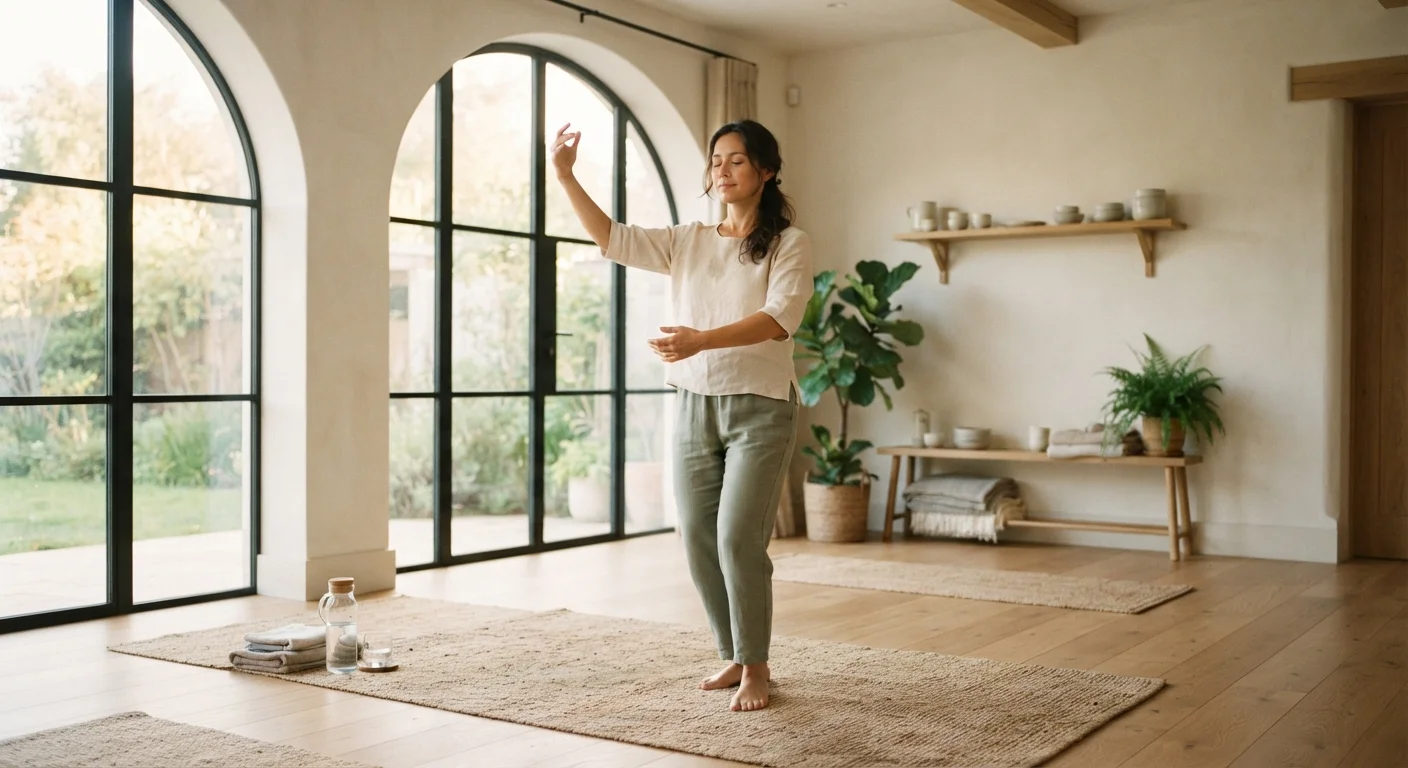
Originally a Chinese martial art, tai chi is now widely practiced for health rather than combat — characterized by slow, flowing sequences performed with deliberate breath and focus. It is particularly well-studied in older populations, where evidence points to meaningful benefits for balance, fall prevention, and stress reduction. That said, its gentle demands and meditative quality make it valuable across age groups. Many community centers offer beginner classes, and introductory sequences are widely available online.
Tai chi's slow, deliberate sequences build balance and reduce stress in a way that feels as much meditative as physical.
Cycling (Stationary or Outdoor)
Cycling — especially on a stationary bike — is a low-impact cardiovascular option that places minimal stress on knees and hips compared to running. Pedal resistance and pace can be adjusted widely, making it accessible to a broad fitness range. Indoor cycling classes offer community and structure; outdoor cycling adds variety and the well-documented mood benefits of time in nature. Proper bike fit matters significantly for comfort and injury prevention, so it's worth getting that right before committing to regular sessions.
Cycling delivers solid cardiovascular conditioning with far less joint stress than running — and proper bike fit makes all the difference.
Walking (Intentional and Progressive)
Walking is consistently underestimated. When approached intentionally — varying terrain, pace, or duration over time — it offers genuine cardiovascular and musculoskeletal benefits. Studies have associated regular brisk walking with improved cardiovascular health, mood regulation, and even cognitive function. It requires no equipment beyond supportive footwear, fits into existing routines naturally, and is one of the most sustainable forms of movement across a lifetime. The evidence on shorter bouts of movement also supports breaking walks into multiple sessions across the day without losing benefit.
Intentional, progressive walking is one of the most evidence-backed and underrated forms of sustainable movement available.
Finding Your Starting Point
There's no single "best" low-impact movement — the most effective one is the one you'll actually return to. That might mean trying two or three before something clicks, or mixing forms across the week to stay engaged. Rigid timetables don't suit every lifestyle, and the good news is that many of these practices scale beautifully to shorter sessions or home environments.
If you're coming back to movement after illness, burnout, or a long pause, starting gently and compassionately matters more than matching any particular format to a prescriptive plan. Low-impact movement is also a natural companion to rest and recovery — learning when light movement serves you better than full rest can help you build a more intuitive relationship with your body over time.
Mix Forms to Keep Things Fresh
There's no rule that says you need to commit to a single movement form. Alternating between two or three practices — say, walking during the week and a yoga or Pilates class on weekends — keeps your body adapting and your motivation higher. Variety also reduces the risk of overuse patterns developing in any one set of muscles or joints.
This article is for general informational purposes only and does not constitute medical advice. If you have existing injuries, chronic conditions, or health concerns, please consult a qualified healthcare professional before beginning any new movement practice.