

Key Takeaways
- Conditioner can leave hair drier when protein-moisture balance is disrupted — more product doesn't fix the problem.
- Protein overload causes stiffness and brittleness; moisture overload causes limpness and breakage — both mimic dryness.
- Rinsing technique, product layering order, and water temperature all affect how conditioner performs on the hair shaft.
- Identifying which imbalance you have determines which ingredient category to reduce, not just which product to swap.
What's Actually Happening When Conditioner Backfires
Conditioner is supposed to be the straightforward part of a hair care routine. Apply, wait, rinse — softer hair. So when the result is straw-like, brittle, or inexplicably drier than before washing, it's understandably confusing. The explanation almost always comes down to one of two imbalances: too much protein relative to moisture, or too much moisture relative to protein structure. Both can present as dryness, and treating one with the other's solution makes things worse.
Hair fibre is primarily keratin protein with a layered cuticle structure on the outside. A healthy cuticle lies flat, reflecting light and resisting moisture loss. Conditioner works by depositing smoothing compounds — typically cationic (positively charged) ingredients that bind to the negatively charged hair shaft — which help seal the cuticle and temporarily fill surface irregularities. When this system is disrupted, conditioning fails even when product is applied correctly.
~80%
Of hair's structural protein is keratin
Hair fibre is composed of approximately 80% keratin protein, which is why disrupting the protein-moisture equilibrium through product use has immediate, measurable effects on texture and elasticity.
2–4 min
Minimum effective rinse-out conditioner contact time
Cosmetic chemistry literature consistently notes that rinse-out conditioners require adequate dwell time for cationic surfactants to bond to the hair shaft — rinsing immediately after application significantly reduces efficacy.
If you're noticing a similar pattern of products not delivering expected results after starting a new regimen, it's worth reading why new routines sometimes cause initial worsening — the adjustment period concept applies broadly across beauty categories.
The Mistakes Behind the Dryness
Most post-conditioning dryness traces back to a small set of repeatable errors. They're common precisely because the logic behind them seems sound — more product, more treatment, more heat. Understanding why each one undermines conditioning helps correct course faster than trial-and-error product swapping.
Protein Overload Mimics Dryness Exactly
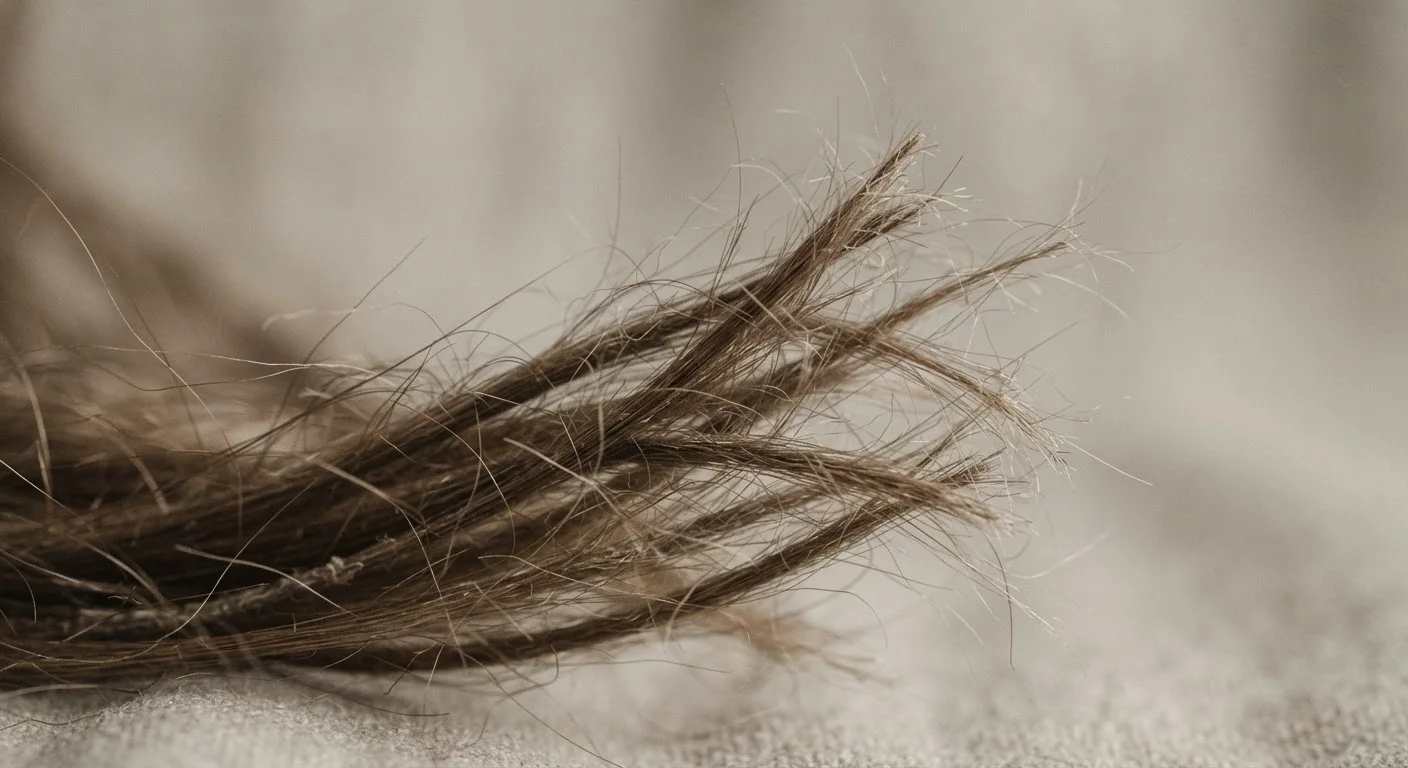
Hair that feels stiff, straw-like, or snaps rather than stretches after conditioning is a classic sign of protein overload — not lack of moisture. Adding more moisturizing conditioner to protein-saturated hair typically makes the problem worse, not better. If your hair has been progressively getting drier despite consistent conditioning, consider reducing or eliminating protein-containing products before introducing any new ones.
Using a conditioner with heavy protein when the hair shaft is already protein-saturated.
Why it happens: Many conditioners are marketed for damaged or dry hair and contain hydrolyzed proteins — readers assume more treatment equals more repair, regardless of current hair state.
Rinsing conditioner out immediately or within seconds of application.
Why it happens: Shower routines are often rushed, and it's not intuitive that a product applied to wet hair needs dwell time to work when it will simply be rinsed away regardless.
Conditioning with very hot water, then rinsing with equally hot water.
Why it happens: Hot water feels thorough and cleansing, so it's natural to assume a consistent temperature throughout the shower is fine.
Applying conditioner over product buildup from silicones or heavy butters that haven't been fully cleared.
Why it happens: Readers often conditioner-only wash to reduce dryness, not realizing that certain product residues prevent conditioner from reaching the cortex at all.
Using a rinse-out conditioner as if it were a leave-in, or vice versa.
Why it happens: Product labels can be ambiguous, and the idea that leaving more conditioner in equals more moisture is a persistent and understandable misconception.
Don't Layer Products Without Knowing Order
Applying a leave-in conditioner over a heavy oil or butter can block further absorption, trapping existing dryness beneath a sealed surface layer. Product layering order — lightest to heaviest — is not cosmetic preference; it follows the physical principle of how each category interacts with the hair fibre. Reversing this order is one of the most common reasons conditioning efforts feel counterproductive.
Once you've identified and corrected these errors, the next step is reading your hair's ongoing feedback systematically. The weekly hair care audit provides a practical checklist for tracking texture, breakage, and scalp signals so you can course-correct before problems compound.