

Key Takeaways
- Ingredients are listed in descending order of concentration — the first five matter most.
- INCI names are standardized Latin or chemical terms; learning a few key ones builds real literacy.
- Not all sulfates or silicones are equally harsh; hair type and formulation context determine impact.
- Fragrance and certain preservatives are the most common contact allergens in hair products.
- Spotting where a 'hero' ingredient appears in the list reveals whether it's present in a meaningful amount.
What you will need
Why Ingredient Literacy Matters
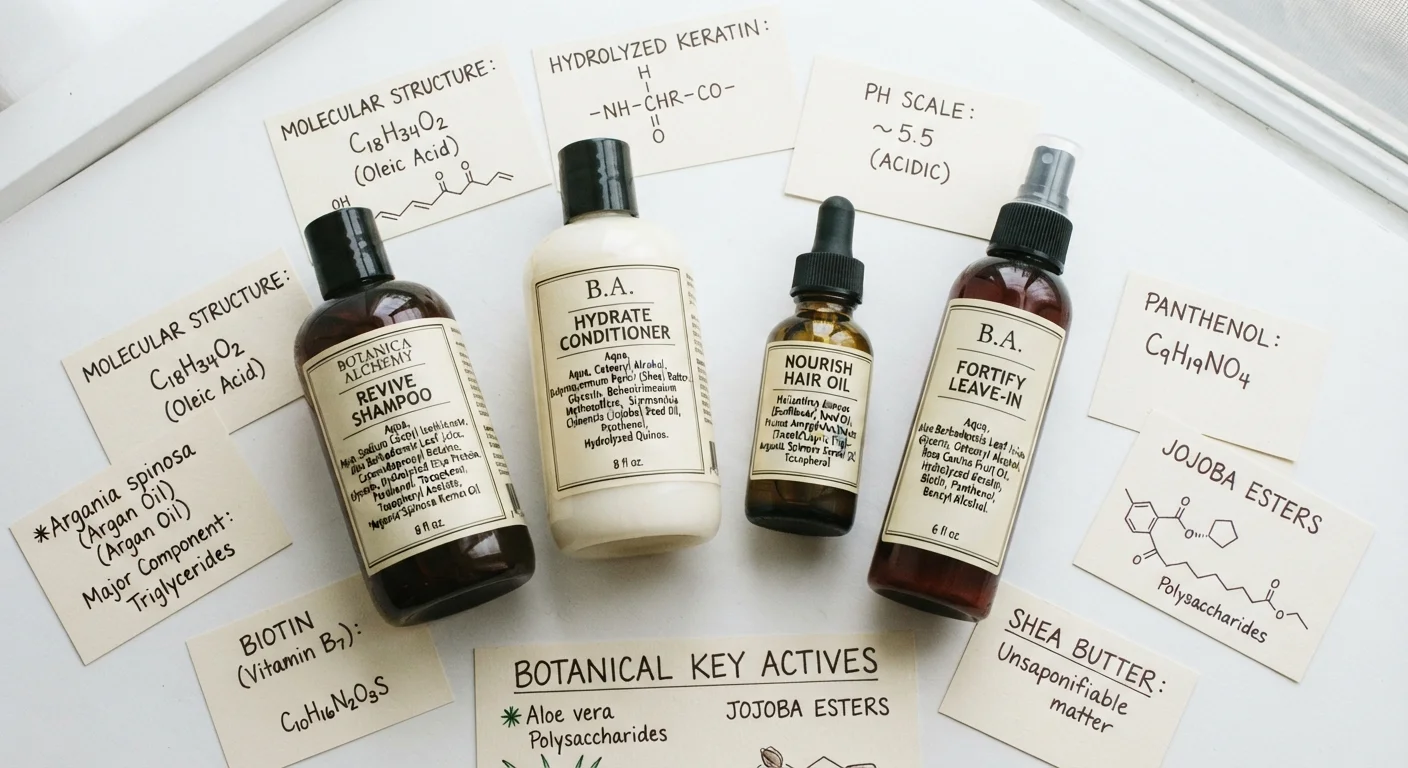
Marketing language on hair product packaging — 'nourishing,' 'strengthening,' 'salon-quality' — is largely unregulated and tells you almost nothing about what a formula will actually do to your hair. The ingredient list, by contrast, is a legally mandated, standardized record of what's in the bottle. Learning to read it means you stop buying based on claims and start choosing based on chemistry.
This is especially useful when you're trying to troubleshoot a routine. If your hair feels weighed down after a new conditioner, the INCI list may reveal a combination of heavy silicones that require a clarifying shampoo to remove. If your scalp itches after switching products, a scan for known sensitizers can point you toward the likely culprit.
Understanding ingredient labels also pairs directly with understanding your own hair's characteristics. How a formula behaves depends significantly on whether your hair is high or low porosity, fine or dense, elastic or brittle — concepts explored in detail in our guide to porosity, elasticity, and density.
What you will need
What to Watch For: A Practical Checklist
Once you understand the basic structure of an INCI list, a few targeted checks make product evaluation faster and more reliable.
Labels Don't Replace Professional Advice
This guide is general educational information about cosmetic labeling, not medical or dermatological advice. If you're experiencing scalp irritation, hair loss, or a suspected allergic reaction, consult a dermatologist or trichologist before adjusting your routine.
Concentration position: Is a featured active (e.g., biotin, keratin, a botanical extract) near the top of the list or buried near the end? Position indicates meaningful presence versus a trace amount included for marketing purposes.
Surfactant type and pairing: A shampoo with SLS as the first surfactant but Cocamidopropyl Betaine immediately after is formulated more gently than one using SLS alone. Blending reduces irritation potential.
Silicone water-solubility: If your conditioner contains silicones, match it with a shampoo that can effectively remove them, or plan for periodic clarifying washes. Otherwise, silicone layering can progressively dull hair and block moisture absorption.
Preservative identity: Scan for MI or MCI if you have a history of scalp sensitivity. Their presence doesn't automatically mean a problem, but it's worth noting.
Use a Reliable Ingredient Database
Free tools like the INCI Decoder or the EWG Skin Deep database allow you to search individual ingredient names and see their function, typical concentration ranges, and any flagged safety concerns. Cross-referencing a new product before purchase takes less than two minutes and builds your fluency over time.
For a broader look at how individual ingredients interact when layered across products, our guide to ingredient interactions offers a useful framework — much of it applies to hair care as well as skincare.
Fragrance Is a Single Hiding Many Ingredients
In the U.S., the term 'fragrance' or 'parfum' on a cosmetic label can legally represent a proprietary blend of dozens of undisclosed chemicals. For anyone with a sensitive scalp or known contact allergies, this single word warrants extra caution. Look for products that disclose individual fragrance components or are explicitly fragrance-free.
If you're newer to building a deliberate hair routine, our complete starting point guide provides the broader context: hair types, routine structure, and where ingredient literacy fits into the bigger picture.
This article is for general informational and educational purposes only. It is not medical or dermatological advice. If you experience persistent scalp symptoms, hair loss, or reactions to hair products, consult a qualified healthcare professional.